You can learn a lot about a machine from a spec sheet. You learn everything about it from the person who's been running it since 6 AM and still has six hours to go.
We spent last year visiting pipeline projects across three continents. Not to sell—to watch. To see what happens to pipeline welding equipment when the novelty wears off and it's just another tool on a long job.
The answer changed how we build things.
Here's what the welders told us about the best welder for pipeline welding, and why the automatic pipeline welding machine that looks perfect in a demo can be a nightmare by Wednesday.
The Weight Problem Nobody Talks About
Every pipeliner welding machine brochure lists weight. Nobody mentions what that number actually means at 4 PM on day five.
We watched a crew in Alberta running premium pipeline welding equipment on a 48-inch project. The machine was technically excellent—stable arc, great data logging, beautiful welds. But it weighed 84 pounds with the head and carriage. By Thursday, the welders were rotating more frequently, taking longer breaks, and the rhythm of the spread had slowed by nearly 15%.
The best welder for pipeline welding on paper wasn't the best one for a 12-hour shift.
We started asking every operator we met: if you could change one thing about your automatic pipeline welding machine, what would it be? The answers weren't about pulse settings or software features. They were about handles that dig into your palms, cables that don't flex in cold weather, and heads that require two people to reposition.
Those things don't show up in the sales demo. They show up in the monthly production numbers.
The Module That Saved a Job in the Desert
Here's a story we didn't expect to hear.
A contractor in the Middle East was running our pipeline welding equipment on a 36-inch gas line. Ambient temperature was pushing 48°C. The sand was everywhere—in the tracks, in the connectors, in places sand shouldn't logically reach.
One of their automatic pipeline welding machine units stopped communicating with the controller mid-weld. In most systems, that's a shutdown. Wait for the technician. Lose half a shift.
Our machine has a backup mode that isn't in the main training manual—because we didn't design it as a feature. We designed it as a failsafe after watching a customer in South America lose three days to a cable failure. If the main communication board fails, the machine defaults to a simplified control scheme using the secondary circuit.
The crew finished the weld. Then the next one. They ran three more days before the replacement board arrived.
That's not a spec sheet win. That's 31 years of watching pipeline welding equipment fail in the field and building workarounds into the next generation.
The pipeliner welding machine that wins isn't the one that never breaks. It's the one that keeps working when it does.
The Coating That Saved a Winter Project
Another thing you won't find in the automatic pipeline welding machine brochure: how it handles -30°C.
We met a crew in Northern Canada who'd tried three different brands of pipeline welding equipment before settling on ours. Not because our arc was better—though they said it was fine—but because our cables didn't turn into rigid plastic rods when the temperature dropped.
Most welding cable insulation is rated for cold. The rating lies. At -25°C, the stuff bends like rebar. It fights you on every reposition. It cracks if you look at it wrong.
We started sourcing different cable compounds about fifteen years ago, after a customer in Scandinavia sent us photos of their competitor's cables snapped clean through. Now every pipeliner welding machine we ship uses a custom blend that stays flexible down to -40°C. It costs more. We don't advertise it. But the crews working in winter remember which machines fight them and which ones don't.
The best welder for pipeline welding in July might be the worst one in January. We build for January.
The Training That Doesn't Stop at Handover
We started this company in 1994 with a simple idea: build equipment that outlasts the people running it.
What we learned along the way is that the equipment is only half the equation. The other half is what happens when the machine arrives and the crew has to figure it out.
We ship to over fifty countries now. Every automatic pipeline welding machine we send out comes with a promise that isn't on the invoice: if you need us, we show up. Not a video call. Not a PDF. A person who's been doing this since before some of your welders were born.
Last year, we had a client in Southeast Asia who needed to weld in conditions that weren't in any manual—monsoon humidity, power fluctuations, and a crew that spoke three different languages. Our engineer spent two weeks on site. Not just training—rewriting procedures for the weather. Showing the same thing six different ways until it stuck.
That's pipeline welding equipment. It's the machine plus the knowledge of how to make it work when everything's trying to stop you.
The best welder for pipeline welding is the one where someone answers the phone at midnight your time when the head stops talking to the controller. We answer our own phones. Not a call center. Not a ticket number. A person who can walk you through it while you're standing in the mud.
What We Tell Our Own Sales Team
Here's something that surprises customers.
When someone calls asking about pipeline welding supplies and which machine they should buy, we don't automatically push the biggest one. We ask questions first.
Where are you working? What's the temperature range? How many hours a day do you run? Who's operating it? What did your last machine do that drove you crazy?
Sometimes the answer is: our entry-level automatic pipeline welding machine is the right fit. Sometimes it's: you need the heavy-duty model with the cold-weather package. And sometimes it's: don't buy from us. Buy from the competitor down the street, because their machine handles that specific alloy better than ours does.
We've been doing this since 1994. We've seen what happens when someone buys the wrong pipeliner welding machine because the salesperson talked them into it. They don't blame the salesperson. They blame the brand. And they never come back.
So we tell our team: if we're not the right fit, say so. The customer will remember the honesty longer than they'll remember the sale.
What to Ask Before You Decide
If you're looking for the best welder for pipeline welding, here are the questions that will actually get you there:
Who do I call at 2 AM when this thing stops working?** Not your distributor. Not the local rep. The person who can authorize a replacement part and get it on a plane before sunrise. We have that number. We'll give it to you before you buy.
Can you show me a machine that's been running for five years in conditions like mine?** We can. Over fifty countries means we have examples everywhere. Talk to those operators. Ask them what broke, how fast it got fixed, and whether they'd buy again.
What happens when my pipe isn't perfectly round?** Because it won't be. Pipeline welding equipment that can't handle real-world fit-up will cost you more in rework than you saved on the price.
How long have you been doing this?** 1994. That's 31 years of watching what works and what doesn't when the pipeline runs through desert, jungle, mountains, and frozen ground. We've made every mistake so you don't have to.
The Question That Matters Most
The best welder for pipeline welding isn't a model number. It's a match between what the machine can do and what your crew can survive.
We built our first pipeliner welding machine in 1994. We've been refining them ever since—not because we're chasing perfection, but because we keep watching what happens in the field and building those lessons into the next version.
If you want to know what's best for your specific job, call us. Tell us where you're working, what you're welding, and who's doing the welding. That conversation doesn't cost anything.
And if we're not the right fit, we'll tell you that too. We've been doing this long enough to know when someone else's automatic pipeline welding machine makes more sense for your situation.





 Chinese
 English
 OA
OA Current location:
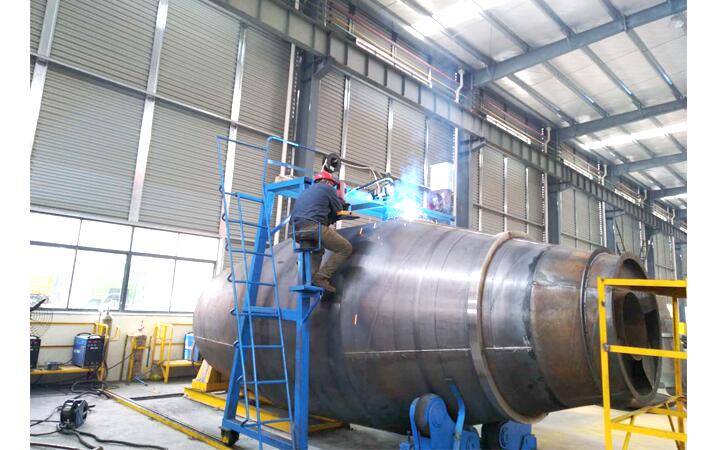 Concrete Mixer Drum Robotic Welding Solutions
 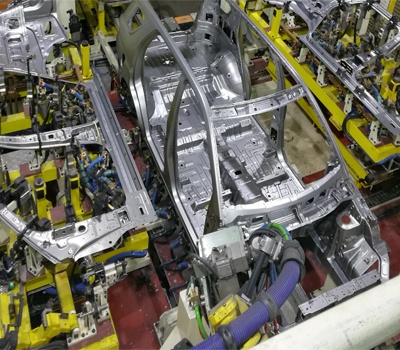 Automobile Body Production Line Welding Fixtures
 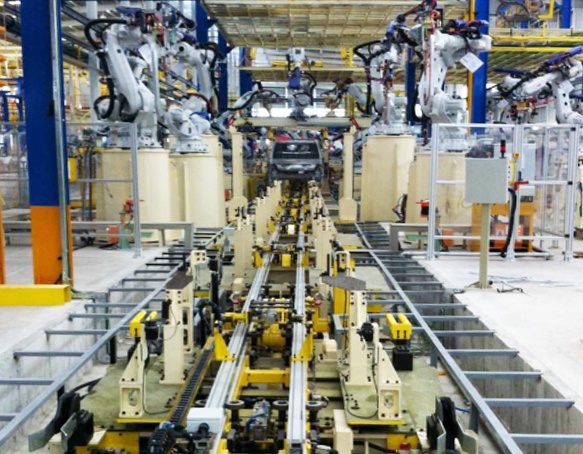 Automotive Body Welding Automated Manufacturing Solutions
 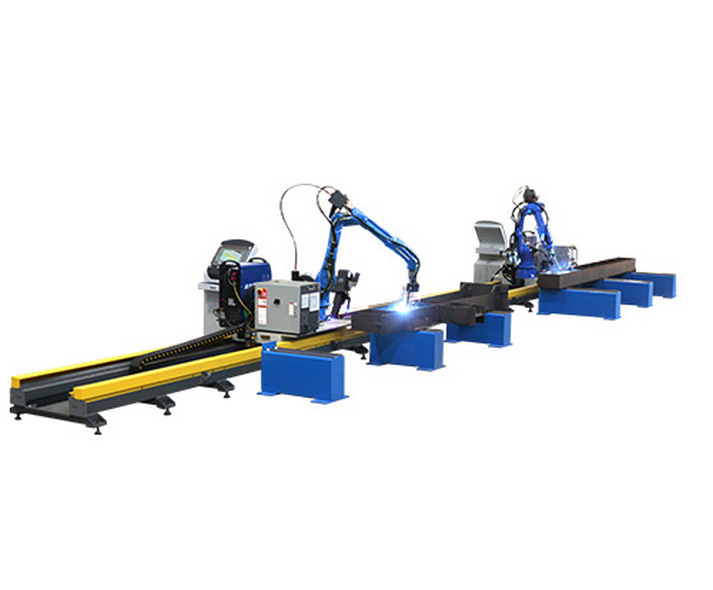 Free-Teaching Programming Welding Robot Cell For I Beam Welding
 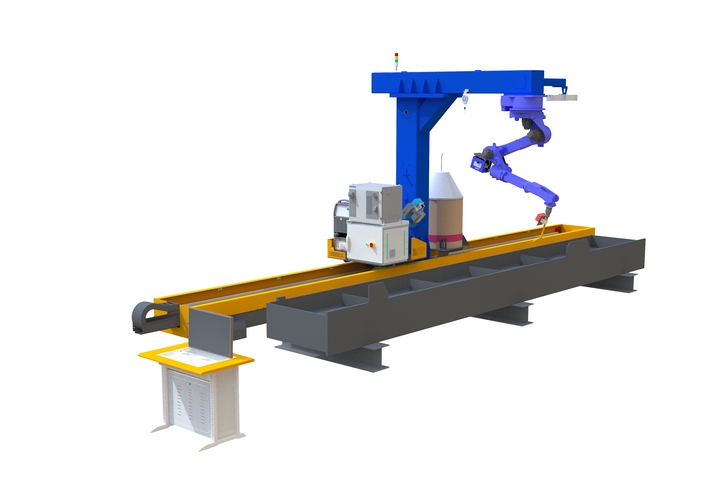 No Programming Required Robotic Welding Systems for H beam Welding Line