How Are Robots Used in Factories? | Robotic Welding Solution Supplier
2026-03-10 16:09:46
For decades, the image of robots working in factories was synonymous with heavy, caged machinery performing repetitive tasks at blinding speeds. That picture is not wrong, but it is incomplete. If you walk into a modern fabrication shop or a shipyard today, you will see something different: robots that are no longer blind components of a hard automation line, but sensory-driven entities capable of decision-making.
The conversation has shifted from "can it repeat this motion?" to "can it see the joint and adapt?" This article dives deep into that shift, specifically where the arc meets the automation—the world of welding.
The Evolution of the Welding Floor
Traditionally, when we discussed robots used in factories, we focused on throughput. The robot was a tool for doing the same thing faster than a human. But in welding, "the same thing" rarely exists. Metal warps from heat. Parts come in with minor dimensional variances from the stamping or casting process. A pre-programmed path is a recipe for a bad weld.
This is where the concept of the automatic welding robot has undergone its most significant evolution. It is no longer just "automatic" in the sense of following a path; it is "autonomous" in the sense of reacting in real-time.
From Teach Pendants to Laser Vision
The death of the teach pendant is exaggerated, but its role is changing. In the past, deploying robots used in factories for welding required an expert to manually guide the robot to every point. Today, the robot uses laser scanners and vision systems to locate the joint. The programmer tells it *what* to weld, not *where* to weld.
Deconstructing the Automatic Welding Robot
To understand the sophistication of modern robotic welding systems, we have to look at the stack. It is not just the arm; it is the symbiosis of hardware and software that allows these systems to thrive in the "dirty, dull, and dangerous" environments .
The "Eye" - Real-Time Seam Tracking
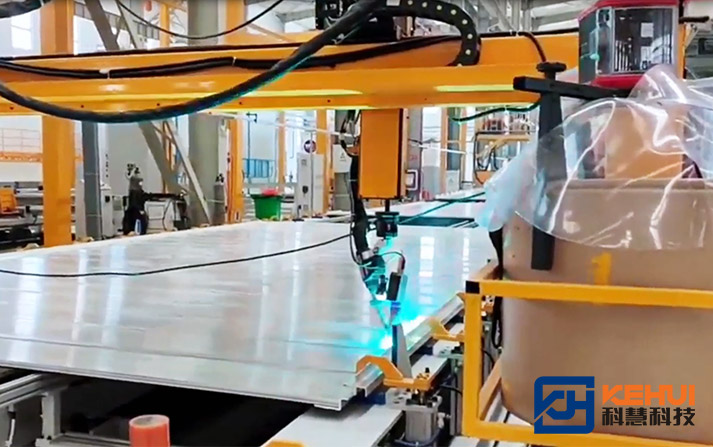
A true automatic welding robot today utilizes through-arc sensing or laser vision. This is critical in high-heat applications. As the metal expands, the joint shifts. The robot’s controller must recalculate the path milliseconds ahead. If you look at the high-end integrators working with companies that use industrial robots, the demand is no longer for rigidity, but for adaptability. The robot must compensate for the "springback" of the metal or an uneven fit-up.
The "Brain" - Physical AI in Welding
We are now entering an era where robotic welding systems are leveraging Physical AI. Instead of relying on a lookup table for parameters, these systems observe the weld pool. They analyze the puddle's behavior—does it look too fluid? Is there spatter?—and adjust the voltage or wire feed speed instantaneously.
This is a marked departure from the past. As seen in recent defense and shipbuilding collaborations, the goal is to build a system that can "see, understand, and adapt to the variations" of a real-world environment . For companies that use industrial robots in structural fabrication, this means the difference between a weld that looks pretty and a weld with the metallurgical strength to survive stress.
Where the Welds Are Happening Now
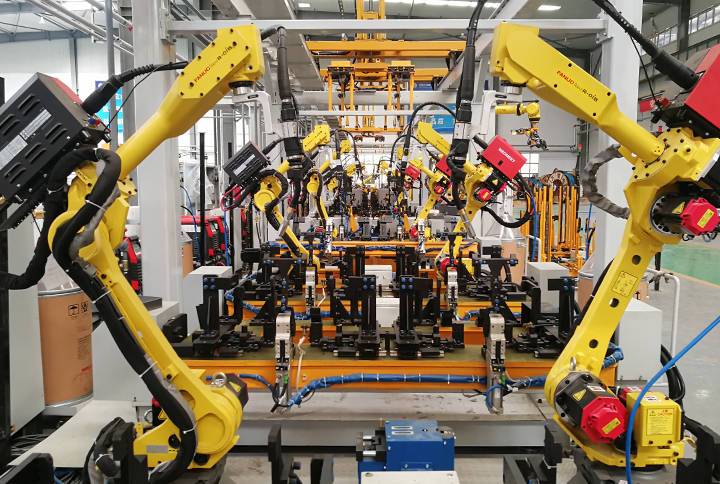
When we visualize robots working in factories, we often picture automotive assembly lines spot-welding car bodies. While that remains a massive market, the growth frontier is elsewhere.
Heavy Fabrication and Shipbuilding
This is the ultimate proving ground. In shipyards, the sections are massive, and the tolerances are... let's call them "robust." Deploying an automatic welding robot here was once considered impossible without extensive jigging. Today, mobile platforms carry collaborative robots to the workpiece. The robot doesn't work in a dedicated cell; the cell comes to the weld.
These environments are the perfect showcase for why robotic welding systems are necessary. The ergonomic strain on a human welding in a double-hull ship section is immense. By deploying robots, yards are not just increasing speed; they are preserving their workforce .
The Rise of the "Non-Automotive" Supplier
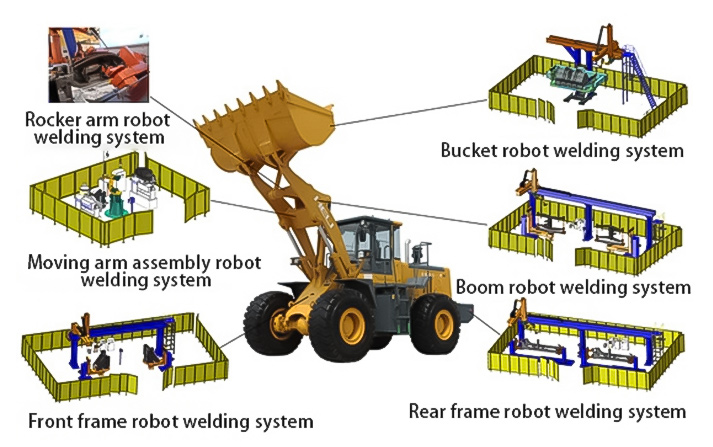
While automotive giants like Hyundai and GM remain significant companies that use industrial robots, the mid-tier manufacturing sector is exploding. We are seeing robots used in factories that produce agricultural equipment, construction machinery, and even artistic architectural structures.
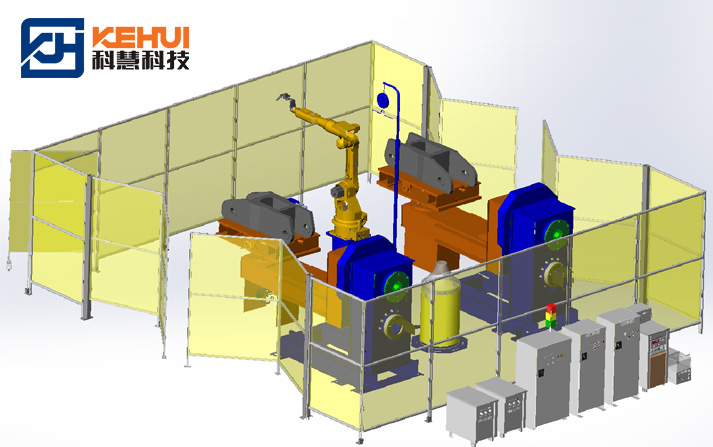
These factories don't have the luxury of high-volume, low-mix production. Their runs are short. Therefore, their robotic welding systems must be flexible. A system that welds a bulldozer bracket in the morning might need to weld a staircase handrail in the afternoon. This requires software that can handle offline programming and hardware that can switch tools quickly.
The Hidden Challenge: Integration Over Installation
For any integrator, the true value lies not in dropping a robot on a floor, but in making it work with the chaos of a real factory.
The Welding Process Itself
The robot is just the platform. The real magic is in the welding process. Parameters like arc length, oscillation patterns, and gas coverage are physics problems, not robotics problems. When we design an **automatic welding robot cell, the first question is not about the robot's speed, but about the material's carbon content and the required deposition rate.
Workforce Augmentation
When robots working in factories are deployed successfully, the welders don't lose their jobs; they get promoted. The skilled welder becomes the supervisor of ten robots. They manage the "tough" problems—the root passes that require finesse—while the robot handles the fill and cap passes that are physically exhausting.
The Technical Benchmark: Why Experience Matters
This is where our story intersects with yours. You are looking for a partner to navigate this complexity. You need someone who understands that welding is a science and robotics is the tool.
We are not new to this game. Founded in 1994, we have been solving these exact problems for over three decades. We have watched robots used in factories evolve from simple pick-and-place units to the intelligent robotic welding systems described above. We moved with the technology, ensuring that our automatic welding robot solutions are always at the forefront.
We serve companies that use industrial robots across the globe. Our equipment is currently welding in harsh environments, from the freezing temperatures of Northern Europe to the humid climates of Southeast Asia. We have shipped to multiple countries because we understand that welding challenges are universal, but the approach must be localized.
Our team doesn't just ship a box. We provide engineers on-site to guide your installation. We know that the success of robots working in factories depends on the handshake between the machine and the existing workflow. Our engineering team brings a notebook full of metallurgical knowledge, not just a laptop full of code.
Our core strengths:
Starting from our experience accumulated since 1994, we have witnessed and adapted to each generation of robotics technology evolution, providing time-tested solutions;
Global footprint with local support: Our products are exported to many countries, but our engineers can provide on-site installation guidance, ensuring global standards are met with localized execution;
A team of engineers with expertise in processes: We are proficient in metallurgy and welding parameters, not just operating robots, ensuring weld quality;
Focusing on vertical welding sectors, from automotive to heavy machinery, we conduct in-depth optimization for highly flexible and high-strength welding scenarios.
When you partner with us, you are not just buying an automatic welding robot. You are buying a library of welding experience, a team of field-service engineers who can troubleshoot on the ground, and a legacy of stability. Let's build your factory of the future, one perfect weld at a time.





 Chinese
 English
 OA
OA Current location:
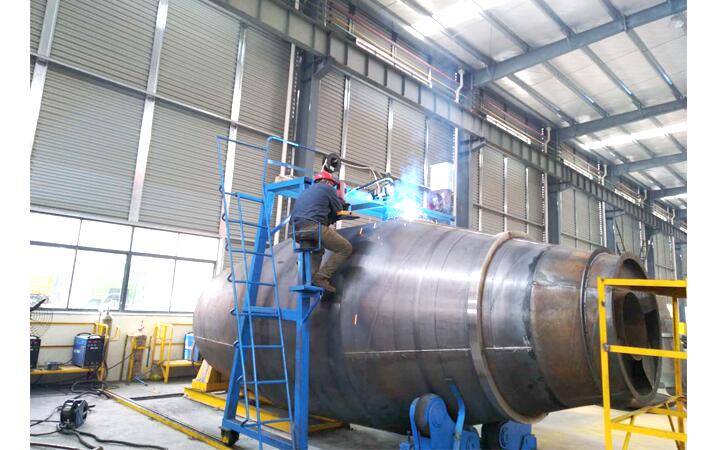 Concrete Mixer Drum Robotic Welding Solutions
 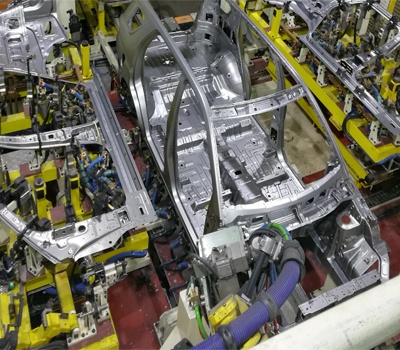 Automobile Body Production Line Welding Fixtures
 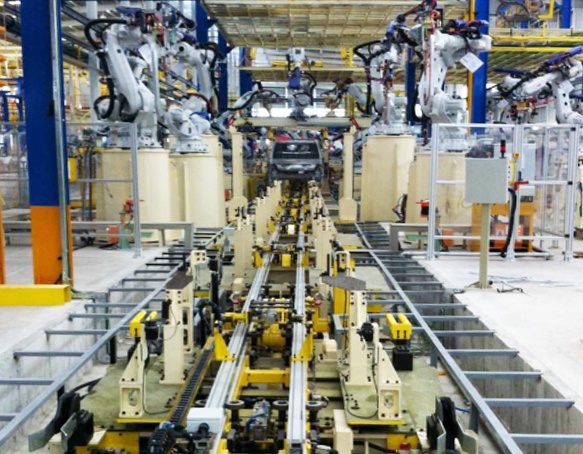 Automotive Body Welding Automated Manufacturing Solutions
 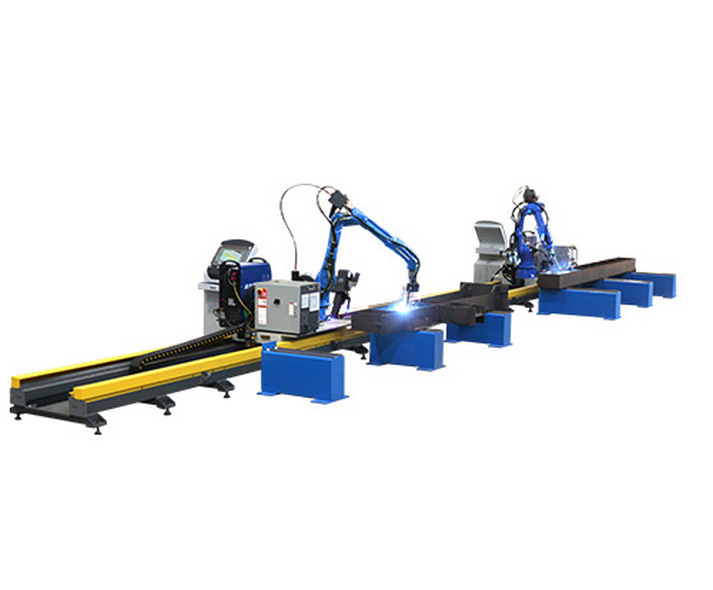 Free-Teaching Programming Welding Robot Cell For I Beam Welding
 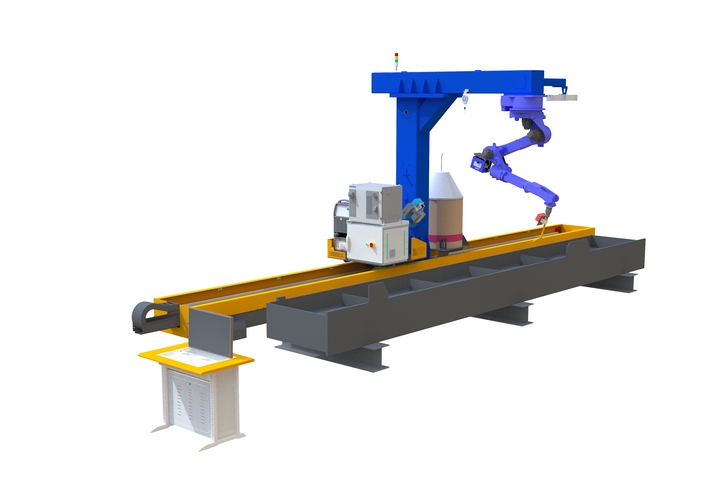 No Programming Required Robotic Welding Systems for H beam Welding Line