What Your Stainless Steel Pipe Welding Machine Won't Tell You About Oxidation
2026-02-25 16:01:06
You can make a weld look perfect on the outside and have it fail internals inspection before the part cools down.
We learned this the hard way about three years ago, when a client in the food processing industry rejected six of our stainless steel pipe welding machine installations—not because the equipment failed, but because every single weld they cut for internal inspection showed blue oxide on the root. The front side looked like a magazine cover. The back side looked like someone had torched it with a propane gun.
The problem wasn't the arc. It was what happened behind the arc.
This isn't a story about pulse settings or travel speed optimization. It's about the stuff that happens on the side of the weld you can't see while you're running an automatic steel pipe welding machine. And it's the reason we changed how we think about gas delivery on stainless applications.
The Oxide Layer You Didn't Know You Were Leaving Behind
Here's what every automatic steel pipe welding machine suppliers loves to show you: bead photos. Shiny, silver, perfectly stacked dimes on the outside of the pipe. They put these in brochures. They put them on websites. They put them on trade show monitors looping all day long.
Here's what they don't show you: the inside of that same pipe after the weld cools.
We started cutting test coupons on every ss pipe welding machine we sent out for stainless validation runs. Not just bend tests—cross-sections through the root. What we found kept us up at night.
On jobs where the outside looked flawless, the inside was often straw-colored at best, blue-black at worst. The client couldn't see it during installation. But six months into service, in a caustic washdown environment, those oxide layers flaked off and contaminated product lines.
The steel pipe welding machine had performed exactly as programmed. The problem was that nobody had programmed it to care about what happens on the backside.
The Purge Assumption That Costs You Money
Most fabricators know they need purge gas for stainless. What they don't realize is that their stainless steel pipe welding machine setup is fighting against basic physics every time they strike an arc.
We watched a job shop burn through argon on 8-inch schedule 10s 304L for months. Their automatic steel pipe welding machine ran fine. Their purge dams sealed tight. Their flowmeters showed 15 CFH. And still, every root showed discoloration.
The issue wasn't purge volume. It was purge turbulence.
When you're running an orbital head on a ss pipe welding machine, the heat doesn't stay in one place. It travels around the circumference. On the top of the pipe, the hot metal is above the purge zone. On the bottom, it's below. The heated argon behaves differently in those two positions—it stratifies, it creates eddies, it lets oxygen sneak in along the edges.
We started running experiments with different purge configurations. What we found: on pipe over 4 inches in diameter, standard end-to-end purging creates dead zones where oxygen levels spike above 1000 ppm right at the weld zone, even if your meter at the vent port reads 50 ppm.
The fix wasn't sexy. It wasn't a software update. It was adding a second vent port at the 12 o'clock position and programming our steel pipe welding machine to delay start until both ports confirmed oxygen below 100 ppm. It added 90 seconds to each weld cycle. It eliminated root oxidation completely.
Why "Automatic" Doesn't Mean "Hands-Off" on Stainless
There's a dangerous phrase we hear from customers buying their first automatic steel pipe welding machine: "Set it and forget it."
Stainless doesn't work that way.
We had a client running production on thin-wall 316L with one of our stainless steel pipe welding machine units. The first shift ran beautifully—98% first-pass acceptance. Second shift came in, loaded the next batch of pipe, and burned through three consecutive welds before anyone hit the stop button.
Same machine. Same program. Same operator. Different material batch.
Turns out, the second batch of pipe had residual magnetism from the mill—enough to pull the arc off center by about 1.5mm. On a 1.6mm wall, that's the difference between a perfect root and a window.
The ss pipe welding machine didn't know the magnetic field had changed. It just kept running the program.
We now include a pre-weld magnetic field check in every stainless procedure we write. If the field reads above 5 gauss, we run a different program with higher frequency and narrower oscillation. It's not in the manual. It's not in the sales brochure. It's in the field notes we collected after watching good equipment fail on bad material.
The Voltage Drift Nobody Talks About
Ask any automatic steel pipe welding machine suppliers about arc voltage control, and they'll tell you their system compensates automatically. And it does—for the first few millimeters.
What they don't tell you is what happens after 15 minutes of continuous welding on stainless.
We set up a test rig with thermocouples on the torch body of a competitor's steel pipe welding machine and ran production-length welds on 6-inch schedule 40s 304. By the tenth weld, the torch body temperature had climbed from ambient to 140°F. By the twentieth, it was over 200°F.
The voltage feedback loop assumed the torch was still at room temperature. The arc length drifted by nearly 0.8mm. The penetration profile changed. The root went from fully fused to cold lapped, and nobody noticed until the X-ray came back.
We redesigned our stainless steel pipe welding machine torch cooling after that test. Not just water cooling on the torch—active cooling on the cables. Because the voltage drop across a hot cable changes just enough to trick the feedback loop into thinking it needs more power.
It's not a feature anyone asks for. It's a feature we added because we watched good welds turn bad for reasons that had nothing to do with the weld program.
What We Learned From 200 Stainless Pipe Welds
Last year, we ran a controlled study. Two hundred stainless steel pipe welds using various configurations of our ss pipe welding machine equipment. We tracked every variable: purge time, torch temperature, cable length, grounding position, material batch, operator experience.
The results surprised us.
The single biggest predictor of root quality wasn't arc stability or purge time. It was ground clamp placement.
On welds where the ground clamp was more than 18 inches from the weld joint, we saw a 23% increase in root oxidation indicators. The magnetic field generated by the current path was pulling the arc enough to change the heat distribution, which changed the cooling rate, which changed the oxide formation on the backside.
We now include ground clamp positioning diagrams with every automatic steel pipe welding machine we ship for stainless work. It feels ridiculous—telling experienced welders where to put a ground clamp. But the data doesn't lie. Location matters more than most people think.
The Supplier Question That Actually Matters
If you're evaluating automatic steel pipe welding machine suppliers for stainless work, you're going to see a lot of demos. They'll weld perfect pipe with perfect fit-up and perfect purge, and the results will look like jewelry.
Ask them to bring a piece of pipe with mill scale. Ask them to run it with the ground clamp on the far end. Ask them to let the torch heat soak for an hour before the first weld.
Watch what happens.
The machines that handle those conditions—not just tolerate them, but handle them consistently—are the ones worth buying.
We built ours by failing enough times to learn what actually matters in stainless fabrication. Not what matters in a demo bay. Not what matters in a brochure. What matters at 3:00 AM on a Friday when the second shift is trying to finish a spool before the weekend.
If you're fighting oxidation problems that your current steel pipe welding machine won't solve, call us. Bring your worst pipe. We'll run it together. And if our machine can't handle it, we'll tell you why—and show you what we're doing to fix it for the next one.





 Chinese
 English
 OA
OA Current location:
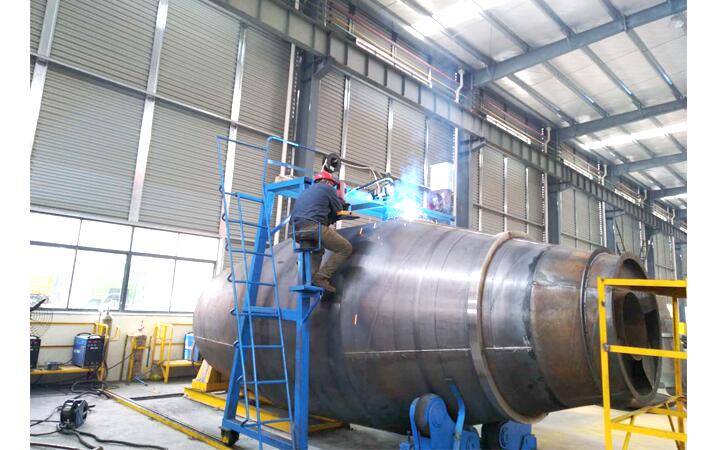 Concrete Mixer Drum Robotic Welding Solutions
 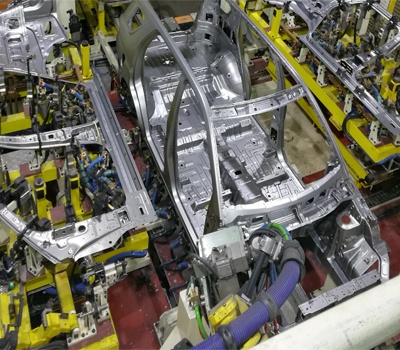 Automobile Body Production Line Welding Fixtures
 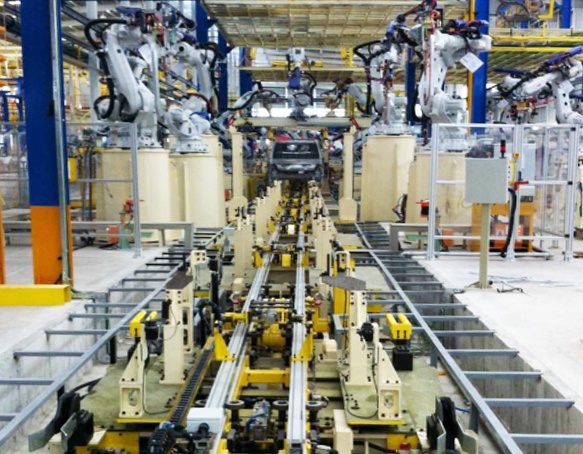 Automotive Body Welding Automated Manufacturing Solutions
 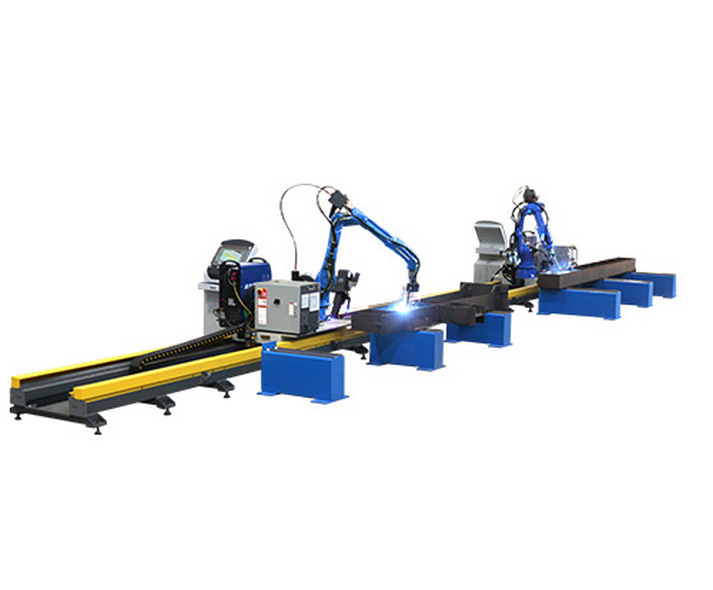 Free-Teaching Programming Welding Robot Cell For I Beam Welding
 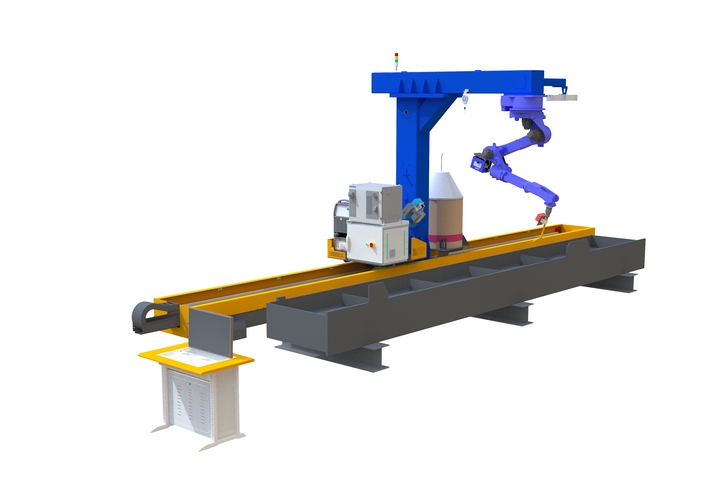 No Programming Required Robotic Welding Systems for H beam Welding Line