+86 15633683072
Heat exchanger manufacturing is under pressure. Tighter quality standards. Shorter delivery windows. Rising labor costs. And a workforce that's getting harder to find.
The bottleneck in most heat exchanger shops isn't design or materials. It's the tube-to-tubesheet joint—the critical connection where thousands of tubes meet the tubesheet. One bad weld can compromise the entire unit. And doing it manually, tube by tube, is slow, inconsistent, and exhausting.
This is where the right tube to tubesheet welding machine changes everything.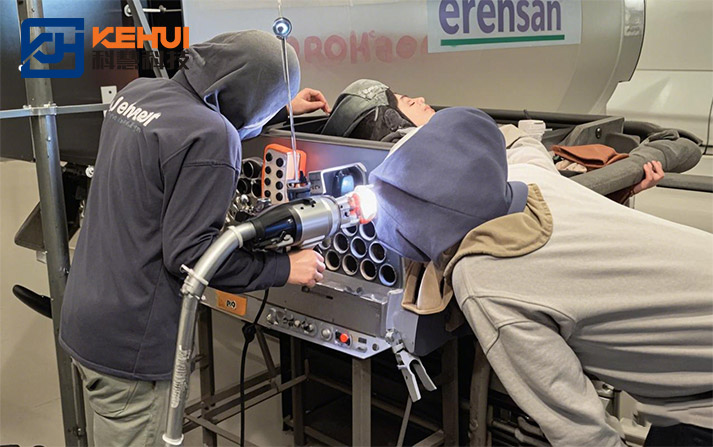
Heat exchanger manufacturing relies on thousands of tube-to-tubesheet joints per unit. Each joint must be leak-tight welding—no pinholes, no cracks, no contamination between the shell and tube sides.
Traditional manual GTAW (gas tungsten arc welding) relies on skilled welders working in cramped spaces, often in awkward positions. Fatigue sets in. Quality drifts. Rework piles up.
Heat exchanger welding is uniquely demanding because:
Tube count is high — some exchangers have 5,000+ tubes
Access is limited — tubes are packed tightly
Material is sensitive — stainless steel, titanium, and nickel alloys are common
Consistency is everything — one weak joint can cause cross-contamination and total failure
A tube to tubesheet welding machine automates this process, delivering consistent, repeatable results on every joint.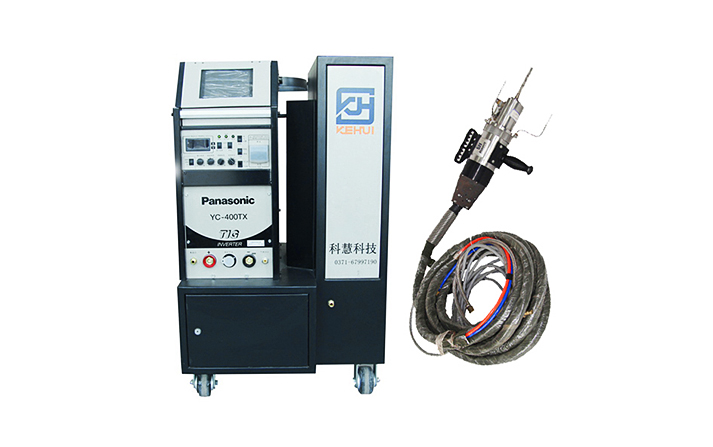
An automatic tube welding machine for tube-to-tubesheet applications uses orbital GTAW (TIG) technology. The welding head mounts on or in the tube and rotates 360° around the joint. The arc, travel speed, and wire feed are precisely controlled.
Here's what changes when you move from manual to automatic tube welding solutions:
Manual welding of a single tube-to-tubesheet joint can take 2-3 minutes, depending on tube diameter and wall thickness. An automatic tube welding machine typically completes the same joint in 30-60 seconds—a 50-75% reduction in cycle time. One company reported a 35% decrease in overall project time after transitioning to orbital welding.
Manual welds vary by operator, time of day, and fatigue level. An automatic tube welding machine delivers the same heat input, same travel speed, and same wire feed on joint #1 and joint #1,000. The result is repeatable welding that passes inspection every time.
Manual stainless steel tube welding on tubesheets often requires grinding, re-welding, and re-inspection. Rework rates of 5-10% are common. With an automatic tube welding machine, rework typically drops to under 2%—sometimes under 1%. That means fewer scrapped tubes, less labor, and faster project completion.
Tube-to-tubesheet welding is physically demanding. Welders crouch, reach, and hold awkward positions for hours. An automatic tube welding machine does the work. The operator monitors the process, positions the head, and starts the cycle—reducing physical strain and improving retention of skilled workers.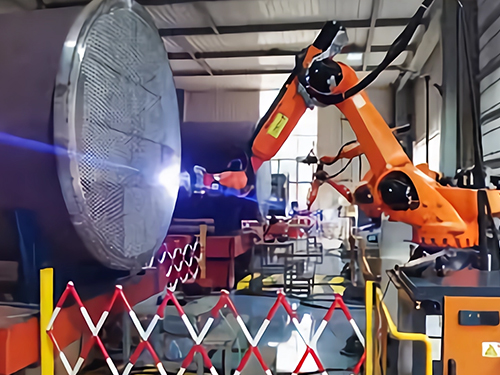
A modern tube to tubesheet welding machine is more than a motor and a torch. It's a precision system.
GTAW tube welding (gas tungsten arc welding, also known as TIG) is the standard for tube-to-tubesheet joints. It offers:
Precise heat control for thin-wall tubes
Clean, contamination-free welds
Compatibility with stainless steel, titanium, nickel alloys, and carbon steel
Automatic GTAW tube welding systems use programmable pulse parameters to manage heat input, reducing distortion and preventing burn-through on thin-wall tubes.
Some manufacturers use tube expansion alone to secure tubes in the tubesheet. Others use welding alone. The best approach for leak-tight welding is often a combination—expansion provides mechanical strength, and welding provides a leak-tight seal.
An automatic tube welding machine can be integrated into a workflow that includes both expansion and welding, streamlining the entire tube sheet welding process.
Accurate alignment is critical. The welding torch must be precisely centered on each tube. Modern tube to tubesheet welding machine systems use servo drives with positioning accuracy of ±0.02mm. The welding head clamps firmly around each tube end, ensuring consistent arc length and penetration.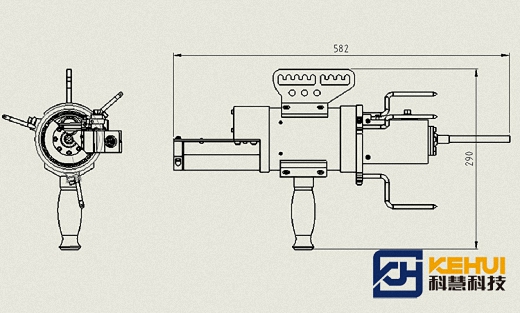
Faster welding cycles + less rework = shorter production times. Manufacturers who switch to automatic tube welding solutions often reduce lead times by 20-40%.
One operator can monitor multiple automatic tube welding machine stations. The same output that required 5 manual welders can be achieved with 1-2 operators and automated equipment.
Weld consistency improves dramatically. Automated GTAW tube welding produces joints that meet ASME Section VIII, TEMA, and other industry standards with minimal variation.
Modern tube to tubesheet welding machine systems log every weld parameter—amperage, voltage, travel speed, wire feed, and gas flow. This data is invaluable for quality audits and traceability.
A good tube to tubesheet welding machine handles a range of tube diameters and materials. The KHB12-80, for example, covers tubes from 12mm to 80mm diameter. This versatility allows heat exchanger manufacturers to handle diverse project requirements without multiple machines.
China tube to tubesheet welding machine manufacturers have made significant advances in recent years. The technology gap with Western brands has narrowed considerably, while pricing remains competitive—often 30-50% lower.
A reputable tube to tubesheet welding machine manufacturer like KEHUI offers:
32 years of experience in automated welding equipment (founded 1994)
Global reach — equipment exported to over 50 countries
Engineer-led training available at customer facilities worldwide
After-sales support with spare parts and technical assistance
Technology comparable to international standards at competitive prices
Choosing a China tube to tubesheet welding machine doesn't mean compromising quality. It means accessing advanced automatic tube welding solutions at a price that makes automation accessible to more manufacturers.
Switching to an automatic tube welding machine requires planning:
1. Operator training. Even automated equipment needs skilled operators. Look for a tube to tubesheet welding machine manufacturer that provides on-site training.
2. Procedure qualification. Develop and qualify welding procedures for your specific tube materials, diameters, and wall thicknesses.
3. Workflow integration. The automatic tube welding machine should fit into your existing production flow—tube preparation, expansion (if used), welding, and inspection.
4. Maintenance. Regular maintenance of welding heads, power supplies, and gas systems ensures consistent weld consistency over time.
5. Spare parts. Ensure your supplier can provide consumables and replacement parts quickly to minimize downtime.
Tube to tubesheet welding is the process of joining tubes to the tubesheet in heat exchangers, boilers, and pressure vessels. The weld creates a leak-tight seal between the tube and the tubesheet, preventing cross-contamination between fluids.
The quality of tube-to-tubesheet joints directly affects heat exchanger performance and service life. Defective joints can cause fluid mixing, reduced thermal efficiency, and premature equipment failure.
Automatic tube welding reduces cycle time per joint by 50-75%, eliminates operator fatigue, minimizes rework, and allows one operator to monitor multiple machines. One company reported a 35% decrease in project time after switching to orbital welding.
Tube to tubesheet welding machines are used in power generation, oil and gas, chemical processing, pharmaceutical, food processing, HVAC, and nuclear industries.
Yes. Stainless steel tube welding is one of the most common applications for automatic tube welding machines. Automatic GTAW (TIG) welding with precise heat control produces clean, oxidation-free welds on stainless steel tubes.
Consider tube diameter range (your minimum and maximum tube sizes), materials (stainless, titanium, nickel alloys, carbon steel), production volume, available space, training and support from the tube to tubesheet welding machine manufacturer, and total cost of ownership—not just purchase price.
Zhengzhou Kehui Technology Co., Ltd
Email: info@zzkehui.com





 Chinese
 English
 OA
OA Current location:
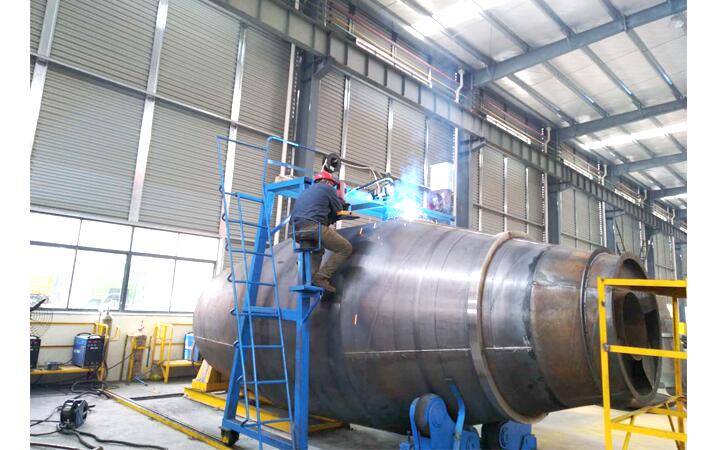 Concrete Mixer Drum Robotic Welding Solutions
 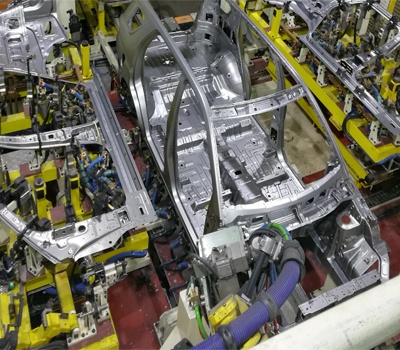 Automobile Body Production Line Welding Fixtures
 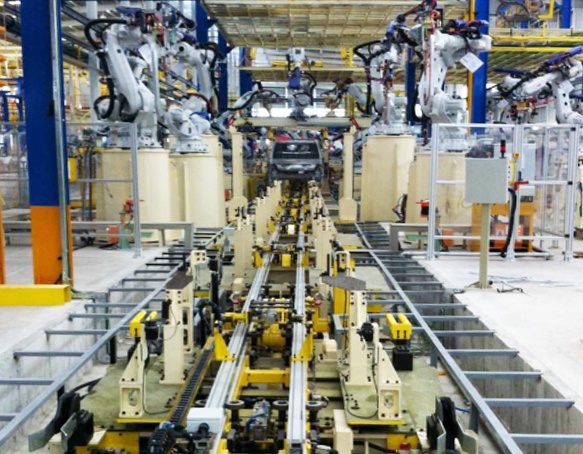 Automotive Body Welding Automated Manufacturing Solutions
 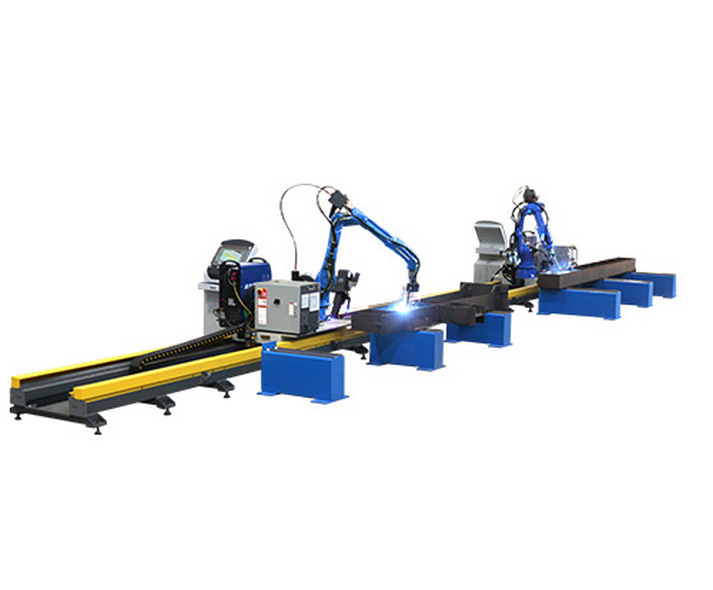 Free-Teaching Programming Welding Robot Cell For I Beam Welding
  No Programming Required Robotic Welding Systems for H beam Welding Line