+86 15633683072
In a semiconductor fab, one bad weld can scrap millions of dollars of product. Not because the weld looks bad. Because the tiniest particle or trace of moisture inside a gas line ruins an entire batch of microchips.
That’s why semiconductor facilities don’t trust manual welding for their ultra‑high‑purity gas systems. They depend on automated processes – specifically high purity orbital welding – to deliver consistent, contamination‑free joints. Every time.
We’ve been building high purity orbital welding equipment since 1994. We’ve shipped to over fifty countries, including some of the world’s largest semiconductor fabs. And we’ve learned exactly why the orbital welding head is non‑negotiable when you’re welding stainless steel tube for sub‑fab and process gas lines.
Here’s what makes high purity orbital welding essential for semiconductor facilities – and why stainless steel tube welding for gas distribution requires a level of precision that only an automated orbital welding head can provide.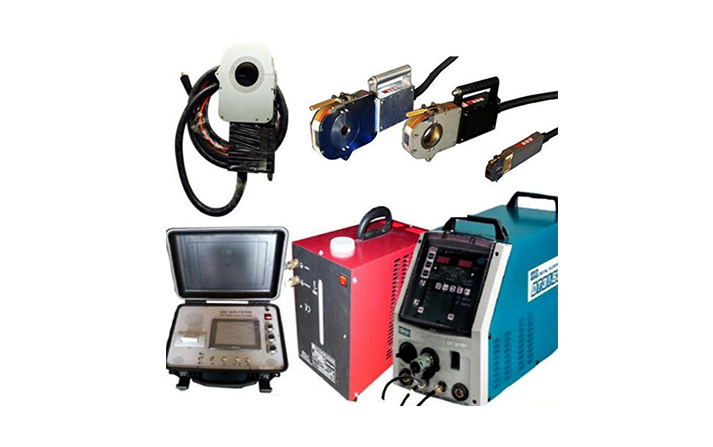
Manual TIG welding, even when done by a skilled welder, introduces variables. The torch angle changes. The arc length drifts. The filler wire touches the tungsten. Each of these variables can create microscopic spatter, tungsten inclusions, or oxidation inside the tube.
In a semiconductor fab, those microscopic defects become particle generators. Gas flowing through the line knocks loose tiny fragments. Those fragments land on a wafer. The wafer is ruined.
High purity orbital welding eliminates the human hand from the arc. An orbital welding head clamps around the tube. The tungsten rotates around the joint with fixed arc length, fixed travel speed, and fixed gas coverage. No drift. No spatter. No inclusions.
We’ve seen fabs reject entire batches of stainless steel tube welding done manually because the root showed signs of oxidation that wouldn’t even be visible to the naked eye. When they switched to high purity orbital welding with a closed orbital welding head, the reject rate dropped to near zero.
That’s why orbital welding for semiconductor gas lines is not a preference – it’s a requirement in most modern fabs.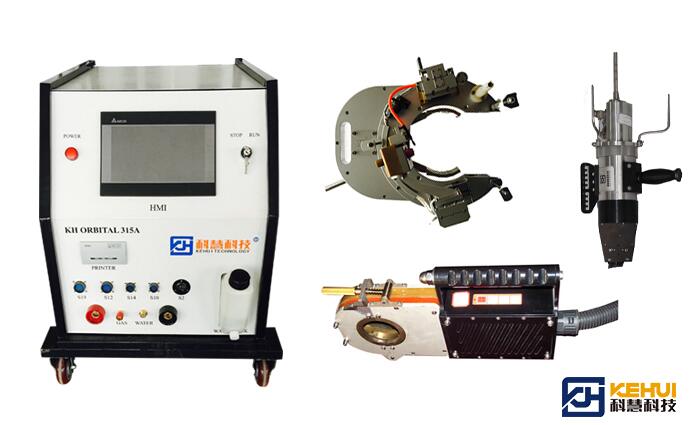
Not every orbital welding head is suitable for high purity orbital welding. Open‑head designs, where the weld zone is exposed to shop air, allow oxygen to reach the root. That creates chromium oxide – visible as blue or grey discoloration on the inside of the tube.
For stainless steel tube welding in semiconductor service, the root must be silver or pale straw. Any blue or grey indicates oxidation that compromises corrosion resistance and creates particle sources.
A closed orbital welding head seals the weld zone inside a chamber filled with inert gas (argon or argon‑hydrogen mix). The high purity orbital welding process monitors oxygen levels before striking the arc – typically requiring less than 50 ppm.
Our KHGC closed orbital welding head is specifically designed for stainless steel tube welding in high‑purity applications. The chamber is purged automatically. The orbital welding for semiconductor gas lines procedure ensures that the root is fully protected from the moment the arc starts until the post‑flow ends.
We’ve supplied high purity orbital welding systems to fabs in the US, Europe, and Asia. Every one of them uses a closed orbital welding head for their critical stainless steel tube welding applications.
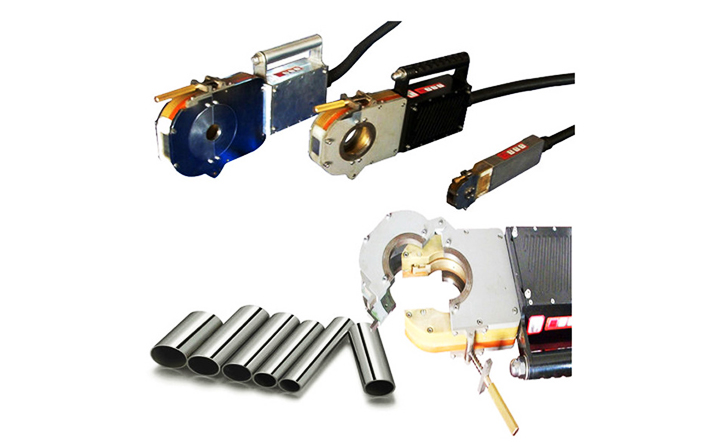
Semiconductor gas lines are typically electropolished inside. The smooth surface prevents particle adhesion and reduces outgassing. High purity orbital welding must preserve that surface finish.
A manual weld can create a rough interior bead profile. The orbital welding head, properly programmed, produces a consistent, smooth root that matches the parent tube’s surface finish.
We’ve worked with fab engineers who require documented surface finish measurements before and after stainless steel tube welding. Our orbital welding for semiconductor gas lines procedures include parameters that minimize heat input and control bead shape – leaving a root that requires no post‑weld finishing.
That’s impossible with manual welding. The variation in hand speed and arc length makes consistent bead profile unattainable. High purity orbital welding with a closed orbital welding head delivers the repeatability that semiconductor quality standards demand.
Semiconductor fabs operate under strict quality systems. Every weld must be documented. Every parameter must be recorded.
An orbital welding head connected to a modern power source logs every variable: amperage, voltage, travel speed, gas flow, interpass temperature. That data becomes part of the weld record for the life of the fab.
When you do stainless steel tube welding manually, you have no such record. You can inspect the weld afterward, but you can’t prove what happened during the weld.
High purity orbital welding provides full traceability. Our systems generate weld logs that can be printed, stored electronically, or integrated into fab management software. That’s why orbital welding for semiconductor gas lines is specified in most fab construction contracts.
We’ve had customers choose our orbital welding head systems over cheaper alternatives specifically because our data logging meets SEMI standards. The high purity orbital welding records are accepted by fab auditors worldwide.
A semiconductor facility in Southeast Asia was struggling with particle counts in their specialty gas distribution system. They were using manual TIG for stainless steel tube welding on 1/4″ lines. Despite careful procedures, they saw occasional contamination.
They brought in our KHGC closed orbital welding head and qualified high purity orbital welding procedures on their tube, with their purge gas, in their cleanroom‑adjacent sub‑fab.
The results: zero particle generation from the welded joints. The stainless steel tube welding root was consistently silver. The orbital welding for semiconductor gas lines data logs satisfied their quality audit.
They’ve since converted all critical stainless steel tube welding to high purity orbital welding using our orbital welding head systems. Their scrap rate from gas‑related defects dropped by over 80%.
If you’re specifying high purity orbital welding equipment for a fab project, here’s what matters:
Closed head design – The orbital welding head must seal the weld zone completely. No open‑head designs for stainless steel tube welding in semiconductor service.
Oxygen monitoring – The high purity orbital welding system should measure oxygen in the purge before welding. Anything above 50 ppm is unacceptable.
Data logging – The orbital welding head controller must record parameters for every stainless steel tube welding joint. The data should be exportable and tamper‑proof.
Small tube capability – Semiconductor gas lines can be as small as 1/8″. Your orbital welding head must handle these diameters. Our KHGC accommodates tubes down to 1/4″; custom tooling can go smaller.
Training and support – High purity orbital welding requires skilled operators. The orbital welding for semiconductor gas lines procedures must be qualified on your actual tube, with your purge setup.
We provide all of this. When you buy a high purity orbital welding system from us, we send an engineer to your facility – anywhere in the world – to qualify stainless steel tube welding procedures on your tube, train your operators, and support you through the first production runs.
Semiconductor facilities depend on high purity orbital welding because the cost of a single weld failure is measured in millions of dollars of scrapped wafers. Manual stainless steel tube welding cannot deliver the consistency, cleanliness, and documentation that fabs require.
A closed orbital welding head – properly programmed, properly purged, and properly logged – eliminates the variables that cause contamination. That’s why orbital welding for semiconductor gas lines is the standard, not the exception.
We’ve been building high purity orbital welding equipment since 1994. We’ve helped fabs in over fifty countries achieve the weld quality their processes demand.
If you’re designing a semiconductor gas system or upgrading your stainless steel tube welding capabilities, call us. We’ll recommend the right orbital welding head for your tube sizes, qualify high purity orbital welding procedures on your material, and train your team.
Because in the world of semiconductor manufacturing, there’s no room for “good enough.” Only high purity orbital welding delivers the certainty that fabs require.
Zhengzhou Kehui Technology Co., Ltd
Email: info@zzkehui.com





 Chinese
 English
 OA
OA Current location:
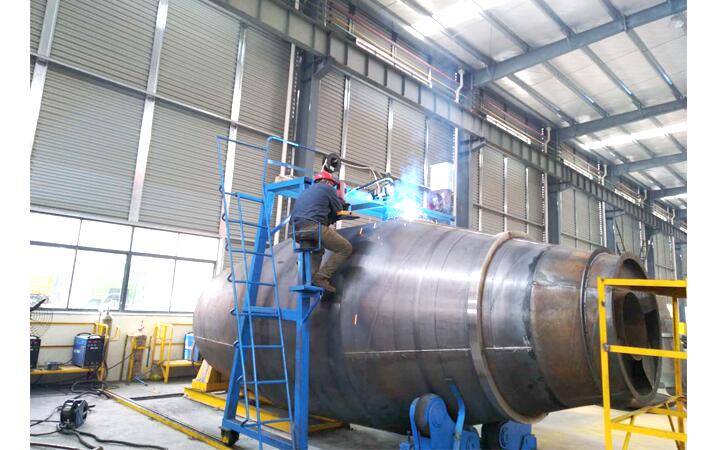 Concrete Mixer Drum Robotic Welding Solutions
 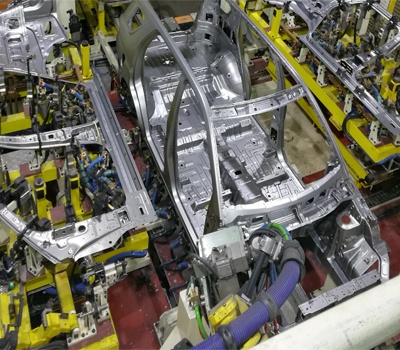 Automobile Body Production Line Welding Fixtures
 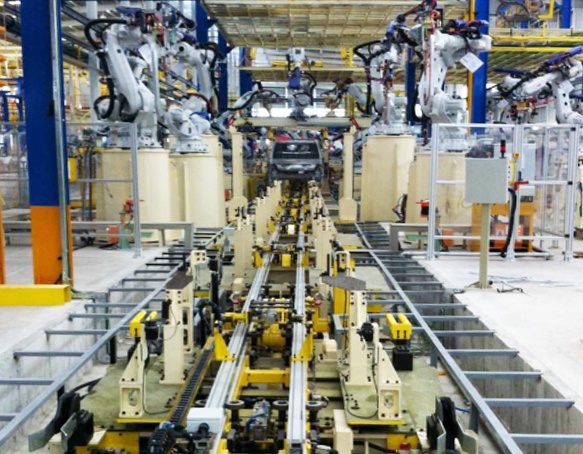 Automotive Body Welding Automated Manufacturing Solutions
 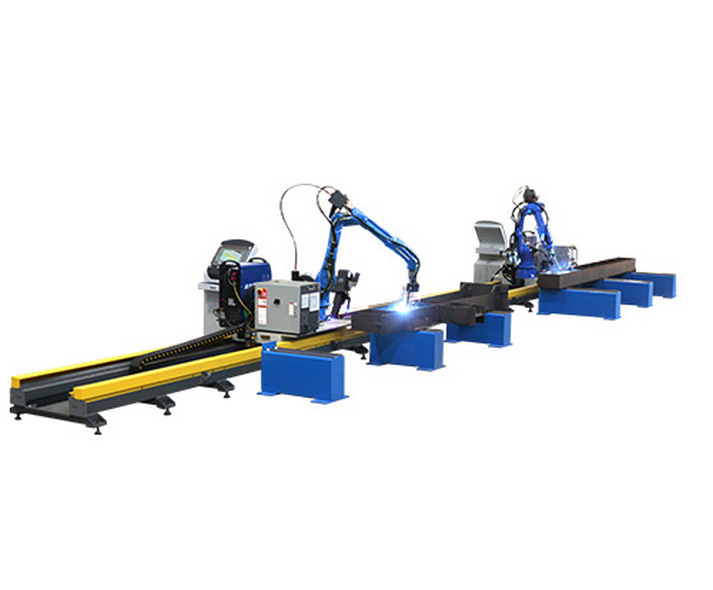 Free-Teaching Programming Welding Robot Cell For I Beam Welding
 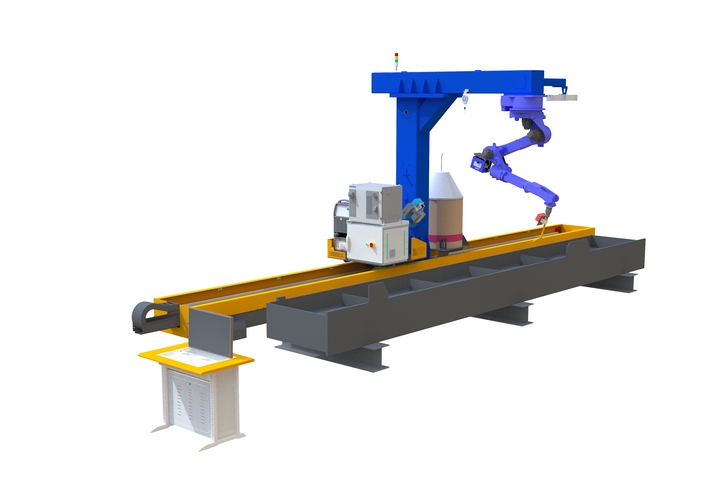 No Programming Required Robotic Welding Systems for H beam Welding Line