Orbital Welding System for Pipe to Pipe Joint | China Manufacturer
2026-03-31 15:36:15
Ask most equipment suppliers to demonstrate an orbital welding system for pipe to pipe joint, and they'll set up a perfect scenario. New pipe. Clean bevels. Consistent gap. Climate-controlled room. The weld looks like a piece of jewelry.
Then you take that same orbital welding system for pipe to pipe joint to your shop. The pipe has been sitting in the yard for three weeks. The bevels have light rust. The fit-up varies by a millimeter or two. Suddenly, the beautiful welds from the demo are nowhere to be found.
We've been building automatic orbital welding machine for pipe applications since 1994. We've shipped equipment to over fifty countries. And we've learned that the real test of an orbital welding system for pipe to pipe joint isn't how it performs on perfect pipe in perfect conditions. It's how it performs on Tuesday afternoon when nothing is perfect.
Here's what we've learned about what actually makes an orbital welding system for pipe to pipe joint work in the real world—not just in the demo bay.
The Fit-Up Assumption That Ruins Pipe to Pipe Joints
The single biggest cause of failure in an orbital welding system for pipe to pipe joint is not the machine. It's the assumption that the pipe ends will meet perfectly.
They won't.
We had a client in the oil and gas sector who bought an automatic orbital welding machine for pipe from a competitor. The machine worked beautifully on their test coupons. Then they put it into production on a 12-inch pipeline. The pipe had been stored outdoors. The ends were slightly out of round. The gap varied by 2mm around the circumference.
The machine tried to weld. The arc started. But the orbital welding system for pipe to pipe joint had no tolerance for the variation. The root washed out on the tight side and lacked fusion on the open side. Every joint failed.
They called us. We looked at their fit-up. The problem wasn't the machine—it was the process. Their orbital welding system for pipe to pipe joint needed a different approach to tacking, a different welding sequence, and a different set of parameters that could adapt to variation.
We spent a week on site helping them redesign their procedure. The same automatic orbital welding machine for pipe that had been producing 40% rejection now ran at 94% acceptance. The hardware hadn't changed. The understanding of how to use it for real pipe to pipe joint conditions had.
That's the difference between an orbital welding system that works in theory and one that works in production. The machine has to be able to handle what the pipe actually gives you, not what the spec sheet says it should give you.
The Gap Tolerance That Actually Matters
Here's something most manufacturers of automatic orbital welding machine for pipe won't tell you.
They'll quote a gap tolerance number. 1.5mm. 2mm. Something impressive. But that number assumes the gap is consistent around the circumference.
On a real pipe to pipe joint, the gap isn't consistent. It varies. The pipe might be oval by a millimeter. The bevel might be slightly off. The tack welds might have pulled the alignment.
We tested this on our own shop floor. We took an orbital welding system for pipe to pipe joint and ran it on joints with artificially varied gaps. The machine could handle a consistent 2mm gap. But when the gap varied from 1mm to 2.5mm around the circumference, the weld quality dropped significantly.
The solution wasn't a better machine. It was a better understanding of how to use the orbital welding system for pipe to pipe joint on real pipe. More tacks. Smaller tacks. Tacks placed to control the gap, not just hold the pipe together. And in some cases, a two-pass root where the first pass seals the joint and the second pass builds penetration.
We now train every customer on this. The automatic orbital welding machine for pipe can do amazing things. But it can't fix a pipe to pipe joint that wasn't prepared correctly. That's on the people setting up the job, not the machine running it.
The Root Pass: Where Pipe to Pipe Joints Live or Die
Every experienced welder knows: the root pass is everything. If the root is bad, nothing else matters.
The same is true for an orbital welding system for pipe to pipe joint. The root determines whether the rest of the weld has a chance.
We've watched customers spend hours tuning their automatic orbital welding machine for pipe parameters for the fill and cap passes. Beautiful beads. Smooth transitions. Then they cut a cross-section and find a root that's cold-lapped or oxidized or just barely fused.
The problem is that the root pass on a pipe to pipe joint is the hardest part of the weld. The gap is open. The heat is building. The purge is critical. And the orbital welding system has to get it right on the first try because you can't go back and fix a root without cutting the joint out.
We developed a specific approach to root welding on our orbital welding system for pipe to pipe joint. Lower current than most manufacturers recommend. Slower travel speed. A slight oscillation to help bridge the gap. And a purge delay that ensures the oxygen is fully displaced before the arc strikes.
It's not flashy. It doesn't make for a good demo video. But it's what makes the difference between a pipe to pipe joint that passes inspection and one that ends up in the scrap bin.
The automatic orbital welding machine for pipe that wins isn't the one with the most features. It's the one with the most reliable root pass.
The Heat Buildup Problem Nobody Mentions
Here's another thing that doesn't show up in the brochure about an orbital welding system for pipe to pipe joint.
On a long weld—say, 12 inches of circumference or more—the heat builds up as you go. The beginning of the weld is on cold pipe. The end of the weld is on pipe that's been heated by the previous 300 degrees of travel.
If your automatic orbital welding machine for pipe runs the same parameters from start to finish, the weld will be inconsistent. The root at the end will be hotter than the root at the beginning. Penetration will change.
We saw this on a pipe to pipe joint job in Southeast Asia. The customer was welding 8-inch schedule 40s stainless. Their orbital welding system for pipe to pipe joint was running a fixed program. The first 90 degrees of the weld looked perfect. By the time the head reached 270 degrees, the root was burning through.
The solution was adaptive programming. The automatic orbital welding machine for pipe now reduces current and increases travel speed as the weld progresses. It's a small adjustment—maybe 5-10% change over the circumference. But it makes the weld consistent from start to finish.
We built this capability into our orbital welding system for pipe to pipe joint after watching too many customers struggle with heat buildup. It's not something you'll find on every machine. But once you've seen the difference it makes on long pipe to pipe joint welds, you won't want to weld without it.
The Training That Makes the System Work
We started building automatic orbital welding machine for pipe equipment in 1994. Back then, we thought if we built a good machine, customers would figure it out.
We were wrong.
We lost a customer in South America because we shipped an orbital welding system for pipe to pipe joint and sent a manual. They never got it running properly. The machine sat for six months. They never bought from us again.
Now we don't ship any automatic orbital welding machine for pipe without sending an engineer to the customer's facility. Anywhere in the world. We cover the travel. We cover the time. We stay until their people can weld a pipe to pipe joint without us standing behind them.
That training focuses on the things that aren't in the manual. How to set up the pipe to pipe joint for success. How to diagnose problems by listening to the arc. How to adjust parameters when the material changes. How to know when to stop and fix a fit-up issue instead of letting the machine weld through it.
The orbital welding system for pipe to pipe joint is just hardware. The skill is knowing how to use it. And that skill comes from training, not from reading a spec sheet.
Over fifty countries now, we've sent engineers to do that training. The customers who take it seriously are the ones who get the results. The ones who think they don't need it are the ones who call us six months later asking why their pipe to pipe joint welds keep failing.
What to Look for in an Orbital Welding System for Pipe to Pipe Joint
If you're evaluating an automatic orbital welding machine for pipe for your operation, here are the questions that matter:
How does your system handle gap variation? Not just a number—show me. Run a weld on a joint with intentionally inconsistent fit-up and let me see the result.
What's your approach to root welding on pipe to pipe joint? Do you have specific parameters and procedures for the root, or is it just the same as the rest of the weld?
Can your system adapt to heat buildup over long welds? Does it have variable parameters that change as the weld progresses, or is it fixed from start to finish?
What training comes with the orbital welding system for pipe to pipe joint? Is there someone who will come to my shop and teach my people on my pipe? Or am I expected to figure it out from a video?
Where else is your automatic orbital welding machine for pipe running on similar applications? We can give you references in over fifty countries. Talk to them about what worked and what didn't on their pipe to pipe joint jobs.
How long have you been doing this? 1994. That's 31 years of watching what works and what doesn't on pipe to pipe joint welding. We've made the mistakes so you don't have to.
The Bottom Line
An orbital welding system for pipe to pipe joint is a powerful tool. It can produce welds that no human hand can match. It can run for hours with perfect consistency. It can document every parameter for traceability.
But it's still just a tool. It needs a pipe to pipe joint that's prepared correctly. It needs an operator who understands how heat builds up over the course of the weld. It needs a process that accounts for fit-up variation, material chemistry, and purge quality.
We've been building automatic orbital welding machine for pipe equipment since 1994. We've sent engineers to over fifty countries to train operators. We've seen what works and what doesn't on thousands of pipe to pipe joint welds.
If you're looking for an orbital welding system for pipe to pipe joint that actually works in production—not just in the demo bay—call us. Tell us what you're welding. Tell us where you're working. We'll help you figure out what you need.
And if we're not the right fit, we'll tell you that too. We've been doing this long enough to know when someone else's automatic orbital welding machine for pipe makes more sense for your situation.





 Chinese
 English
 OA
OA Current location:
 Concrete Mixer Drum Robotic Welding Solutions
 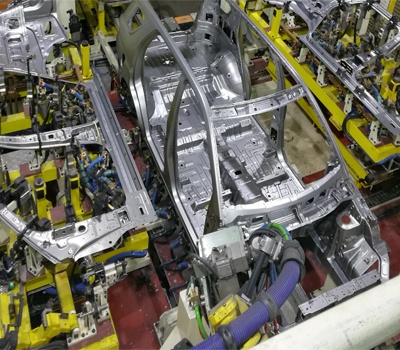 Automobile Body Production Line Welding Fixtures
 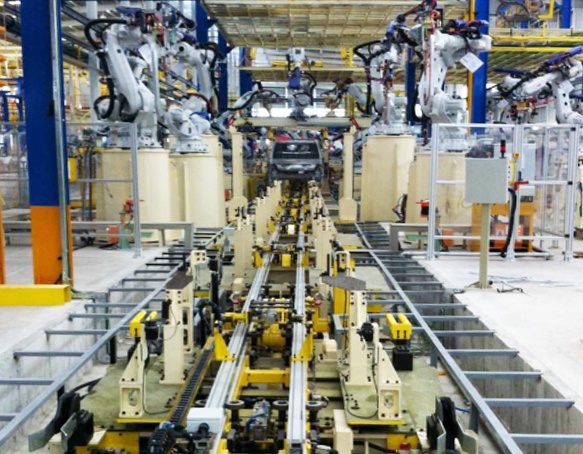 Automotive Body Welding Automated Manufacturing Solutions
 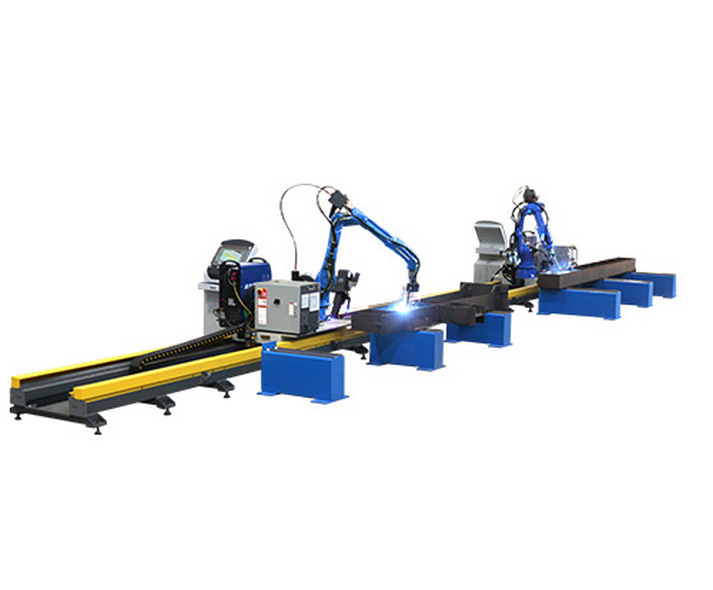 Free-Teaching Programming Welding Robot Cell For I Beam Welding
 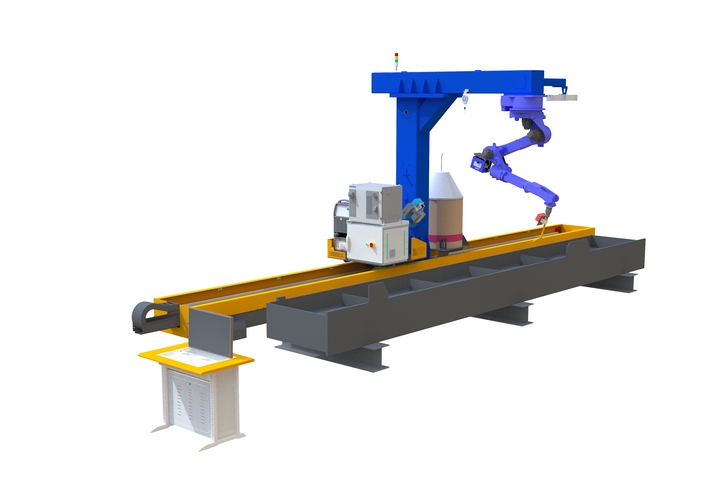 No Programming Required Robotic Welding Systems for H beam Welding Line