+86 15633683072
In a heat exchanger factory, tube sheet welding becomes difficult not because one joint is complicated, but because the same joint may need to be repeated hundreds or thousands of times.
A large shell-and-tube exchanger can contain hundreds of tube holes. Every connection needs consistent positioning, heat input, penetration, and sealing. For manufacturers involved in heat exchanger manufacturing, this makes heat exchanger tube sheet welding a potential production bottleneck.
Manual TIG can produce excellent welds, but maintaining the same torch movement throughout a long production run is difficult. This is where an automatic tube sheet welding machine becomes valuable.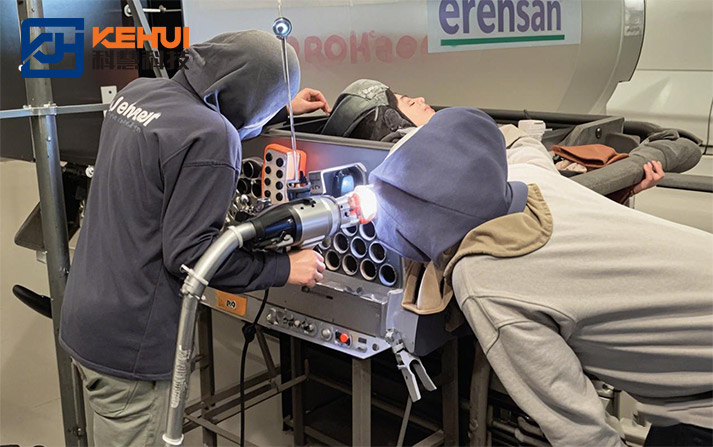
A tube sheet usually has a dense pattern of holes with limited spacing between adjacent tubes. Once the tubes are installed, the operator must access each joint without interfering with neighboring tubes.
In high-volume Heat exchanger manufacturing, manually positioning the torch for every joint consumes considerable time and makes consistency increasingly difficult.
TIG is well suited to precision welding. The challenge is maintaining identical conditions throughout a large number of joints.
During manual TIG tube sheet welding, the operator controls torch angle, arc length, travel speed, current, and heat input. Small variations can affect bead geometry and penetration.
For TIG welding tube sheet joints, operator fatigue can therefore become a process variable rather than simply a labor issue.
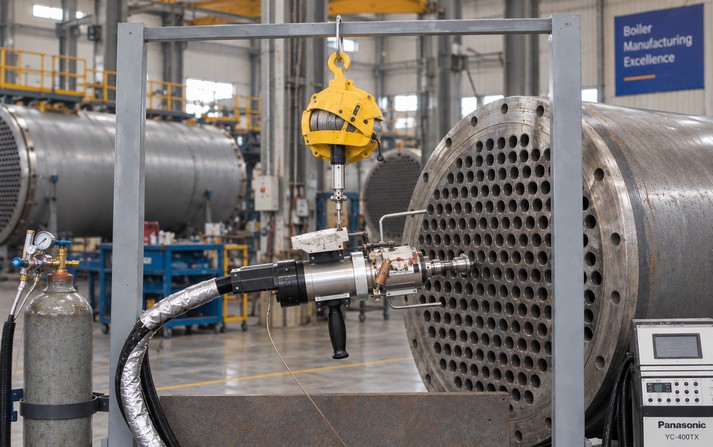
A tube sheet with 300, 500, or more connections turns welding into a repetitive operation. Each joint requires positioning, arc starting, welding, and stopping.
For heat exchanger tube sheet welding, the accumulated production time can become significant.
A slight change in torch angle or travel speed can alter weld width and heat input. When hundreds of TIG welding tube sheet joints are produced, these small differences can accumulate.
Tight tube pitches leave limited access around the joint. The welding head must fit between neighboring tubes while maintaining accurate torch positioning.
This is an important consideration when selecting equipment for heat exchanger tube sheet welding.
During manual TIG tube sheet welding, slowing the torch increases heat input, while excessive travel speed can reduce penetration.
Automated movement helps maintain a more consistent relationship between welding current and travel speed.
Tube to tube sheet seal welding may look simple, but repeating the same seal weld hundreds of times is challenging. Variations in torch movement can produce different bead profiles and penetration conditions.
After several hours of repetitive welding, physical fatigue can affect torch positioning and welding speed.
This is one reason automation is increasingly considered in high-volume Heat exchanger manufacturing.
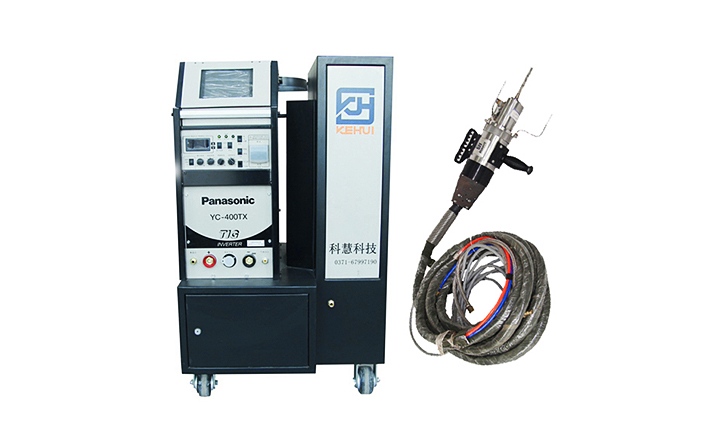
An automatic tube sheet welding machine transfers repetitive torch movement from the operator to a controlled mechanical system.
Depending on the machine configuration, it can control:
The operator establishes the welding procedure and positions the welding head. The machine then repeats the programmed cycle across similar joints.
This makes heat exchanger tube sheet welding more predictable and reduces variation caused by manual torch manipulation.
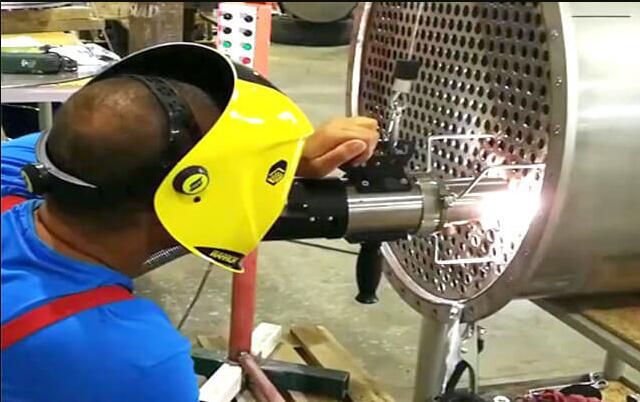
During manual TIG, the operator physically moves the torch around the tube.
With an automatic tube sheet welding machine, the welding head controls the movement mechanically. This helps maintain a consistent travel path and weld geometry.
The machine can store welding parameters for a specific tube and tube sheet combination. These settings can then be reproduced for subsequent joints.
This is particularly useful for TIG tube sheet welding, where controlled heat input is important.
Automation does not eliminate skilled personnel. Instead, it allows operators to focus on:
The machine handles the repetitive movement.
Not every welding system is suitable for every exchanger.
The welding head must fit the actual tube spacing. Tube diameter alone is not enough; the relationship between tube diameter and pitch must also be considered.
The equipment should match the tube sheet geometry and whether the application requires seal welding, strength welding, or another joint configuration.
Stainless steel, carbon steel, and alloy materials may require different TIG parameters.
A suitable automatic tube sheet welding machine should provide adequate control over welding current, pulse settings, travel speed, and shielding conditions.
Automated tube sheet welding can be applied to:
Large numbers of tube-to-sheet connections make these exchangers one of the most suitable applications for automation.
Power-generation equipment often contains large tube sheets where consistent heat exchanger tube sheet welding is important.
Stainless steel and corrosion-resistant alloys are commonly used in process equipment, making controlled TIG welding valuable for reliable tube connections.
Where clean weld profiles and repeatability are important, automated TIG welding can provide better process consistency.
An automatic tube sheet welding machine becomes particularly attractive when:
In these situations, automation addresses both the welding quality issue and the production bottleneck.
For Heat exchanger manufacturing, the most important question is not simply how fast a machine can weld.
A better question is:
Can the factory produce the same acceptable joint hundreds or thousands of times with minimal variation?
That is the real value of an automatic tube sheet welding machine. Consistent torch movement, controlled heat input, repeatable parameters, and reduced operator fatigue can make heat exchanger tube sheet welding more stable and easier to manage.
Answer: An automatic tube sheet welding machine automates the welding of tubes to a tube sheet by controlling torch movement and welding parameters for repeatable joints.
Answer: TIG tube sheet welding provides precise arc control and controlled heat input, making it suitable for many tube-to-sheet connections in heat exchangers.
Answer: TIG welding tube sheet joints means using TIG/GTAW to weld the end of a tube to a tube sheet. The exact joint design depends on the required sealing and mechanical performance.
Answer: Tube to tube sheet seal welding is used to create a leak-resistant welded connection between the tube and tube sheet. The procedure depends on the exchanger design and applicable requirements.
Answer: It is especially useful when a manufacturer produces large numbers of repetitive tube joints and needs better consistency, controlled heat input, and reduced dependence on manual TIG operation.
Zhengzhou Kehui Technology Co., Ltd
Email: info@zzkehui.com





 Chinese
 English
 OA
OA Current location:
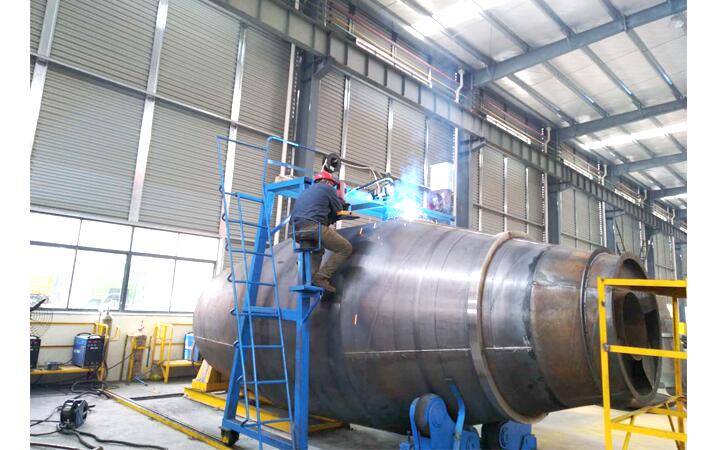 Concrete Mixer Drum Robotic Welding Solutions
 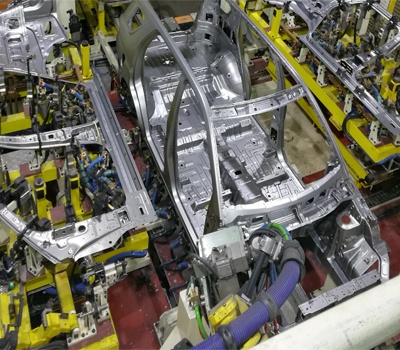 Automobile Body Production Line Welding Fixtures
 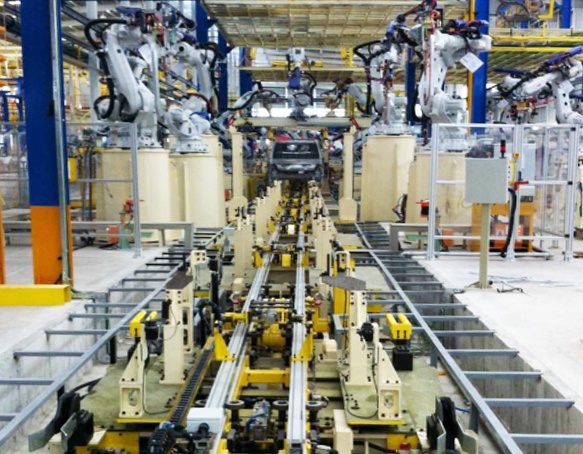 Automotive Body Welding Automated Manufacturing Solutions
 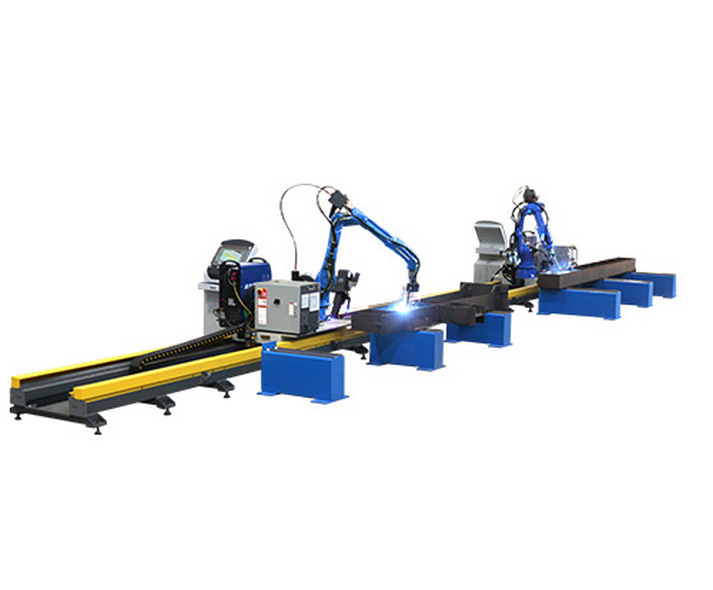 Free-Teaching Programming Welding Robot Cell For I Beam Welding
  No Programming Required Robotic Welding Systems for H beam Welding Line