+86 15633683072
In industrial radiator production, welding tubes to a tubesheet is a critical step for achieving reliable sealing and consistent product quality. A radiator may contain dozens or hundreds of tube joints, making manual welding increasingly difficult to control as production volume grows.
The real challenge in radiator manufacturing is not simply producing one good weld. It is producing hundreds of consistent tube to tubesheet connection welds with stable parameters, accurate positioning, and minimal rework.
A properly designed industrial radiator tube to tubesheet welding solution can help manufacturers standardize the welding process, reduce operator dependence, and improve production efficiency.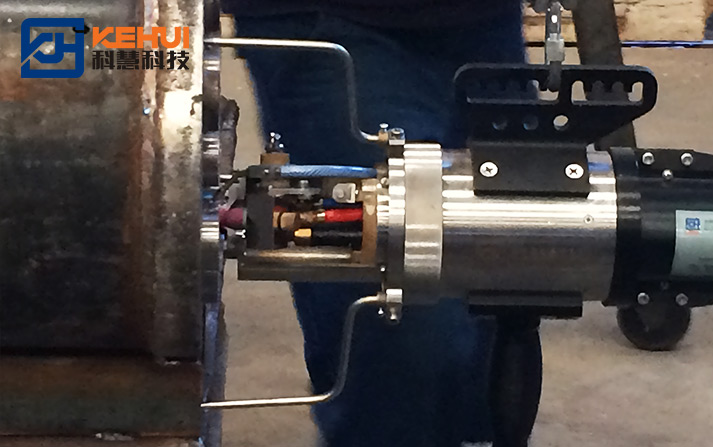
Industrial radiator tube to tubesheet welding joins radiator tubes to a tubesheet or header structure to create a sealed and mechanically reliable tube to tubesheet connection.
The welding process needs to consider:
These factors become especially important when radiator manufacturing involves a large number of repetitive tube joints.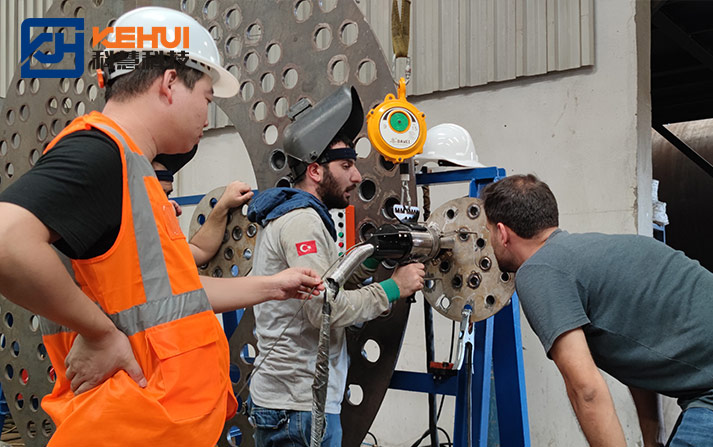
A radiator can have many identical tube joints. When an operator performs the same weld hundreds of times per shift, fatigue and small differences in torch positioning can affect consistency.
For this type of production, a tubesheet welding automatic welding machine can provide more repeatable welding parameters and movement.
Industrial radiators may have closely arranged tubes, leaving limited room for the welding torch.
The welding head therefore needs to reach each joint accurately without interfering with adjacent tubes. Machine accessibility and fixture design are just as important as the welding power source.
Many radiator tubes have relatively thin walls. Excessive heat can result in burn-through, distortion, or poor weld formation.
This is one reason TIG welding radiator tubes is widely considered for applications requiring controlled heat input and precise arc control.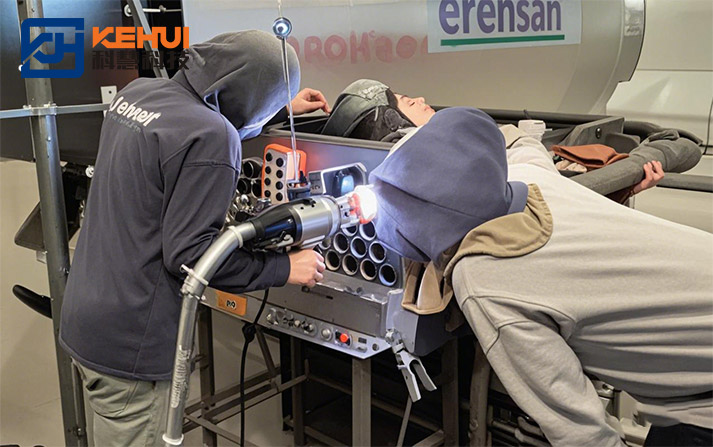
TIG provides accurate control of welding current and arc characteristics, making it suitable for many thin-wall tube applications.
For TIG welding radiator tubes, welding parameters should be matched to the tube material, thickness, joint geometry, and required production quality.
Manual TIG depends heavily on the operator's skill and consistency. In repetitive production, automated torch movement and programmable welding parameters can make the process much more stable.
A tubesheet welding automatic welding machine can repeat the programmed welding cycle across multiple tube positions, reducing unnecessary manual intervention.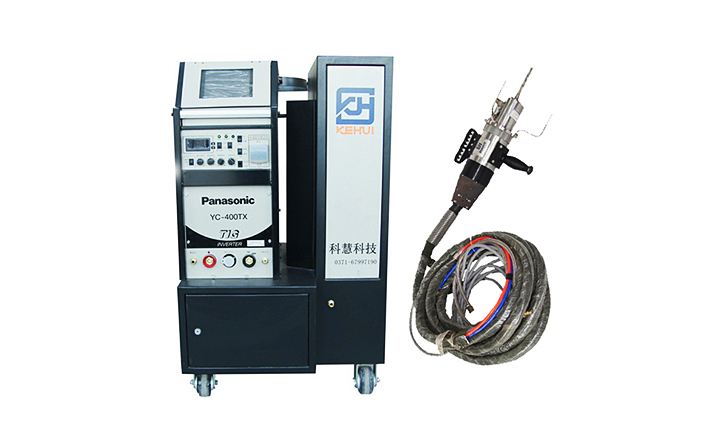
A complete industrial radiator tube to tubesheet welding solution normally includes more than a welding power source.
The welding head maintains the required torch position around the tube joint and performs the programmed welding cycle.
Accurate positioning is essential. If the tubesheet is not properly supported or aligned, even a high-quality welding system cannot guarantee consistent results.
A programmable control system can store welding parameters and coordinate the welding sequence.
A typical cycle may be:
Load radiator → select program → position welding head → weld → move to next tube → repeat
This approach is particularly useful for high-volume radiator manufacturing.
When evaluating automation, manufacturers should consider the complete production process rather than only welding speed.
| Factor | Manual TIG | Automatic Welding |
|---|---|---|
| Operator dependence | High | Lower |
| Welding consistency | Variable | More repeatable |
| Parameter control | Manual | Programmable |
| Repetitive production | Labor-intensive | More efficient |
| Operator fatigue | Higher | Lower |
| Production standardization | Limited | Better |
For small quantities or highly customized radiators, manual welding may still be practical. For factories producing large batches, automation can provide greater consistency and production stability.
A tubesheet welding automatic welding machine becomes especially valuable when:
In these situations, automation can reduce dependence on individual welding skills while improving the repeatability of every tube to tubesheet connection.
Before selecting equipment, manufacturers should provide the supplier with actual production data, including:
Based on these details, the supplier can determine whether a standard machine is suitable or whether a customized industrial radiator tube to tubesheet welding solution is required.
In real radiator manufacturing, welding speed is not always the main bottleneck.
A factory may lose considerable time because operators repeatedly adjust fixtures, position the torch, change parameters, inspect welds, and repair defective joints.
Therefore, an effective industrial radiator tube to tubesheet welding solution should address the complete workflow.
The goal is not simply to replace a manual welder. It is to create a more repeatable process in which positioning, welding parameters, torch movement, and welding sequences can be standardized.
This is particularly important when production volume increases and the factory needs to maintain consistent quality across multiple shifts.
TIG is commonly used where precise heat control and clean weld formation are important. The actual process should be selected according to tube material, thickness, joint design, and production requirements.
Yes. A suitable industrial radiator tube to tubesheet welding solution can automate welding parameters, torch movement, positioning, and repetitive welding cycles.
A tubesheet welding automatic welding machine is designed to automate repetitive welding between tubes and a tubesheet. It can improve welding consistency and reduce repetitive manual work.
The tube to tubesheet connection directly affects sealing performance and the reliability of the radiator assembly. Poor weld consistency can result in leakage, rework, or premature failure.
Yes, when the joint design and equipment are suitable. Automated TIG welding radiator tubes can provide more consistent welding parameters and reduce operator fatigue compared with fully manual TIG welding.
Manufacturers can improve radiator manufacturing by combining accurate fixtures, standardized welding parameters, automatic positioning, and programmable welding sequences. For repetitive tube joints, automation can significantly improve process consistency.
Zhengzhou Kehui Technology Co., Ltd
Email: info@zzkehui.com





 Chinese
 English
 OA
OA Current location:
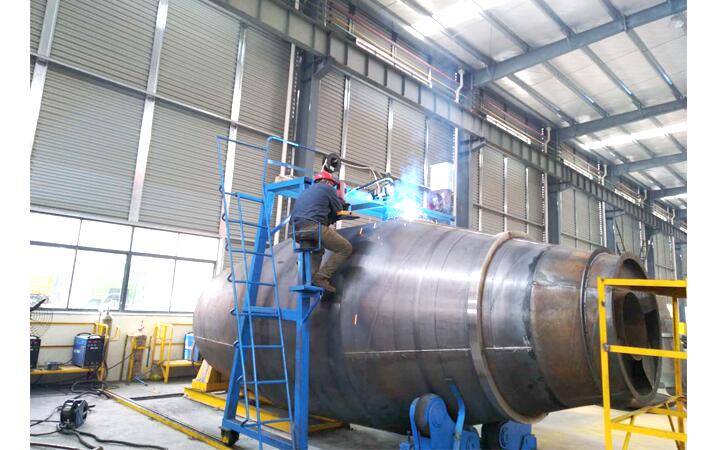 Concrete Mixer Drum Robotic Welding Solutions
 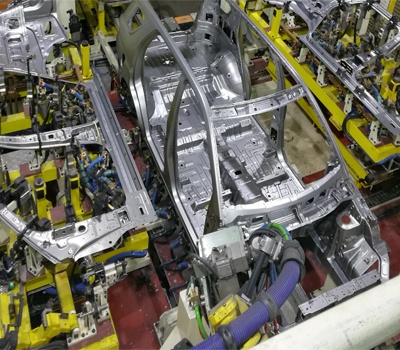 Automobile Body Production Line Welding Fixtures
 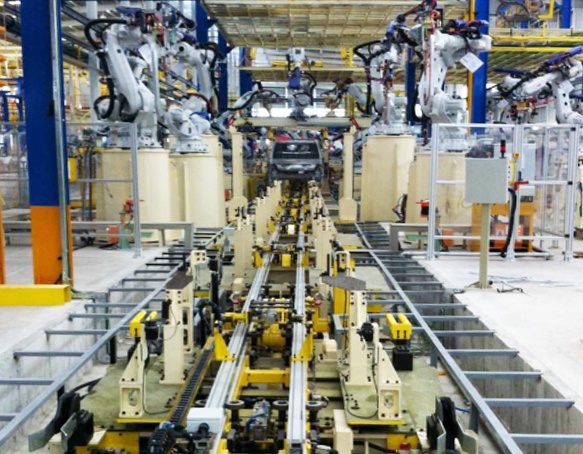 Automotive Body Welding Automated Manufacturing Solutions
 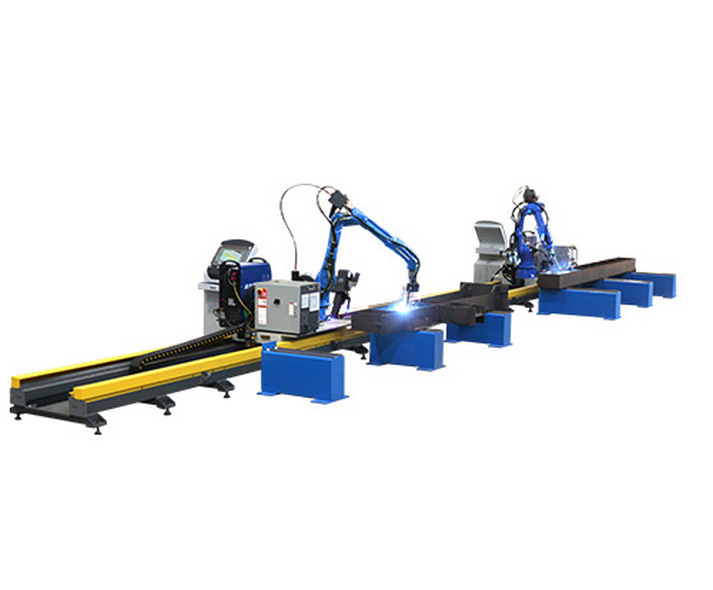 Free-Teaching Programming Welding Robot Cell For I Beam Welding
  No Programming Required Robotic Welding Systems for H beam Welding Line