+86 15633683072
Automatic circumferential welding can improve consistency when welding pipes, pressure vessels, and cylindrical tanks. However, problems such as torch misalignment, unstable carriage travel, uneven weld beads, and porosity can still occur.
Effective troubleshooting starts with identifying whether the problem comes from the carriage, its guidance system, joint preparation, welding parameters, or the surrounding work environment.
A circumferential welding tractor controls torch movement along the joint, but it cannot independently correct every variation in fit-up or welding conditions. Likewise, a circumferential welding machine may include advanced controls, or it may provide only mechanized travel, depending on its configuration.
This guide explains common automatic circumferential welding problems, how to identify their likely causes, and what to check before restarting production.
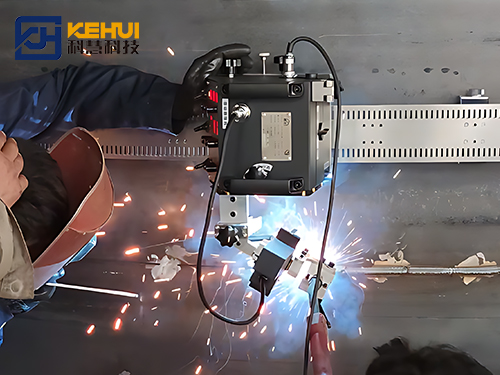
| Observed problem | Possible causes | First check |
|---|---|---|
| Carriage moves away from the seam | Incorrect alignment, poor guidance, joint deviation | Inspect the travel path and torch position |
| Travel speed fluctuates | Wheel slip, mechanical resistance, cable tension | Run the carriage without welding |
| Weld bead width varies | Speed changes, inconsistent wire feed, joint gap variation | Compare travel speed and welding parameters |
| Torch position shifts | Loose mounting, vibration, fixture movement | Inspect torch brackets and fasteners |
| Magnetic carriage loses stability | Unsuitable material, contamination, poor contact | Stop and inspect attachment conditions |
| Porosity appears | Contamination, shielding gas problems, drafts | Check gas flow and joint cleanliness |
| Undercut develops | Excessive heat input, poor torch position, unsuitable parameters | Review the welding procedure and bead profile |
| Lack of fusion occurs | Insufficient heat input, incorrect torch angle, poor technique | Inspect the weld and verify process parameters |
These are starting points, not definitive diagnoses. Several faults can produce similar symptoms, so inspect the actual joint and equipment before changing settings.
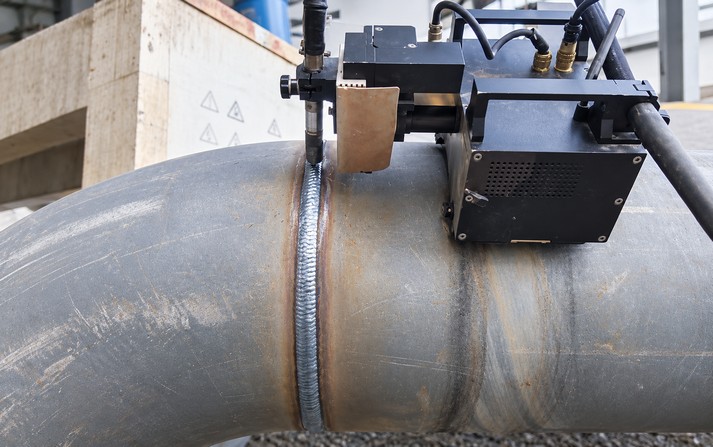
One of the most common automatic circumferential welding problems is a carriage that travels away from the intended joint.
The carriage was not aligned correctly before welding.
The pipe or tank seam deviates from the planned travel path.
The guide rail is loose, misaligned, or unevenly positioned.
Wheel contact or steering is inconsistent.
The torch bracket shifts under vibration.
The system lacks automatic seam tracking, or its correction range is insufficient.
First, stop welding and inspect the torch position relative to the joint. Run the carriage without an arc to determine whether the deviation occurs during travel alone.
If the carriage follows the wrong path, check the track, wheel arrangement, steering, and mounting points. If the carriage remains on its intended route but the torch misses the joint, inspect the torch offset and bracket alignment.
For a magnetic circumferential welding tractor, also verify that the workpiece is suitable for magnetic attachment and that the contact surface is clean.
Important: Automatic seam tracking is not standard on every circumferential welding machine. If the machine relies on manual alignment, it may not compensate for a wandering seam automatically.
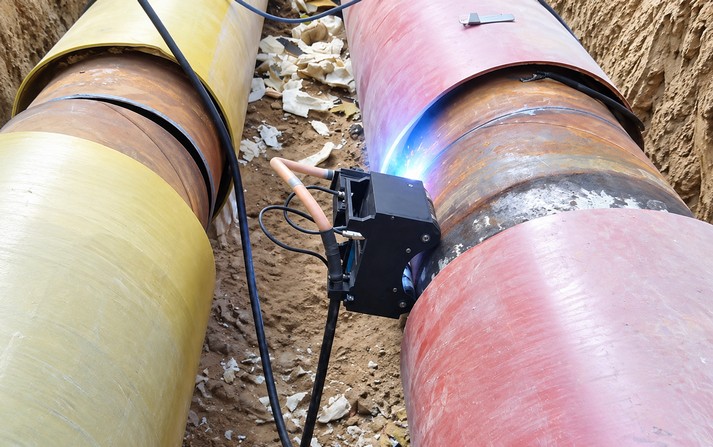
A circumferential welding tractor may jerk, stop intermittently, slip, or change speed during operation. These problems can affect bead geometry and heat input.
Debris, spatter, or surface irregularities interfere with wheel movement.
A track is improperly installed or its fixing points have loosened.
Magnetic wheel contact is inadequate.
Cables or hoses pull against the moving carriage.
The drive mechanism has excessive resistance or a mechanical fault.
Travel-speed settings or control signals are unstable.
Perform a dry run. Observe movement without welding to isolate mechanical problems from welding-process issues.
Inspect the contact surface. Remove debris and check for obstacles that interfere with wheel travel.
Check the track or attachment system. Confirm that the rail is secure or that magnetic contact is stable.
Inspect cables and hoses. Ensure they do not drag, snag, or pull the carriage off its path.
Verify travel-speed control. Check settings and inspect the drive system according to the manufacturer's instructions.
If the carriage moves smoothly without welding but becomes unstable during welding, examine whether cable movement, torch forces, process settings, or electrical interference are contributing.
A circumferential welding machine cannot produce consistent results if its travel motion is unstable, even when the welding parameters are otherwise correct.
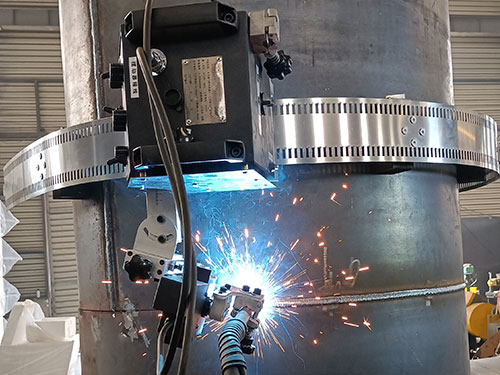
An uneven circumferential weld bead may have inconsistent width, height, or reinforcement around the joint. It is important to distinguish a change in bead appearance from an actual weld defect that fails the applicable acceptance criteria.
| Cause | Typical indication | What to check |
|---|---|---|
| Variable travel speed | Bead width or reinforcement changes along the seam | Actual travel speed and drive motion |
| Inconsistent wire feed | Irregular deposition or arc behavior | Wire feeder, wire path, and feed settings |
| Changing joint gap | Bead profile changes at specific positions | Fit-up, root gap, and alignment |
| Torch angle or stick-out changes | Asymmetric bead or inconsistent fusion | Torch mounting and joint access |
| Welding parameters are unsuitable | Excessive buildup, shallow fusion, or other profile issues | Current, voltage, wire feed, and procedure |
| Workpiece distortion | Variation develops as the weld progresses | Fit-up, restraint, and thermal distortion |
Compare the weld location with the carriage's travel behavior. If bead variation occurs where the carriage slows or hesitates, investigate mechanical movement first.
If travel remains consistent, inspect the joint gap, torch angle, wire feed, and welding parameters. A circumferential welding tractor can make torch travel more repeatable, but it cannot compensate for substantial changes in joint geometry unless the system is specifically designed to detect and correct them.
Do not adjust current or voltage immediately without identifying the source of the variation. Changing parameters to compensate for a mechanical fault may create additional defects elsewhere.
Torch alignment problems can result in an off-center bead, inconsistent sidewall fusion, or difficulty maintaining the intended torch angle.
Torch brackets, clamps, and mounting fasteners.
Torch angle relative to the joint.
Contact tip or nozzle condition, where applicable.
Clearance between the torch, carriage, workpiece, and fixtures.
Movement of the torch mount during acceleration or changes in orientation.
A useful check is to position the torch at several points around the circumference before welding. On a curved workpiece, a torch position that looks correct at one location may not provide the same access or angle elsewhere.
If the torch moves relative to the carriage, correct the mounting problem first. If the torch remains fixed but the joint moves relative to it, review workpiece alignment, distortion, and the travel path.
These checks are particularly important when a circumferential welding machine is used on large pipes or tanks where the workpiece cannot easily be repositioned.
For magnetic carriages, unstable attachment is a mechanical and safety issue—not simply a welding-quality problem.
The workpiece is non-magnetic or insufficiently magnetic for the attachment system.
Paint, scale, rust, or debris interferes with effective contact.
The surface curvature is outside the permitted operating range.
The carriage is carrying an unsuitable load or operating in an unapproved orientation.
Cables exert excessive pulling force on the carriage.
Stop the machine if attachment becomes uncertain. Secure the work area and follow the manufacturer's instructions before inspecting the carriage.
Verify material compatibility, surface condition, permitted curvature, and the complete assembly's operating limits. Never rely on magnetic attraction alone as fall protection when the machine is operating above personnel or valuable equipment.
A magnetic circumferential welding tractor should be tested under realistic conditions before production, not just on a clean, flat steel plate.
Not all circumferential weld defects originate from carriage movement. Some result primarily from welding parameters, contamination, shielding conditions, joint preparation, or technique.
Possible causes:
Oil, moisture, rust, or other contamination.
Insufficient or disturbed shielding gas.
Gas leaks, blocked nozzles, or unsuitable gas flow.
Drafts or airflow that disrupt shielding.
What to do: Check the joint and filler material cleanliness, inspect the gas supply and connections, and verify nozzle condition and shielding coverage. Increasing gas flow without diagnosis is not always the solution; excessive flow can also create turbulence.
Undercut is a groove along the weld toe that remains unfilled.
Possible causes:
Excessive current or unsuitable voltage and travel speed.
Incorrect torch angle or positioning.
Poorly selected welding parameters for the joint and material.
Inadequate technique when the process requires controlled manipulation.
What to do: Inspect the weld profile and review the qualified welding procedure. Check whether the carriage is travelling too quickly or the torch is positioned incorrectly before changing parameters.
Lack of fusion occurs when weld metal fails to fuse adequately with the base metal or a previous weld pass.
Possible causes:
Insufficient heat input for the joint configuration.
Incorrect torch angle or arc placement.
Contamination or unsuitable joint preparation.
Travel speed or other parameters outside the qualified procedure.
What to do: Review joint preparation, torch position, and welding parameters. Use the inspection method required by the project specification to determine whether the weld is acceptable.
The main causes of circumferential weld defects are often interrelated. A mechanical problem may contribute to a defect, but the defect itself must be assessed against the applicable welding procedure and acceptance criteria.
When automatic circumferential welding problems occur, follow a consistent sequence rather than changing multiple settings at once.
Stop and record the symptom. Note the location, weld pass, travel direction, and when the problem started.
Inspect the equipment. Check the carriage, track or magnetic attachment, torch mount, cables, and drive mechanism.
Run a dry test. Confirm that travel is stable and the torch remains aligned without welding.
Check joint preparation. Inspect fit-up, root gap, surface cleanliness, and local distortion.
Verify welding settings. Review travel speed, current, voltage, wire feed, shielding gas, and the applicable procedure.
Make one controlled correction at a time. Record the change and its effect.
Perform a trial weld and inspect it. Resume production only when the equipment operates safely and the weld meets the required acceptance criteria.
For additional guidance on setup and alignment, see How to Set Up a Welding Track Carriage for Pipe Circumferential Welding. For selecting an appropriate system, see How to Choose an Automatic Girth Welding Machine.
Common problems include seam deviation, unstable travel, uneven bead profiles, torch misalignment, magnetic attachment issues, porosity, undercut, and lack of fusion. The correct diagnosis depends on whether the source is mechanical, geometric, or process-related.
Possible causes include fluctuating travel speed, inconsistent wire feed, changing joint gaps, torch-angle variation, or unsuitable welding parameters. Check carriage motion and joint conditions before adjusting the welding settings.
Stop welding and inspect the travel path, guide rail or wheel system, torch offset, and joint alignment. Confirm whether the machine has automatic seam tracking or depends on manual alignment.
It can improve the consistency of torch movement, but it cannot eliminate defects caused by contamination, poor fit-up, inadequate shielding, or unsuitable welding parameters. Weld quality depends on the complete welding process.
Perform a dry run first. If the carriage jerks, slips, or deviates without welding, investigate mechanical movement and guidance. If travel is stable but defects appear during welding, inspect joint preparation, shielding, torch position, and process parameters. Some faults require both types of checks.
Effective troubleshooting of automatic circumferential welding starts with identifying the source of the problem. A carriage that deviates from the seam requires different corrective action from a weld that develops porosity or lack of fusion.
A well-selected circumferential welding tractor can improve travel consistency, but reliable results still depend on stable mechanics, correct alignment, suitable joint preparation, and controlled welding parameters. Diagnose the fault, make one change at a time, and verify the result through a representative trial weld and appropriate inspection.
Zhengzhou Kehui Technology Co., Ltd
Email: info@zzkehui.com





 Chinese
 English
 OA
 Current location:
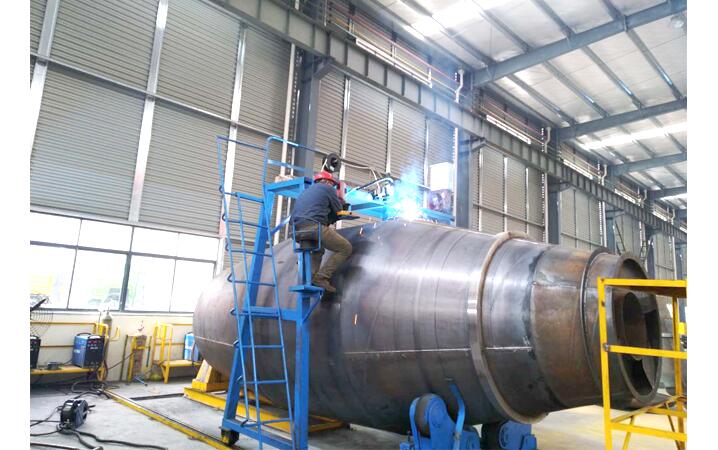 Concrete Mixer Drum Robotic Welding Solutions
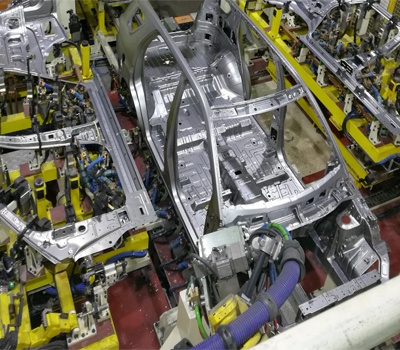 Automobile Body Production Line Welding Fixtures
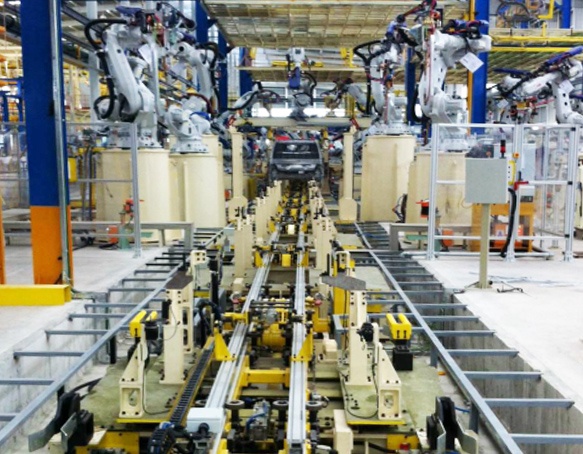 Automotive Body Welding Automated Manufacturing Solutions
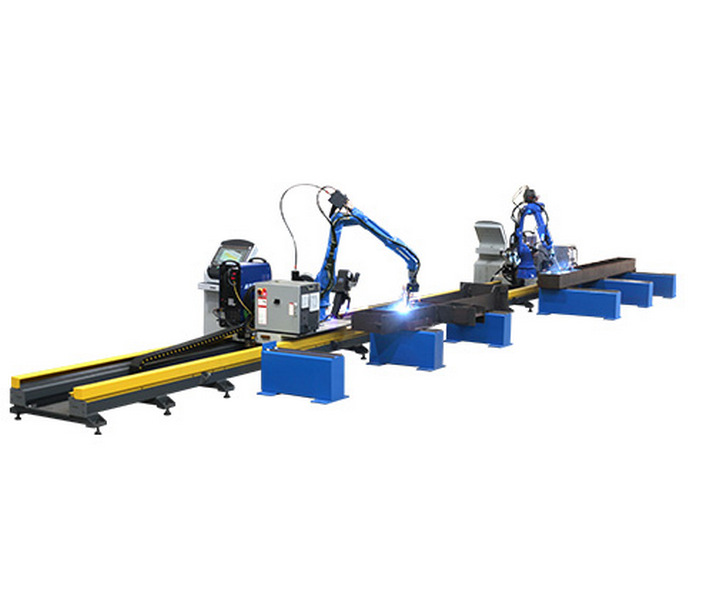 Free-Teaching Programming Welding Robot Cell For I Beam Welding
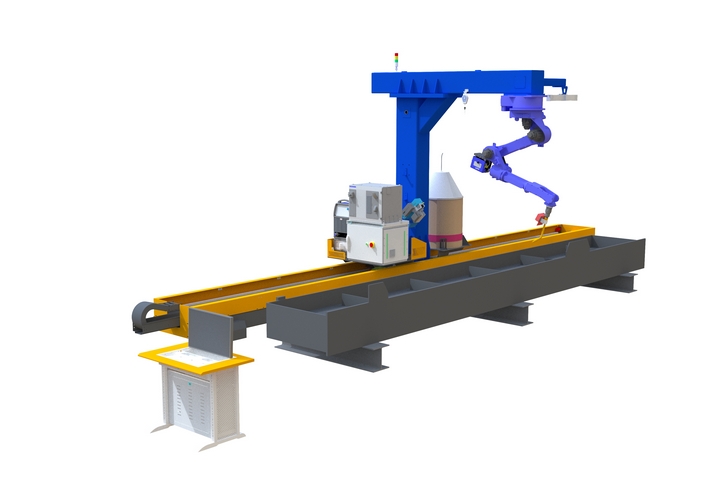 No Programming Required Robotic Welding Systems for H beam Welding Line