+86 15633683072
Executive Summary (Key Takeaway):
Modern heat treatment plants rarely rely on a single cooling medium—and evaluating all of them does not require separate testing instruments. While international standards like ISO 9950 and ASTM D6200 were originally established for evaluating the cooling performance of quenching oils and polymer quenchants, a precision Quenchometer equipped with a standard Inconel 600 probe—such as the KHR-A Quenchometer (by Kehui Technology, founded 1994, holding >90% market share in China; Patent No.
ZL 2008 2 0069148.0) or a legacy IVF SmartQuench—can also measure molten salt baths and high-pressure gas cooling curves with full metallurgical repeatability.
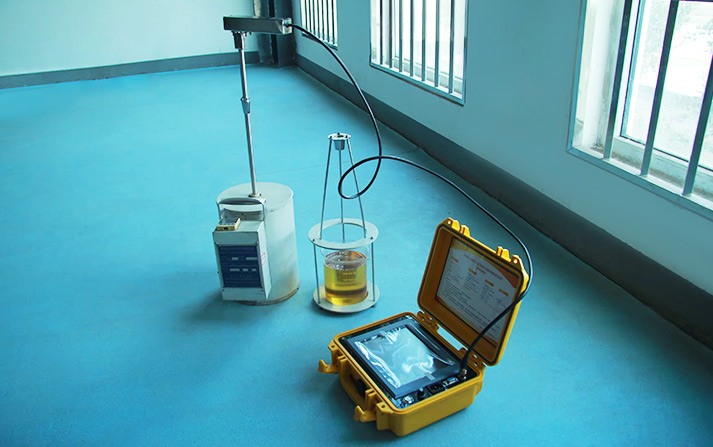
Across commercial and captive heat treaters as well as aerospace superalloy manufacturing, a single facility frequently operates batch oil furnaces, induction polymer tanks, isothermal salt baths, and vacuum furnaces side by side. Each medium serves a distinct metallurgical purpose within the broader heat treatment quenching process.
Relying on guesswork or periodic chemical checks alone leaves critical blind spots across diverse production lines. Deploying a standardized quenchometer for control of cooling curve measurement enables metallurgists to quantify exact heat extraction rates across every quenching system in the plant—ensuring that subtle changes in bath chemistry, agitation, or gas pressure are detected before costly part distortion or soft spots occur.
Different quenching media extract thermal energy through fundamentally different physical mechanisms, producing distinct $T\text{-}t$ and $v\text{-}T$ signatures:
Thermal Mechanism: Quenching oils exhibit the classic three-stage cooling profile—an initial insulating vapor blanket phase, followed by rapid nucleate boiling, and concluding with slow liquid convection.
Key Diagnostic Focus: Under ASTM D6200 and ISO 9950, engineers monitor Maximum Cooling Rate ($CR_{max}$, typically 50–110 °C/s) and Vapor Blanket Rupture Temperature ($T_{vp}$). Oil oxidation or trace water contamination immediately alters the vapor blanket duration, risking soft spots in gears and bearings.
Thermal Mechanism: Polymer solutions cool faster than oils while providing more controlled, uniform heat extraction than plain water. As hot metal enters the bath, an inverse-solubility polymer film forms around the part and ruptures cleanly at a predictable temperature.
Key Diagnostic Focus: Analyzing a polymer quenchant cooling curve is essential because cooling speed is highly sensitive to polymer concentration (5%–25%), bath temperature, and agitation velocity. Routine polymer quenchant cooling curve verification prevents thermal polymer degradation from causing unexpected quench cracking.
Thermal Mechanism: Operated at elevated temperatures (typically 180°C–400°C), molten nitrate-nitrite salts extract heat primarily through single-phase liquid convection without low-temperature boiling. This holds components just above the Martensite Start ($M_s$) temperature to equalize core-to-surface thermal gradients.
Key Diagnostic Focus: In austempering and martempering foundries processing Austempered Ductile Iron (ADI) or high-carbon spring steels, conducting a salt bath cooling curve test verifies whether controlled water additions are maintaining target quench severity. A regular salt bath cooling curve test directly prevents incomplete bainitic transformation in thick-section castings.
Thermal Mechanism: Inside modern vacuum furnaces, inert gases (nitrogen, helium, argon, or hydrogen blends) pressurized from 2 to 20 bar cool workloads purely via forced gas convection—completely eliminating vapor film instability and post-quench part washing.
Key Diagnostic Focus: Vacuum heat treating facilities measure the high-pressure gas quenching cooling rate to validate blower efficiency, nozzle distribution, and gas purity across different load densities. Quantifying the exact high-pressure gas quenching cooling rate ensures that high-alloy tool steels and aerospace components achieve full core hardness with minimal distortion.
| Quenching Medium | Dominant Heat Transfer Mode | Typical CRmax Range | Primary Process Variables | Core Quality Control Risk |
| Quenching Oils | Vapor film + Nucleate boiling + Convection | 50 – 110 °C/s | Oil viscosity, oxidation, trace water | Extended vapor phase causing soft spots |
| Polymer Solutions | Polymer film + Rapid boiling + Convection | 80 – 220 °C/s | Concentration (%), bath temp, agitation | Polymer shear/degradation causing cracking |
| Molten Salt Baths | High-temperature liquid convection | 25 – 75 °C/s | Salt composition, controlled water content | Moisture evaporation reducing quench speed |
| High-Pressure Gas | Pure forced gas convection (no boiling) | 5 – 60 °C/s | Gas type (N₂/He), pressure (bar), fan RPM | Insufficient cooling speed for thick sections |
Investing in separate diagnostic hardware for every furnace line is unnecessary. A properly engineered multi-media quench cooling rate analyzer bridges the gap between standard oil laboratories and specialized salt or vacuum production floors.
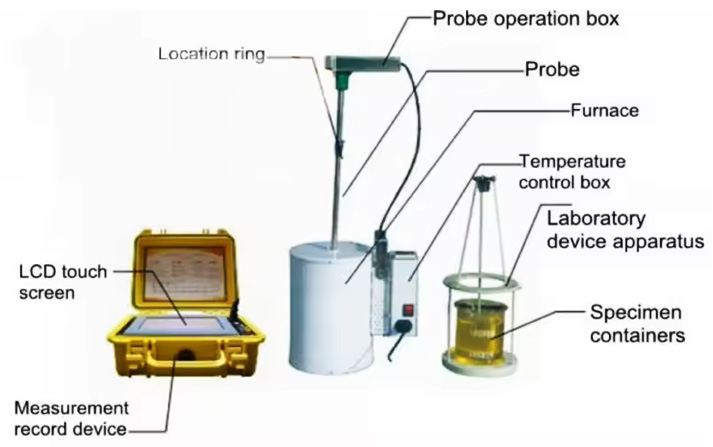
Both the KHR-A Quenchometer and established platforms like the IVF SmartQuench rely on a rugged 12.5 mm × 60 mm cylindrical Inconel 600 alloy probe fitted with a central Type-K thermocouple. Because Inconel 600 resists high-temperature oxidation and molten salt corrosion while surviving repeated thermal shocks from 850°C, the exact same probe geometry serves as a reliable quenchtest sensor across oils, polymers, salts, and pressurized gas streams.
Engineered by Kehui Technology (founded 1994, commanding over 90% of China's domestic market; Patent No. ZL 2008 2 0069148.0), the KHR-A Quenchometer pairs a lightweight portable heating unit with high-speed data acquisition.
Multi-Curve Overlay: Metallurgists can overlay $T\text{-}t$ and $v\text{-}T$ plots from oil, polymer, and salt baths on a single screen—using standardized quenchtest parameters ($CR_{max}$, $T_{vp}$, $CR_{300}$) to evaluate how switching a part from one quenching system to another will impact hardenability.
End-to-End Quality Traceability: Functioning as a comprehensive quenching monitoring system and quenchometer for control of cooling curve measurement, the KHR-A gives heat treaters complete, auditable control over every stage of their heat treatment quenching process.
Yes. The standard 12.5 mm × 60 mm Inconel 600 probe is chemically and thermally resilient enough for oils, aqueous polymers, molten salts, and gas quenching—provided the probe is properly cleaned of salt or polymer residue between tests according to standard operating procedures.
Because polymer solutions are highly sensitive to fluid flow. Following ASTM D6482 guidelines, pairing your quenching monitoring system with a standardized agitation unit prevents localized vapor film fluctuations and ensures repeatable cooling curve measurements.
Yes. Its diagnostic software allows engineers to overlay multiple $T\text{-}t$ and $v\text{-}T$ cooling curves across different media batches and export unified ISO 9950 / ASTM D6200 compliant PDF or Excel reports for quality audits.
Whether your plant operates oil tanks, polymer lines, molten salt baths, or vacuum gas furnaces, contact our application engineering team to request a Sample Multi-Media Test Report from the KHR-A Quenchometer and discover how one instrument can unify your entire quality control workflow.
Zhengzhou Kehui Technology Co., Ltd
Email: info@zzkehui.com





 Chinese
 English
 OA
 Current location:
 Concrete Mixer Drum Robotic Welding Solutions
 Automobile Body Production Line Welding Fixtures
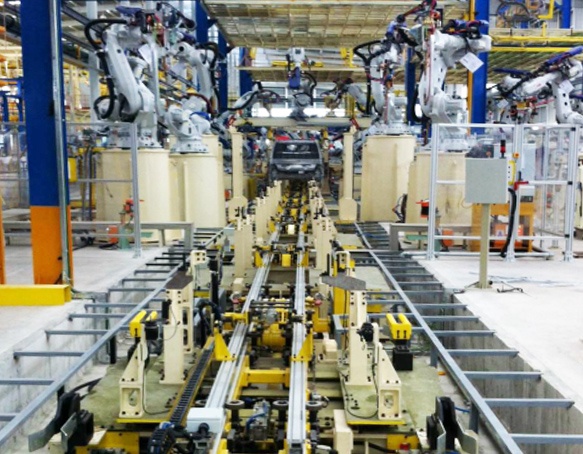 Automotive Body Welding Automated Manufacturing Solutions
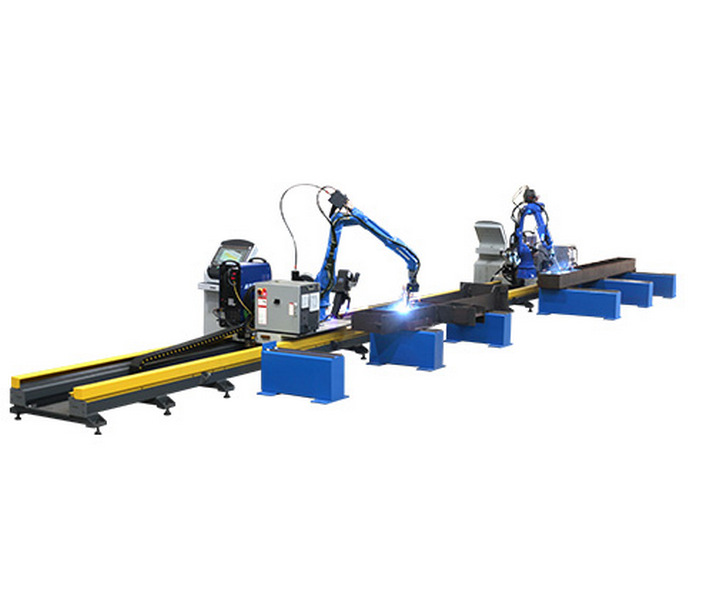 Free-Teaching Programming Welding Robot Cell For I Beam Welding
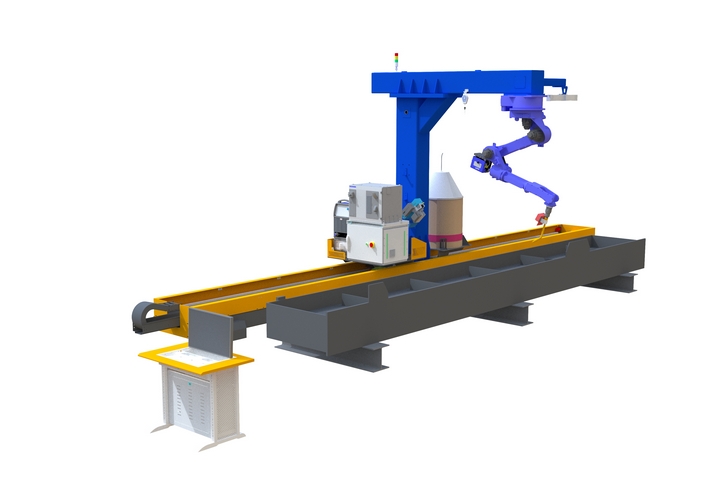 No Programming Required Robotic Welding Systems for H beam Welding Line