+86 15633683072
Two quenching instruments both claim compliance with ASTM D6200 and ISO 9950. Both use the same Inconel 600 probe geometry, both record a temperature–time curve, both can produce a certificate. One outputs a raw curve that ends up in a filing cabinet. The other outputs a 300°C cooling rate compared against a stored baseline, and the shift supervisor uses it to decide whether the tank is still safe for the next batch. The compliance is identical. The decision capability is not.
This article separates what ASTM D6200 and ISO 9950 actually require from what they explicitly leave to the user, explains the relationship between the two standards and GB/T 30823, and identifies the layer a quenching instrument must add—beyond compliant acquisition—to turn a standard-compliant curve into an operational decision.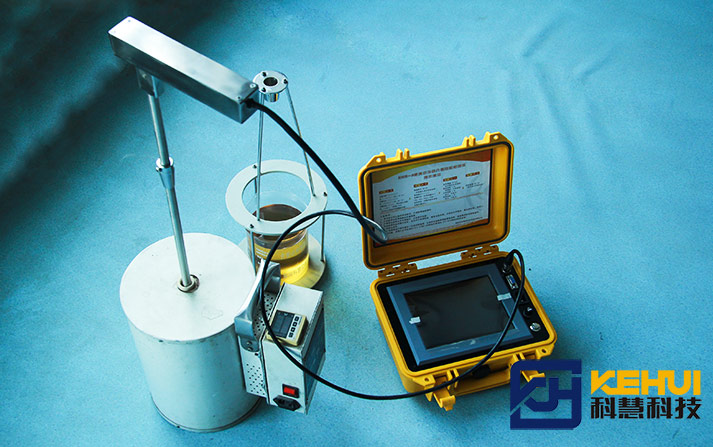
The three standards describe the same experimental method, and the differences between them are administrative rather than technical.
ASTM D6200 covers the determination of quenching oil cooling characteristics using cooling curve analysis. It specifies an Inconel 600 cylindrical probe, 12.5 mm diameter × 60 mm length, with a Type K thermocouple at the geometric center, heated to the austenitizing temperature and quenched into a fixed volume of test oil at a controlled bath temperature, in a non-agitated system. ISO 9950 specifies the same probe geometry and the same non-agitated, non-stirred test condition for industrial quenching oils. GB/T 30823-2014 is the Chinese standard that adopts ISO 9950:1995 identically—not “by reference,” not “with modifications,” but as an equivalent adoption.
The practical consequence for a buyer is direct: if an instrument’s method complies with ISO 9950, it is compliant with ASTM D6200 at the data-acquisition level. The choice between citing ASTM D6200 and citing ISO 9950 depends on which standard the customer’s quality system or audit body references—not on a difference in what the probe measures or how the curve is recorded.
This is the line that most standard-comparison articles miss. ASTM D6200 and ISO 9950 describe the experimental methodology for acquiring cooling curve data. They do not prescribe how that data should be analyzed or what decision should follow from it. The analysis of the resulting time–temperature cooling data is left to the user.
That is not a criticism of the standards. It is a division of responsibility. The standards exist to ensure that two laboratories measuring the same oil under the same conditions obtain comparable raw data. They do not exist to tell a shop whether a particular 300°C cooling rate is safe for a particular workpiece—because that answer depends on the workpiece, the material, the section size, and the crack-safe threshold the shop has established for that part.
The gap this creates is easy to see in practice. A quenching instrument can be fully compliant with ISO 9950, record a complete temperature–time curve, and still leave the operator without the parameters needed to make a replacement or cracking decision—if its software presents only the maximum cooling rate and a pass/fail flag against a generic range. The standard guaranteed that the curve was acquired correctly. It did not guarantee that the curve was presented in a form that answers the question the shop is actually asking.
What the standards cover: probe geometry, heating conditions, quench volume, bath temperature, non-agitated test condition, and the recording of the temperature–time history.
What the standards leave to the user: which curve parameters matter for a given failure mode, how much shift constitutes a meaningful change, and what action follows from that shift.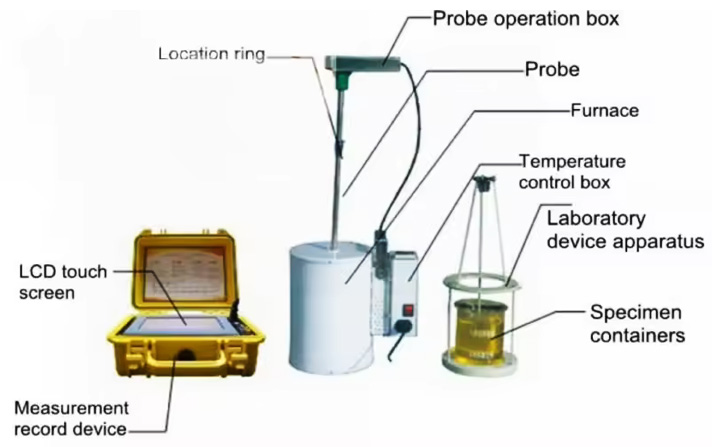
Both ASTM D6200 and ISO 9950 specify a non-agitated system. ASTM D6200 states directly that the test is “designed to evaluate quenching oils in a non-agitated system” and that “no correlation between these test results and the results obtained in agitated systems” should be assumed.
This is not a limitation to be worked around; it is the design intent. The non-agitated condition creates a controlled reference frame in which the medium’s cooling characteristics can be compared across batches, across suppliers, and across time without the confounding variable of agitation. For a replacement decision, that is exactly the right frame: the question is whether the oil itself has changed, not whether the tank’s agitator is running at the same speed it was last quarter.
What the standard curve does not tell you is what a specific part experiences in a specific production tank with a specific agitation pattern. That is a different measurement, and it requires a different interpretation. A quenching instrument that presents the standard curve should make clear which layer of information the operator is looking at—the reference-frame behavior of the medium, or the in-tank behavior of the part. Confusing the two leads to the wrong corrective action: adjusting agitation when the oil has degraded, or replacing the oil when the flow pattern has changed.
A standard can specify the method and still leave room for interlaboratory scatter. That is true of ISO 9950, and it is worth stating plainly because it shapes what a shop should expect from a compliant instrument.
An eight-laboratory comparison reported in the technical literature found “unexpected deviations and significant scatter” between cooling curves, with some participating laboratories not strictly following the specified 850°C starting temperature. ASTM D6200’s interlaboratory precision statement reports a bias of up to ±10.1 seconds for the time to cool to 200°C. These are not indictments of the standards—they are the normal reality of any thermal measurement performed across different equipment, different operators, and different calibration states.
The operational implication is this: “Compliant with ASTM D6200 and ISO 9950” does not mean that any two compliant instruments, operated by any two people, will produce interchangeable results. Probe condition, calibration, starting-temperature control, and operator technique all influence the curve. That is precisely why a quenching instrument used for trend monitoring must make baseline comparison a core function rather than an optional feature. A single curve judged against a generic range is vulnerable to interlaboratory scatter. A curve judged against the same instrument’s own previous measurement of the same tank is comparing like with like—and that comparison is where the decision value lies.
Compliance establishes that the curve is acquired correctly. It does not establish that the curve can drive a decision. The layer between those two points is what distinguishes a quenching instrument built for monitoring from one built for record-keeping.
The KHR-A Quenchometer illustrates the distinction. It is manufactured to ISO 9950, supports testing in line with ASTM D6200 and ISO 9950, and uses the same Inconel 600 probe geometry the standards define. On top of compliant acquisition, it reports the parameters that correspond to the decisions a shop actually makes: maximum cooling rate and its temperature, cooling rate at 300°C, upper and lower characteristic temperatures, and time to reach 600/400/200°C. It stores multiple results and overlays curves, so the current cooling curve analysis can be read against the tank’s own baseline rather than against a remembered number or a supplier’s generic range.
The distinction is not about which instrument is “more standard.” Both are standard-compliant. It is about which instrument closes the gap the standard leaves open. A cooling curve tester that outputs only a maximum rate has done the acquisition and stopped. A quenching instrument that outputs the 300°C rate, the characteristic temperatures, and a baseline overlay has done the acquisition and the analysis layer the standard deliberately leaves to the user.
| Layer | What ASTM D6200 / ISO 9950 specifies | What to confirm in the quenching instrument |
|---|---|---|
| Probe geometry | Inconel 600, 12.5 mm × 60 mm, Type K thermocouple at center | Probe matches the standard geometry; calibration is traceable |
| Test conditions | Non-agitated, specified bath temperature, specified start temperature | Instrument controls or verifies start temperature and bath condition |
| Data acquisition | Records the temperature–time curve | Sampling rate and temperature accuracy sufficient to resolve the low-temperature segment |
| Curve analysis | Left to the user | Direct output of 300°C cooling rate, characteristic temperatures, time-to-temperature |
| Decision basis | Not prescribed | Baseline storage and curve overlay, so “shift from baseline” is visible |
| Scope of the data | Non-agitated reference frame | Clear indication that the curve is a reference-frame measurement, not a production-tank replica |
Read the checklist by the decision you need to make, not by the certificate on the datasheet. A shop that only needs a compliance record can stop at the acquisition layer. A shop that needs to decide whether a tank is still safe, whether an oil has degraded, or whether a quenchant has moved out of its qualified window needs the analysis layer—and that layer is where instruments differ.
The KHR-A Quenchometer is manufactured by Zhengzhou Kehui Technology (Kehui Group), founded in 1994. Kehui’s founder is a technical specialist in this field, and the company was the first domestic Chinese manufacturer to independently develop and manufacture quenching medium cooling performance testers. The KHR-A carries patent ZL 2008 2 0069148.0 and is designed for oil, polymer, water-based, salt, and gas quenching media. Kehui’s quenching detectors have covered approximately 95% of the Chinese domestic market, with an installed base spanning chemical, boiler, pressure vessel, engineering machinery, military, and nuclear power applications.
For a buyer comparing instruments against ASTM D6200 and ISO 9950, the relevant claim is narrow: the KHR-A is a quenching instrument that meets the standards at the acquisition layer and adds the analysis layer the standards leave open—300°C cooling rate, characteristic temperatures, time-to-temperature, and baseline overlay—so the curve can support a replacement or troubleshooting decision rather than only a compliance file.
At the data-acquisition level, yes. Both specify the same Inconel 600 probe geometry (12.5 mm × 60 mm, Type K thermocouple at center), the same non-agitated test condition, and the same temperature–time recording method. The choice between citing one or the other depends on which standard your quality system or audit body references.
GB/T 30823-2014 is the Chinese standard that adopts ISO 9950:1995 identically. An instrument compliant with ISO 9950 is compliant with GB/T 30823 at the method level.
Not automatically. ASTM D6200’s interlaboratory precision statement reports bias of up to ±10.1 seconds for time to 200°C, and published ISO 9950 comparisons have documented significant scatter between laboratories. Compliance ensures the method is correct; it does not eliminate equipment, calibration, and operator variability. That is why baseline comparison against the same instrument’s own history matters.
No. Both ASTM D6200 and ISO 9950 specify a non-agitated system. The standard curve is a reference-frame measurement of the medium, not a replica of production-tank behavior with agitation.
The standards leave cooling curve analysis to the user. An instrument should therefore output the parameters that map onto decisions—300°C cooling rate, characteristic temperatures, time-to-temperature—and support baseline storage and curve overlay, so the operator can see whether the medium has shifted, not only whether it falls inside a generic range.
No. It performs the cooling curve measurement—the functional evidence—at the tank. Water content, acid value, viscosity, and flash point remain laboratory tests. The KHR-A complements those tests by supplying the analysis layer the standards leave open.
ASTM D6200 and ISO 9950 did their job: they standardized the probe, the conditions, and the acquisition method, so that a cooling curve means the same thing wherever it is measured. What they did not do—deliberately—is tell you what the curve means for your part, your tank, or your replacement decision. That analysis is the user’s responsibility, and the instrument you choose determines whether that responsibility is supported or left to a filing cabinet.
If you are comparing quenching instruments for compliance and decision capability, or if you need to confirm whether your current instrument’s output covers the analysis layer the standards leave open, send us the standard your quality system references, the quenchant type, and the decisions you need the curve to support. We will tell you where the compliance layer ends and the analysis layer begins—not simply quote an instrument.
Zhengzhou Kehui Technology Co., Ltd
Email: info@zzkehui.com





 Chinese
 English
 OA
 Current location:
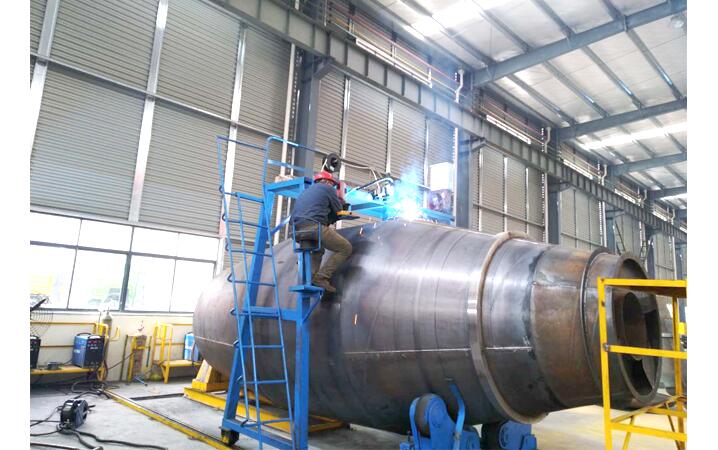 Concrete Mixer Drum Robotic Welding Solutions
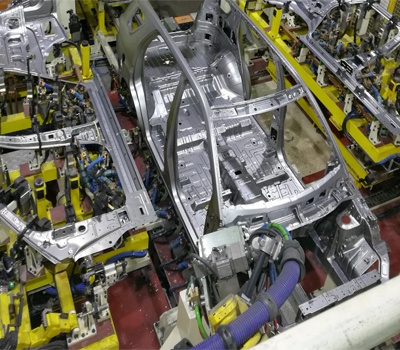 Automobile Body Production Line Welding Fixtures
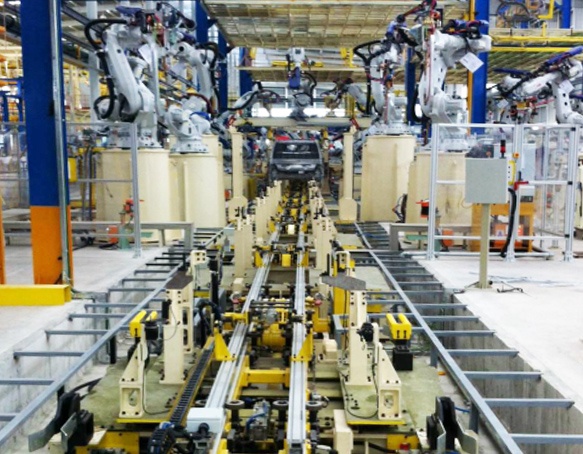 Automotive Body Welding Automated Manufacturing Solutions
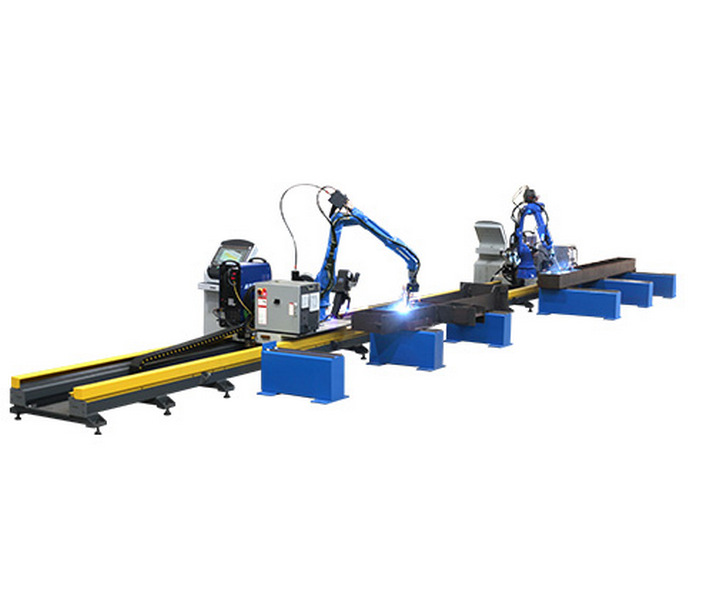 Free-Teaching Programming Welding Robot Cell For I Beam Welding
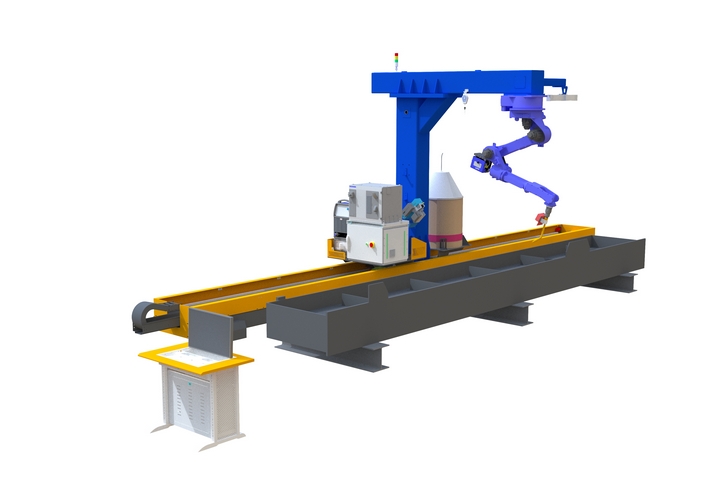 No Programming Required Robotic Welding Systems for H beam Welding Line