+86 15633683072
In industrial boiler manufacturing, tube-to-tubesheet welding is one of those processes that can look simple on a drawing but become surprisingly difficult on the factory floor. A boiler may contain a large number of tube joints, and each joint needs to be positioned, welded, inspected, and repeated with consistent results.
For manufacturers, the challenge is not simply producing a strong weld. The real challenge is maintaining consistent tube to tubesheet orbital welding across hundreds or thousands of joints while keeping production time under control.
A properly selected orbital welding machine for boiler tubes can automate repetitive tube-to-tubesheet joints, standardize welding parameters, and reduce the amount of manual torch manipulation required during industrial boiler pipe welding.
This article looks at the process from a practical manufacturing perspective and explains how manufacturers can evaluate an automatic welding solution for industrial boilers.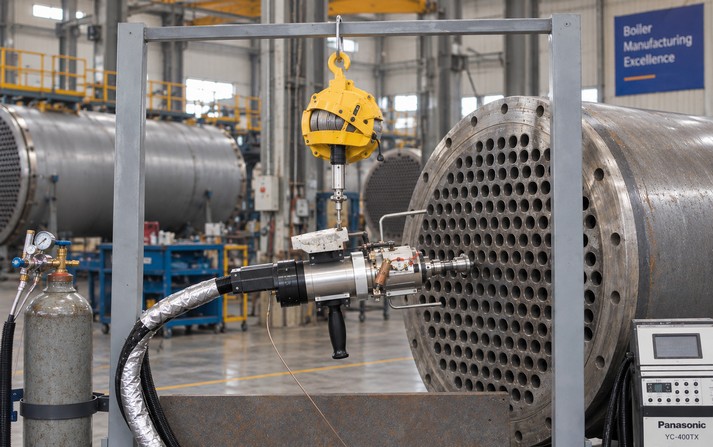
Tube to tubesheet orbital welding is an automated welding process used to join the end of a tube to a tubesheet. The welding torch travels around the tube or follows a controlled circular path while maintaining programmed welding parameters.
In industrial boiler production, the process can be used where boiler tubes are connected to tube sheets, headers, or similar components requiring reliable and repeatable welded joints.
The key difference from ordinary manual pipe welding is the level of process control. Instead of relying on an operator to manually control the torch around every joint, an orbital system can control important variables such as:
This makes tube to tubesheet orbital welding particularly relevant to repetitive industrial boiler pipe welding.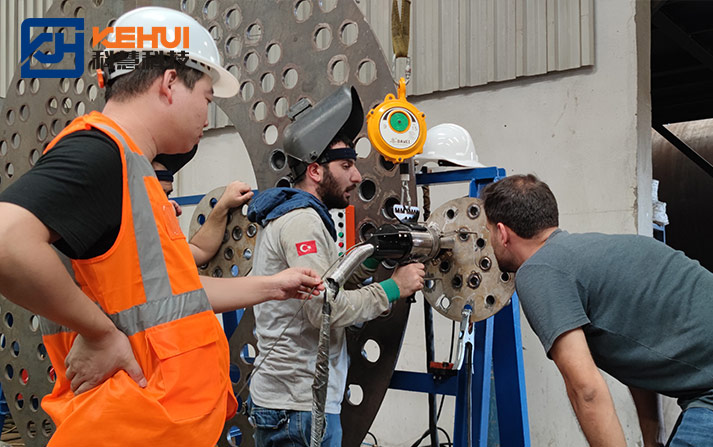
A boiler manufacturer may need to weld a large number of tube connections on a single assembly.
The first few joints may not be difficult for an experienced welder. The problem appears when the same operation has to be repeated throughout an entire production shift.
Small differences in torch angle, arc length, travel speed, or welding time can accumulate into inconsistent welds.
This is where a boiler tube sheet welding machine can provide an important production advantage: the welding cycle can be repeated according to predefined parameters instead of being recreated manually for every joint.
Tube sheets can contain closely spaced holes, making access difficult.
The welding head must reach the joint without colliding with neighboring tubes or interfering with the tubesheet structure. Therefore, selecting an orbital welding machine for boiler tubes requires more than checking the welding current or power source.
The actual tube diameter, tube spacing, tubesheet thickness, and available working space need to be evaluated.
In a real factory, welding is only one part of the process.
Operators may also spend time:
When this cycle is repeated hundreds of times, non-welding activities can become a significant part of the production time.
An effective tube to tubesheet orbital welding system should therefore improve the overall cycle, not just the arc-on time.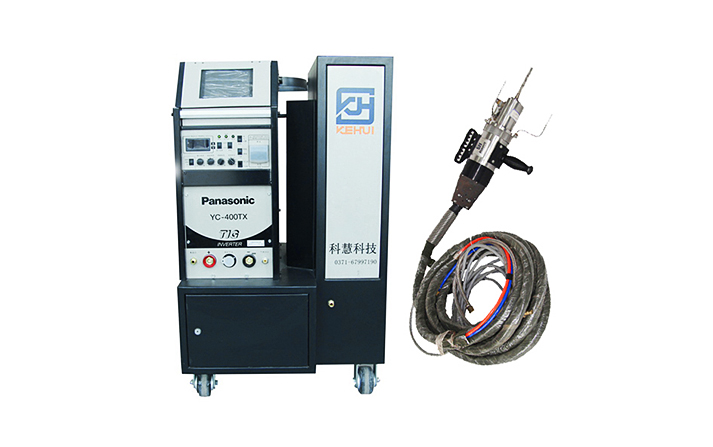
A typical industrial boiler production process may include tube preparation, tube forming, tube insertion, tubesheet assembly, welding, inspection, pressure testing, and final assembly.
Within this workflow, industrial boiler pipe welding has a direct relationship with final product reliability.
Before welding, tube ends and tubesheet holes need to meet the required dimensional and fit-up conditions.
Poor preparation can create problems that no welding machine can completely compensate for.
For this reason, a complete industrial boiler pipe welding solution should consider upstream tube preparation and fixture accuracy as well as the welding process itself.
After the tubes are correctly positioned, an orbital welding machine for boiler tubes can perform the programmed welding cycle.
Depending on the equipment configuration, the system can control the torch movement and welding parameters for repeated tube joints.
After welding, manufacturers may use visual inspection, dimensional checks, leakage testing, pressure testing, or other quality-control procedures according to the boiler design and applicable standards.
Automation does not replace inspection. Instead, it helps create a more consistent process before inspection takes place.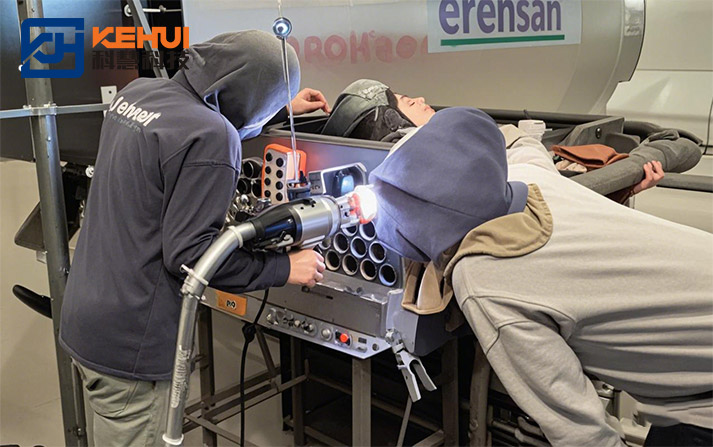
A boiler tube sheet welding machine should be evaluated according to the actual production requirements rather than simply its advertised specifications.
The welding head must reach the tube joint comfortably, particularly when tubes are installed close together.
For dense tube layouts, compact mechanical design and sufficient clearance can be more important than simply having a high welding power rating.
The system should provide repeatable control of welding current, travel speed, shielding gas, and other relevant parameters.
This is particularly important for tube to tubesheet orbital welding, where the same joint may need to be reproduced many times.
A stable fixture is essential.
If the tubesheet moves during welding or the tube is not properly aligned with the hole, weld quality can vary even when the welding parameters remain unchanged.
For factories producing multiple boiler models, programmable welding parameters can simplify production changeovers.
Different tube diameters or joint configurations may require different welding programs.
A professional tube to tubesheet welding machine factory should not select equipment only from a product catalog.
In many industrial projects, the welding machine needs to be matched to the customer's actual workpiece.
The factory may evaluate:
For a new boiler welding project, sample testing can reveal practical issues that specifications alone cannot show.
For example, a machine may technically support a certain tube diameter, but the actual tube spacing could make torch access difficult.
A capable tube to tubesheet welding machine factory can use sample workpieces to verify torch accessibility, welding parameters, positioning, and cycle requirements before finalizing the equipment configuration.
This approach is particularly useful for customized industrial boiler pipe welding projects.
The choice between manual and automated welding depends heavily on production volume and joint complexity.
| Production Factor | Manual Welding | Orbital Welding |
|---|---|---|
| Operator involvement | High | Lower |
| Welding parameters | Operator controlled | Programmable |
| Repetitive joints | Labor-intensive | Well suited |
| Weld consistency | Skill dependent | More repeatable |
| Operator fatigue | Higher | Lower |
| Process standardization | Limited | Stronger |
| Initial investment | Lower | Higher |
For prototype boilers, repair work, or very low-volume production, manual welding may still make sense.
For manufacturers producing large quantities of similar tube assemblies, an orbital welding machine for boiler tubes can provide better process repeatability and production control.
Automation becomes particularly attractive when a factory encounters one or more of these conditions:
If operators spend a large part of the shift welding repetitive tube connections, automation can reduce manual workload.
If the same joint produces different results depending on who performs the welding, programmable welding parameters can help standardize the process.
Defective joints can lead to repair welding, additional inspection, and delayed delivery.
Reducing variation in tube to tubesheet orbital welding can help minimize these production disruptions.
When orders increase, adding more welders is not always the most efficient solution.
A factory should also consider whether its existing industrial boiler pipe welding process can be automated before simply increasing manpower.
When comparing suppliers, manufacturers should look beyond the machine price.
A suitable tube to tubesheet welding machine factory should be able to discuss the complete application, including:
For customized boiler projects, the supplier's ability to understand the production process can be just as important as the welding machine itself.
Inconsistent torch movement or welding parameters can result in variations in weld appearance and penetration.
Too much heat can affect thin-wall tubes, cause distortion, or create undesirable weld characteristics.
Poor tube positioning can make the weld joint uneven and difficult to reproduce.
A poor tube to tubesheet connection can lead to leakage during subsequent testing. The root cause may involve joint preparation, fit-up, welding parameters, or operator consistency.
Automation can address some of these variables, but proper tube preparation and process qualification remain essential.
Modern boiler manufacturers are under pressure to improve productivity without sacrificing quality.
For repetitive industrial boiler pipe welding, automation provides a way to standardize operations that were traditionally dependent on individual welders.
The value of tube to tubesheet orbital welding is therefore not limited to faster welding. It can help manufacturers build a more predictable production process in which welding parameters, torch movement, and joint sequencing are controlled systematically.
For factories producing different boiler models, the ability to combine programmable welding with customized fixtures can make automation even more valuable.
Tube to tubesheet orbital welding is an automated process in which a welding torch travels around a tube-to-tubesheet joint according to controlled parameters. It is suitable for repetitive tube joint welding where consistent results are required.
Yes. An orbital welding machine for boiler tubes can be configured for suitable tube diameters, materials, joint structures, and welding requirements. Actual sample testing is recommended before selecting the final configuration.
A boiler tube sheet welding machine is designed to automate welding between boiler tubes and a tubesheet. It can help improve welding repeatability and reduce repetitive manual operations.
In industrial boiler pipe welding, orbital equipment can standardize welding parameters and torch movement. This reduces dependence on continuous manual torch control and can improve consistency across large numbers of tube joints.
Choose a tube to tubesheet welding machine factory that can evaluate your actual tube dimensions, tubesheet structure, tube spacing, welding requirements, production volume, and automation needs. Sample welding and technical support are also important considerations.
Yes. Tube to tubesheet orbital welding is particularly useful when a boiler manufacturer needs to repeat similar tube joints many times. Automation can improve consistency, reduce operator fatigue, and help standardize the production process.
This depends on the welding head, fixture, positioning system, and equipment design. A customized boiler tube sheet welding machine may be configured to handle multiple tube sizes or production models within a defined range.
For industrial boiler manufacturers, tube-to-tubesheet welding is not simply a welding operation. It is a repetitive production process involving positioning, welding parameters, torch accessibility, inspection, and cycle time.
A properly designed industrial boiler pipe welding system can make this process more predictable, while tube to tubesheet orbital welding provides a practical way to automate repetitive tube joints.
When selecting an orbital welding machine for boiler tubes, manufacturers should evaluate the complete workpiece and production process rather than focusing on welding specifications alone.
For customized applications, working directly with an experienced tube to tubesheet welding machine factory can help ensure that the welding head, fixture, control system, and welding parameters are matched to the actual boiler structure.
Zhengzhou Kehui Technology Co., Ltd
Email: info@zzkehui.com





 Chinese
 English
 OA
OA Current location:
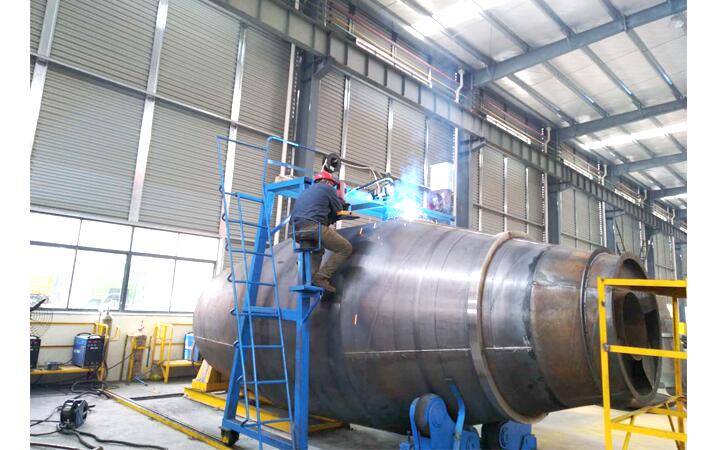 Concrete Mixer Drum Robotic Welding Solutions
 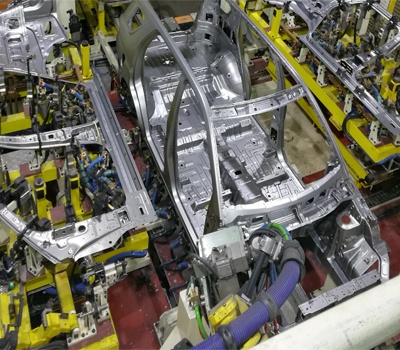 Automobile Body Production Line Welding Fixtures
 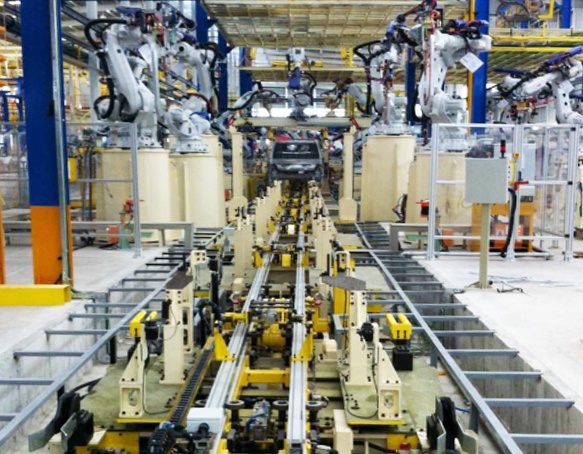 Automotive Body Welding Automated Manufacturing Solutions
 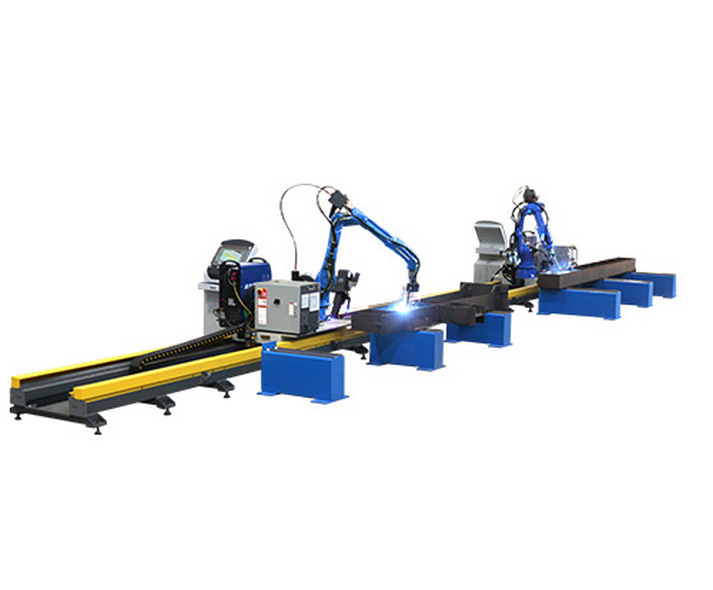 Free-Teaching Programming Welding Robot Cell For I Beam Welding
 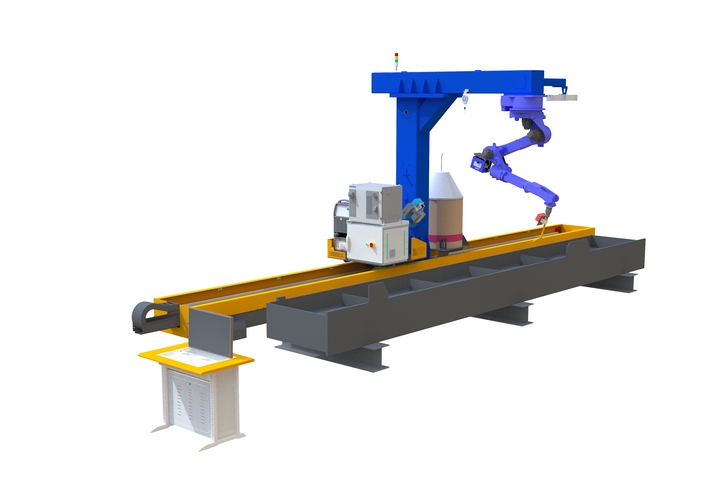 No Programming Required Robotic Welding Systems for H beam Welding Line