+86 15633683072
A batch of grade 8.8 fasteners comes back with a hardness spread of 4.5 HRC across the lot. The furnace log is clean, the material certificate is in order, and the last semi-annual oil test says the quench oil was “within range.” All three statements can be true at once, because a semi-annual test proves the oil was acceptable on the day it was sampled—not that it stayed acceptable across the hundreds of batches that followed.
For fastener heat treatment and bearing heat treatment, the question is not whether to test the quench oil. It is how often the testing has to happen for the result to cover the batch risk the tank actually carries. This article sets out the frequency gap between what CQI-9 requires in writing and what batch production exposes, the reported cost relationship between testing frequency and scrap, and the practical constraint that decides whether a higher frequency is achievable at all.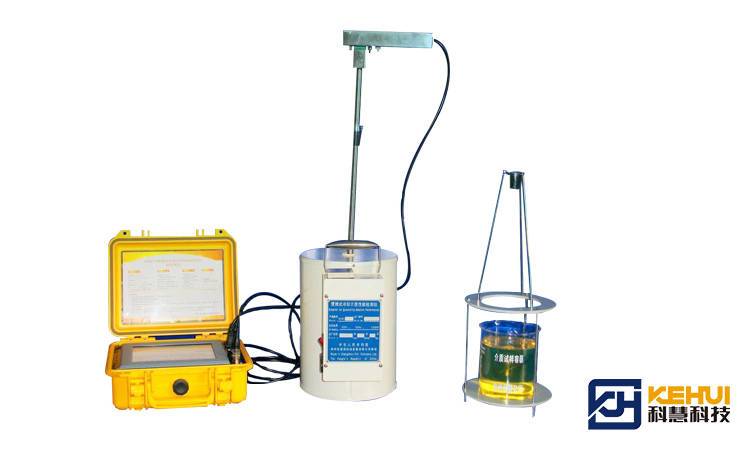
Both product families run large volumes through a shared tank, but their failure modes pull on different parts of the cooling curve.
In fasteners, the coupling is between hardness spread and geometry. Hardness converts to tensile strength through a known relationship, so a batch-to-batch hardness spread directly threatens the consistency of that conversion. Threads, recesses, and shank transitions are exactly where a quench oil’s vapor blanket tends to linger, and soft spots in fasteners are routinely traced to oil that is overheated, water-contaminated, or degraded. The judgment language in fastener practice is direct: the cooling curve is no longer suitable for the steel grade.
In bearings, the coupling is between distortion and retained austenite. Bearing ring distortion includes both size change and shape change, and oil temperature, cooling uniformity, and retained austenite content all participate. Retained austenite is influenced by cooling rate, and cooling rate is set by the medium and the agitation together. The bearing requirement is not “fast” or “slow”—it is stable. A low-temperature cooling rate that drifts between batches produces drift in distortion and in retained austenite, and the shop sees it as dimensional instability rather than as an oil problem.
Different failure modes, same conclusion: the medium has to be visible between batches, not sampled once at a half-year node.
CQI-9 4th Edition Section 3.14 requires in-use quench oil to be tested every six months, covering water, suspended solids, total acid number, viscosity, flash point, and a cooling curve. That is the written floor. It is not the whole picture.
In fastener practice, discussions of CQI-9 requirements cite monthly monitoring of cooling performance characteristics—maximum cooling rate and 300°C cooling rate—with quarterly as the minimum. Fastener batch-consistency programs go further and recommend weekly cooling curve checks on characteristic temperature and maximum cooling rate. The driver is exposure: one oil tank may run hundreds of batches in six months, and any single undetected shift acts on an entire batch.
That is why the frequency question is really a risk-coverage question. A semi-annual curve certifies one day. A monthly or weekly curve shows a trend. For a batch safety part, the trend is what protects the lot.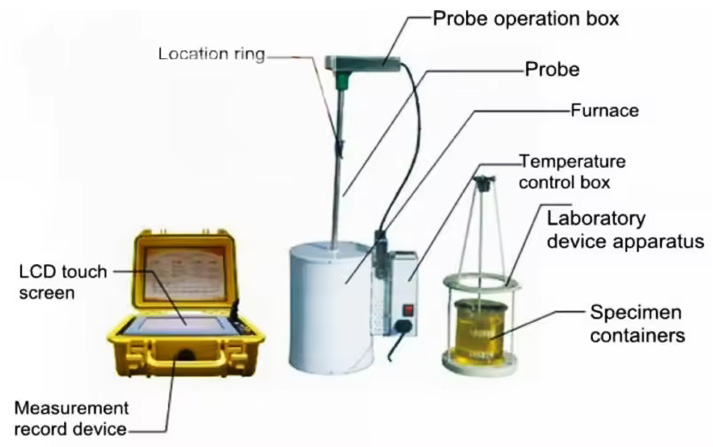
The economic case for higher frequency rests on two levers, and both have been reported in plant results.
Lever one: data-driven oil replacement instead of calendar replacement. A bearing manufacturer that deployed cooling curve monitoring extended its quench oil change interval from 6 months to 11 months, with annual savings reported at roughly 800,000 RMB. The mechanism is straightforward: when the curve shows the oil is still inside its functional window, replacement can wait; when the curve shows a shift, replacement is justified before scrap occurs. Frequency is what makes that judgment possible.
Lever two: catching the trend before it becomes a rejected lot. Another bearing plant that moved to a quarterly testing regime reported its quench distortion rate falling from 3.2% to 0.7%, with annual quality-loss savings reported above 3 million RMB. The frequency did not change the oil; it changed how early the drift was seen.
These results are plant-specific and should not be read as a universal payback figure. What they establish is narrower and more useful: testing frequency and quality cost are linked by a measurable mechanism, and in batch safety parts the expected cost of an undetected shift is far larger than the cost of the extra tests.
If every curve has to be mailed to an external laboratory, the quarterly frequency collapses back to semi-annual within a few cycles. Turnaround is measured in days to weeks, while batch production runs in shifts; by the time the report returns, several more lots have already been quenched.
This is where a quenching monitoring system designed for tank-side use changes what is operationally possible. An instrument built to ISO 9950 and supporting ASTM D6200—the KHR-A Quenchometer discussed below is one—turns “run a cooling curve” from a shipping event into a tank-side routine. It reports maximum cooling rate and its temperature, cooling rate at 300°C, upper and lower characteristic temperatures, and time to reach 600/400/200°C, and it stores multiple results with curve overlay. Frequency only creates value when each curve can be compared against the same tank’s baseline; a weekly or monthly measurement without a baseline is just a stack of isolated snapshots.
A quenchotest performed at the tank, against the oil’s own history, is what makes the higher frequency meaningful. Without that, a SmartQuench-class platform in a distant lab produces a better curve than no curve at all—but it cannot produce the cadence that batch risk requires.
The KHR-A Quenchometer does not replace the laboratory panel, and it does not diagnose a batch. Its role in this context is narrower: it makes the frequency affordable and comparable.
Its 64-result storage and four-curve overlay map directly onto what batch parts need—batch-to-batch trend comparison. This week’s curve sits on top of the post-oil-change baseline, and the shift is visible rather than judged from zero each time. For a fastener line, a 300°C cooling rate that has moved points to low-temperature cracking or hardness-scatter risk. For a bearing line, movement in characteristic temperatures and cooling uniformity points to distortion and retained austenite drift. The instrument does not interpret the batch, but it ensures that the medium-side question—“is the oil still inside its window?”—has an answer at every point where the batch schedule needs one.
That is also where it connects to the broader heat treatment quenching process: the quenching and tempering heat treatment process used on fasteners and bearing components depends on a cooling path that stays within a qualified window, and the curve is the record that the window held.
| Scenario | Risk exposure | Practical frequency | What the frequency buys |
|---|---|---|---|
| Fasteners, multiple grades and sizes sharing one tank, 8.8–12.9 | Hardness scatter, soft spots, thread-zone cooling variation | Weekly to monthly cooling curve, with per-batch hardness checks | Catches an oil shift before it becomes a rejected lot |
| Bearing rings/rollers, continuous or batch furnace, GCr15/52100 | Distortion, retained austenite variation, dimensional instability | Monthly to quarterly cooling curve, with distortion trend records | Uses curve stability to support distortion control instead of calendar replacement |
| High-volume safety parts with customer or audit expectation above quarterly | Audit nonconformity plus batch failure | At least quarterly, curve included in the audit evidence pack | One record serves both compliance and trend judgment |
| New oil charge or after an oil change | Missing baseline | Run a baseline curve immediately after the change | The anchor every later frequency measurement compares against |
| Water contamination, abnormal oil temperature, or a hardness complaint | A shift that has already occurred | Immediate extra test, then increased frequency until the curve returns to baseline | Frequency becomes a diagnostic tool, not a routine cadence |
Read the table by your line type, not by a single recommended number. Frequency is not a fixed value; it scales with exposure and with the current state of the medium. The baseline curve is the precondition that makes any frequency meaningful—without it, “testing every week” only produces more isolated data.
The KHR-A Quenchometer is manufactured by Zhengzhou Kehui Technology (Kehui Group), founded in 1994. Kehui’s founder is a technical specialist in this field, and the company was the first domestic Chinese manufacturer to independently develop and manufacture quenching medium cooling performance testers. The KHR-A carries patent ZL 2008 2 0069148.0 and is designed for oil, polymer, water-based, salt, and gas quenching media. Kehui’s quenching detectors have covered approximately 95% of the Chinese domestic market, with an installed base spanning chemical, boiler, pressure vessel, engineering machinery, military, and nuclear power applications.
For a fastener heat treatment or bearing heat treatment line deciding how often to test, the relevant claim is narrow: the KHR-A is a tank-side quenching monitoring system that produces a comparable cooling curve at the cadence the batch risk requires, against the tank’s own baseline. It does not replace water, acid value, viscosity, or flash point testing. It makes the functional measurement frequent enough to cover the batches between laboratory samples.
CQI-9 4th Edition Section 3.14 requires every six months for in-use oil. In practice, fastener and bearing programs frequently run quarterly or monthly cooling curve checks, and some batch-consistency programs test weekly. The standard is the floor; batch exposure sets the actual cadence.
It tells you the lot is not homogeneous, and the causes split between heating, material, and cooling. Once furnace uniformity and material are cleared, the cooling-side question is whether the oil’s 300°C cooling rate has moved away from the grade’s window. A single semi-annual curve cannot answer that for the batches in between.
Bearing distortion and retained austenite are both sensitive to cooling rate and cooling uniformity. If the oil’s low-temperature behavior drifts between batches, distortion and retained austenite drift with it. Higher frequency makes the drift visible before it shows up as a dimensional nonconformity.
No. It replaces the cooling curve portion of the testing, at the tank and at a higher cadence. Water content, total acid number, viscosity, and flash point remain laboratory tests. The two together cover both the functional and the chemical side of the decision.
A baseline cooling curve, taken immediately after the change on the same instrument that will be used for routine monitoring. Every later frequency measurement is judged against that curve, not against a generic range.
The heat treatment quenching process sets the cooling path; the quenching and tempering heat treatment process depends on that path being repeatable, because tempering follows quenching and cannot correct a cooling-side defect. The cooling curve is the record that the quench side of the sequence stayed inside its window.
For fastener heat treatment and bearing heat treatment, quench oil testing frequency is a risk-coverage decision. The standard’s semi-annual floor is the starting point for compliance; the batch exposure of a shared tank is what sets the cadence that actually protects the lot. The reported plant results—longer oil life, lower distortion, lower scrap—all run through the same mechanism: seeing the shift before it becomes a rejected batch.
If you are running fasteners or bearings and seeing batch hardness scatter, distortion variation, or unstable retained austenite—and your only cooling curve is a semi-annual report—send us the part type, the tank’s service time, and your latest curve and chemical data. We will tell you whether your current frequency covers your batch risk, not simply quote an instrument.
Zhengzhou Kehui Technology Co., Ltd
Email: info@zzkehui.com





 Chinese
 English
 OA
 Current location:
 Concrete Mixer Drum Robotic Welding Solutions
 Automobile Body Production Line Welding Fixtures
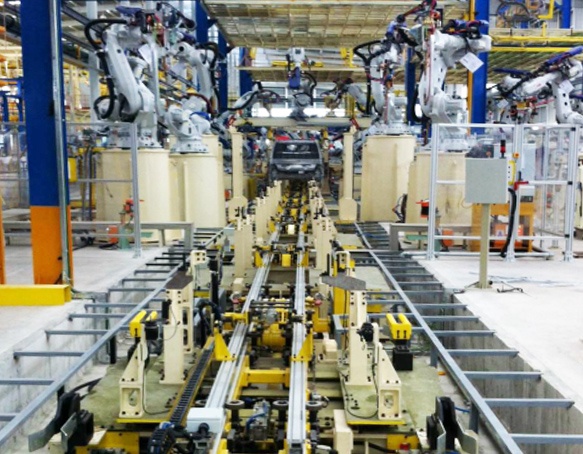 Automotive Body Welding Automated Manufacturing Solutions
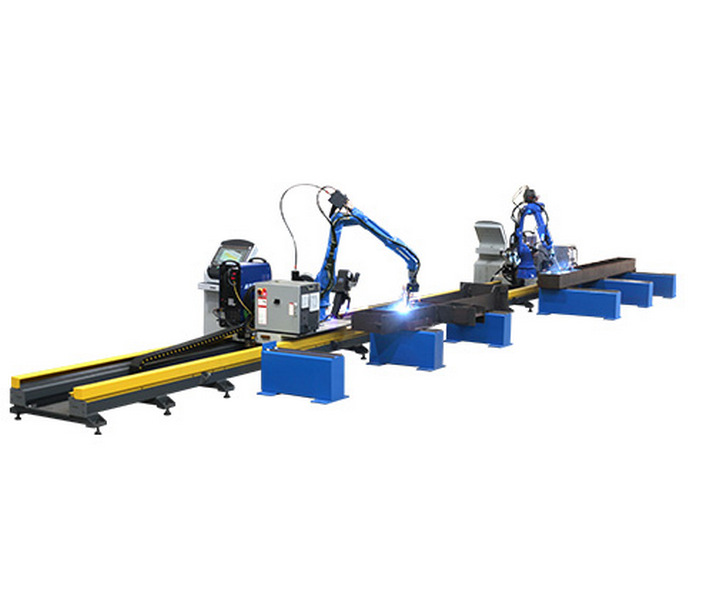 Free-Teaching Programming Welding Robot Cell For I Beam Welding
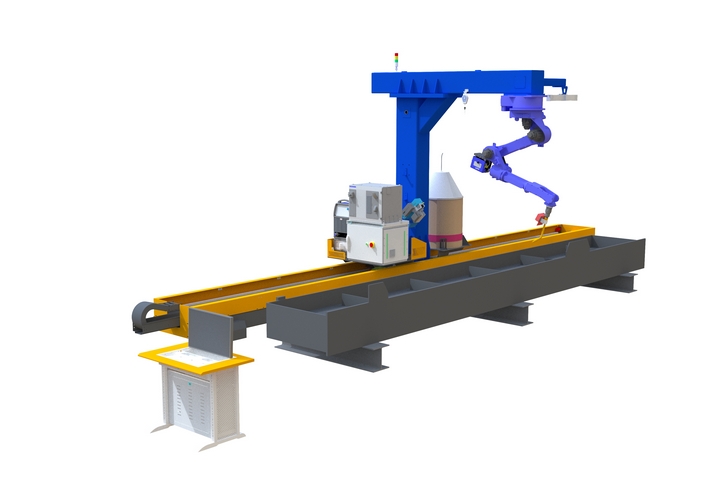 No Programming Required Robotic Welding Systems for H beam Welding Line