+86 15633683072
Pipe fabrication manufacturers handle a wide range of welding tasks, from joining straight pipes to assembling elbows, tees, and flanges into complete piping systems. When these operations involve repeated circumferential welds, an orbital welding machine can help improve welding consistency and reduce dependence on manual torch operation.
Orbital welding for pipe fabrication is particularly useful for manufacturers producing stainless steel process piping, industrial pipe spools, and prefabricated piping assemblies. By selecting the appropriate welding head and process, manufacturers can automate pipe-to-pipe welding and certain pipe-to-fitting welding applications.
What Welding Tasks Do Pipe Fabrication Manufacturers Handle?
Pipe fabrication manufacturers produce individual pipe sections and complete piping assemblies for industries such as food processing, chemical production, oil and gas, pharmaceuticals, and water treatment.
Common fabrication tasks include:
Pipe-to-pipe welding: Joining two straight pipe sections through circumferential butt welds.
Pipe-to-elbow welding: Connecting straight pipes to elbow fittings.
Pipe-to-tee welding: Joining pipes and branch fittings where the joint configuration allows suitable welding head access.
Pipe-to-flange welding: Connecting pipes to flanges for subsequent installation.
Pipe spool fabrication: Assembling multiple pipes and fittings into prefabricated sections ready for installation.
These tasks often involve repeated welds with similar joint configurations. For pipe fabrication manufacturers handling multiple production batches, an automatic pipe welding machine can help standardize torch movement and welding operations.
Manual welding can be suitable for customized or difficult-to-access joints. However, repetitive circumferential welding may require considerable operator attention, especially when production involves many similar pipe connections.
An orbital welding machine rotates the welding torch around a stationary pipe, following a controlled welding path. This makes it suitable for applications where the workpiece can be properly positioned and the welding head can access the joint.
For industrial pipe fabrication, the main benefits include:
Repeatable torch movement: The welding head follows a controlled path around the pipe.
Consistent welding procedures: Stored or established welding settings can be applied to similar production tasks when supported by the equipment configuration.
Reduced manual torch manipulation: Operators do not need to guide the torch around the entire circumference by hand.
Better production organization: Repetitive welding operations can be arranged into more standardized workflows.
However, automation does not eliminate the need for accurate pipe alignment, proper joint preparation, suitable shielding gas, and qualified welding procedures.
Pipe fabrication manufacturers may work with different pipe sizes throughout the same production facility. The welding head must match the pipe outside diameter, joint geometry, and available installation space.
Kehui offers two types of orbital pipe welding machines for different diameter ranges.
The KHGC closed-head orbital welding machine is designed for pipe outside diameters from 3 to 180 mm.
Its closed-head structure surrounds the pipe during welding. It is suitable for applications where the pipe configuration allows the welding head to be installed around the workpiece.
Typical applications include:
Small- and medium-diameter stainless steel pipe welding
Repetitive pipe-to-pipe circumferential welds
Industrial process piping fabrication
Pipe assemblies with accessible joint locations
For manufacturers working with smaller pipe diameters and repetitive welding tasks, the KHGC provides a dedicated closed-head solution.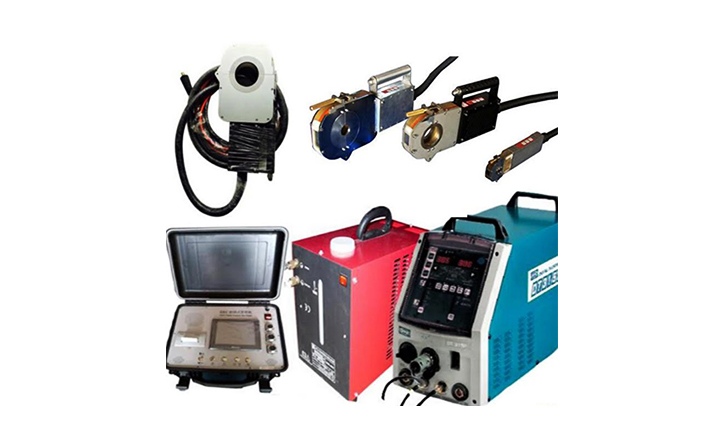
The KHGK open-head orbital welding machine uses an open caliper structure and supports pipe outside diameters from 16 to 300 mm.
Unlike a closed-head design, its open structure allows the welding head to be positioned around the pipe from the side. This can be useful when a closed ring cannot conveniently pass over the workpiece or adjacent components.
Typical applications include:
Medium- and larger-diameter pipe circumferential welding
Pipe-to-pipe welding in fabrication workshops
Selected pipe-to-fitting joints with suitable access
Industrial piping assemblies with different pipe diameters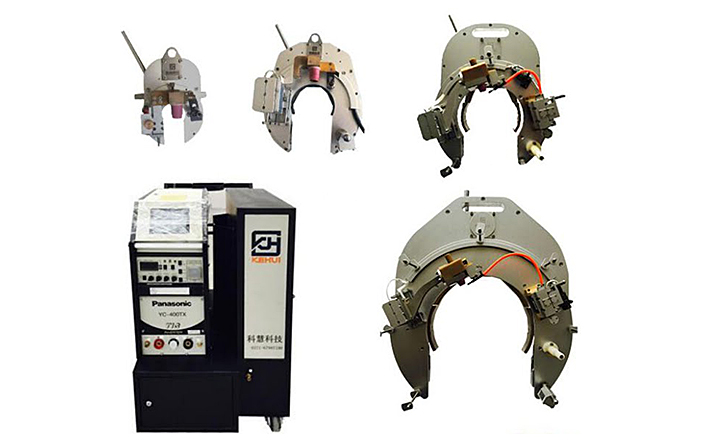
| Specification | KHGC | KHGK |
|---|---|---|
| Welding head | Closed head | Open caliper |
| Pipe outside diameter | 3–180 mm | 16–300 mm |
| Installation structure | Encloses the pipe | Open-side installation |
| Typical application | Repetitive pipe welding | Pipe welding requiring open-head access |
The diameter ranges overlap, so the decision should not be based on pipe size alone. Manufacturers should also consider joint accessibility, workpiece structure, clamping requirements, material, and wall thickness.
An orbital welding machine is usually one part of a larger pipe fabrication process. A typical workflow includes:
Pipe cutting and end preparation: Cut pipes to the required dimensions and prepare the joint edges.
Fit-up and alignment: Position pipes and fittings, checking alignment and root gap.
Clamping and positioning: Secure the workpiece and install the appropriate welding head.
Orbital welding: Apply the qualified welding procedure with suitable current, travel speed, and shielding gas.
Weld inspection: Inspect the completed joints according to project requirements.
Pipe spool assembly: Complete the fabrication and prepare the piping sections for delivery or installation.
For manufacturers engaged in pipe spool fabrication, integrating automatic pipe welding equipment into repetitive production stages can help organize welding operations more efficiently.
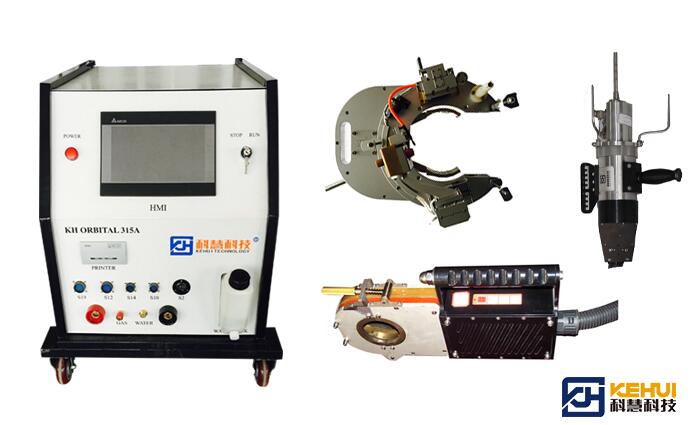
Orbital welding for pipe fabrication is relevant to manufacturers that regularly produce metal piping assemblies, particularly when their work involves repeated circumferential joints.
Potential applications include:
Food and beverage piping manufacturers: Fabricating stainless steel process pipes for dairy, juice, beverage, and liquid food production lines.
Agrochemical and chemical piping manufacturers: Producing process piping for reactors, mixing systems, and chemical transfer equipment.
Oil and gas process piping fabricators: Manufacturing pipe sections and piping modules for processing facilities.
Pharmaceutical piping manufacturers: Producing stainless steel process piping for pharmaceutical and biotechnology facilities.
Water treatment equipment manufacturers: Fabricating pipe assemblies for filtration, purification, and water treatment systems.
The suitability of orbital welding depends on pipe dimensions, material, joint design, production volume, and the required welding procedure. Not every joint in a piping assembly can be welded with the same orbital head.
Before investing in an automatic pipe welding machine, manufacturers should evaluate several production factors:
Pipe diameter: Confirm that the welding head covers the required outside diameter range.
Wall thickness: Determine whether the welding process and power source are suitable for the actual material thickness.
Material: Consider carbon steel, stainless steel, alloy steel, or other specified materials.
Joint configuration: Check whether the joint is a butt weld or a fitting connection and whether the welding head can access it.
Production volume: Evaluate how frequently similar joints are produced.
Equipment support: Consider commissioning, operator training, maintenance, and technical assistance.
A suitable orbital welding machine should match the manufacturer's actual fabrication tasks rather than simply offer the widest diameter range.
An orbital welding machine automates circumferential welding by moving the welding torch around a pipe. It is commonly used for repetitive pipe-to-pipe joints and suitable pipe-to-fitting applications.
Yes, provided the joint geometry, welding head access, clamping arrangement, and qualified welding procedure are suitable for the application.
Kehui's KHGC closed-head machine covers pipe outside diameters from 3 to 180 mm, while the KHGK open-head machine covers 16 to 300 mm.
A closed-head welding machine surrounds the pipe with an enclosed welding head. An open-head machine uses an open caliper structure that can be installed around the pipe from the side. The appropriate design depends on pipe dimensions and workpiece accessibility.
Yes. They can be used for suitable stainless steel pipe joints in pipe spool fabrication, provided the material, dimensions, joint preparation, and welding procedure are compatible with the equipment.
Kehui provides automatic pipe welding equipment for manufacturers handling different pipe diameters and fabrication requirements. With the KHGC closed-head machine covering 3–180 mm and the KHGK open-head machine covering 16–300 mm, manufacturers can evaluate different configurations for their pipe welding operations.
As an automated welding equipment manufacturer established in 1994, Zhengzhou Kehui Technology Co., Ltd. provides equipment manufacturing, technical support, and customer training for overseas applications. Contact Kehui with your pipe diameter, wall thickness, material, and joint samples to discuss a suitable orbital welding solution.
Zhengzhou Kehui Technology Co., Ltd
Email: info@zzkehui.com





 Chinese
 English
 OA
 Current location:
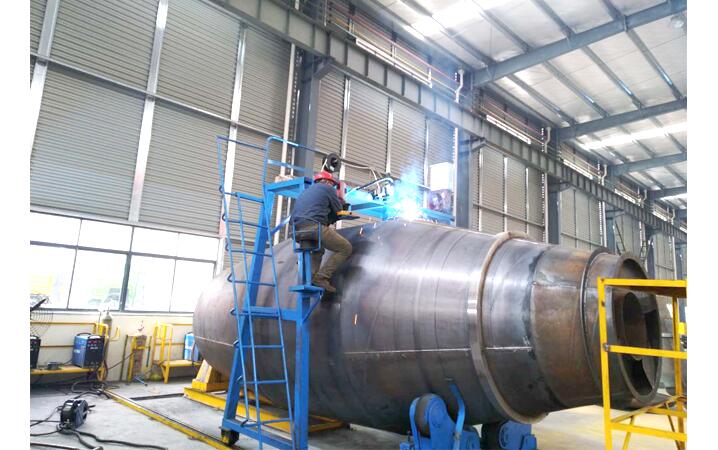 Concrete Mixer Drum Robotic Welding Solutions
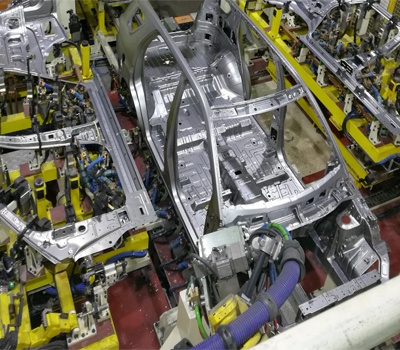 Automobile Body Production Line Welding Fixtures
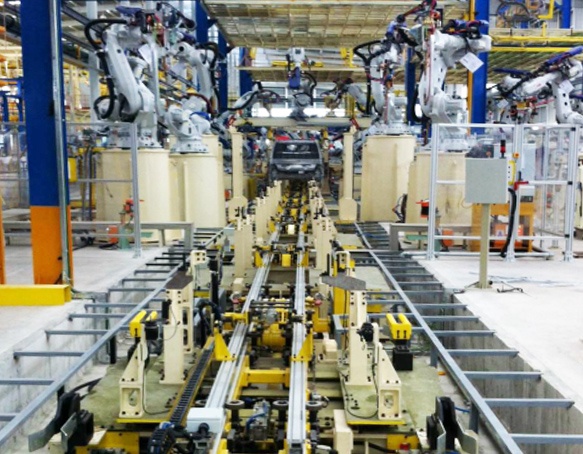 Automotive Body Welding Automated Manufacturing Solutions
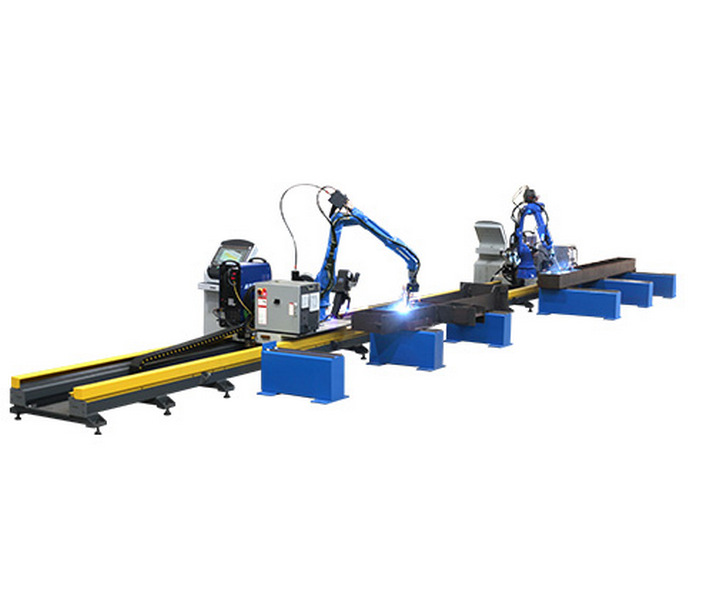 Free-Teaching Programming Welding Robot Cell For I Beam Welding
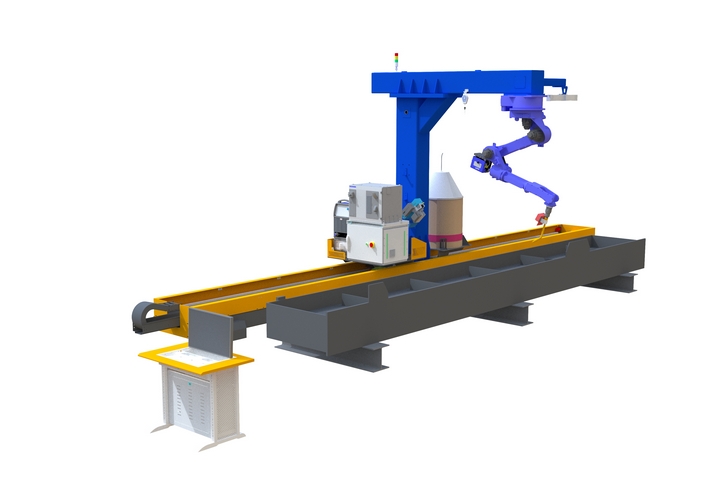 No Programming Required Robotic Welding Systems for H beam Welding Line