Robotics Integration Companies With Experience in Welding Automation
2026-01-22 17:14:09
Many factories make a mistake in their first step when it comes to welding automation: mistaking "buying robots" for "automation." The result is that robots arrive, but problems arise—unstable welds, slow cycle times, and chaotic changeovers. The real solution to these problems isn't the robot brand, but rather robotics integration companies that understand the on-site process.
If you're currently selecting suppliers, this article will offer a more "engineer's perspective": how to find a reliable welding robot integrator, and why some robotics integration companies can turn projects into productivity tools rather than equipment showcases.
1. First, understand: welding automation isn't just about "getting robots moving," but about "stabilizing welding."
True welding automation solutions are not simply about getting a robotic arm to weld a line; they must simultaneously meet three goals:
Stable cycle time: maintaining consistent speed even when the crew changes
Long-term stability: maintaining consistent speed for three months, six months, or even a year.
Therefore, you're not looking for someone who sells machines, but rather a welding robot integrator who can deliver mass-producible systems. Excellent robotic welding integrators start by discussing processes and fixtures, not by boasting about robot parameters.
2. A reliable welding robot integrator will ask these 5 "tough questions" first:
Don't be afraid of these seemingly tedious questions; they precisely demonstrate that the other party is a serious welding robot integrator:
How much tolerance variation do your parts exhibit? What is the pre-weld consistency like?
Is the weld prioritized for "strength" or "appearance"?
Which areas are most prone to deformation? What is the allowable range of deformation?
Do you want a cycle time of several seconds? Or is stability the priority?
Will you expand your product range in the future? How frequently will you change models?
Robotics integration companies that truly understand welding will treat these as inputs to their system design. Because once welding enters mass production, workpiece differences, heat-affected zones, and fixture fatigue will all accumulate. If these problems are not addressed beforehand, failure to do so will inevitably lead to problems later.
3. Core Capabilities of Robotic Welding Integrators: Turning "Uncontrollable Factors" into "Controllable Processes"
Many project failures are not due to inadequate equipment, but rather the complexity of factory realities: incoming material deviations, assembly errors, welding thermal deformation, shift variations… This is the real battleground for welding automation solutions.
Mature robotic welding integrators typically incorporate three capabilities into their systems:
Fixture rigidity and positioning strategies: Ensuring repeatable positioning and reducing welding drift
Process window design: Making welding parameters more tolerant of minor deviations
Online process correction: Performing weld tracking and arc induction compensation when necessary
This is also the biggest difference between a welding robot integrator and a "robot installation team": the former incorporates risk into the system, while the latter leaves risk to the field.
Many customers have fallen into the trap: they found a general-purpose industrial robotic integrator that excelled at material handling and palletizing, but failed when it came to automated welding.
The most difficult aspect of welding automation is: Correct robot trajectory ≠ acceptable welding quality. A true welding robot integrator must understand:
Welding torch posture and molten pool stability
Welding sequence and deformation control
The process differences between multi-pass welding, fillet welding, and lap welding
If you see a company only talking about "robot speed, load capacity, and brand," but not "how to avoid welding defects," it's likely just a general industrial robotic integrator.
5. When choosing robotics integration companies, always consider "whether they can turn welding into a production line."
Many factories find that even with automated welding stations, production is still slow. The reason is the lack of a "connecting system."
Robotics integration companies that can truly build complete production lines often also possess the capabilities of automated assembly integrators, such as:
Loading and unloading and cycle time buffering design
Conveyor line and station logic
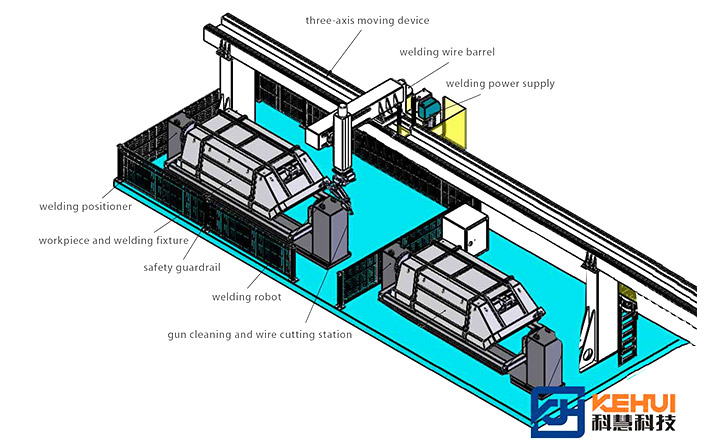
Positioner/rail/tilting mechanism coordination
Quality traceability and process data recording
When a welding robot integrator can also effectively connect assembly and logistics, you get more than just a robot; you get a welding automation solution that can continuously run in production.
6. Quickly Determine if a Welding Robot Integrator is Reliable: Check Their Acceptance Criteria
To quickly screen suppliers, you can ask directly:
"If you don't look at videos during acceptance testing, what do you look for?"
A reliable welding robot integrator will typically provide these indicators:
Weld strength and flaw detection requirements (e.g., sampling rate)
Cycle time achievement and OEE targets
Changeover time, alarm recovery time
Tooling lifespan and maintenance schedule
Robotic welding integrators that dare to include these in their acceptance criteria are truly mass-production focused.
7. Finally: Why Should We Be Chosen?
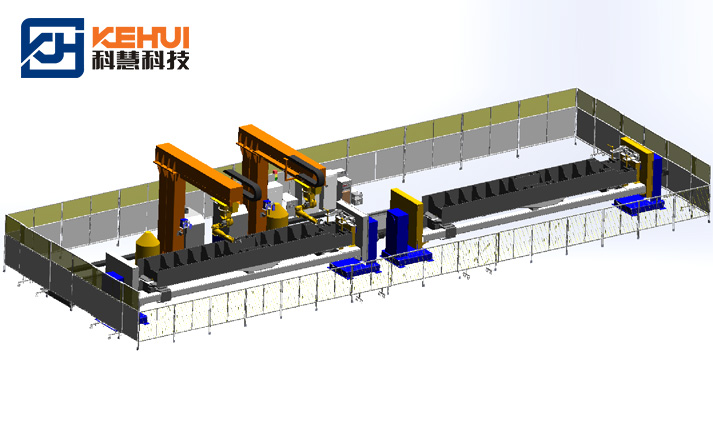
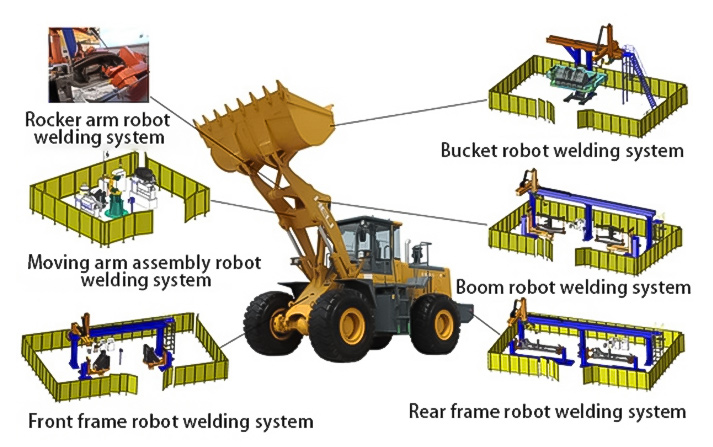
We are a robotics integration company specializing in welding automation, founded in 1994. We have long delivered welding robot workstations and automated production lines to manufacturing companies worldwide. We prefer to be called a "welding robot integrator that can run welding smoothly," rather than a supplier that sells equipment.
Our practical services include:
Process verification and cycle time planning based on workpiece and weld characteristics
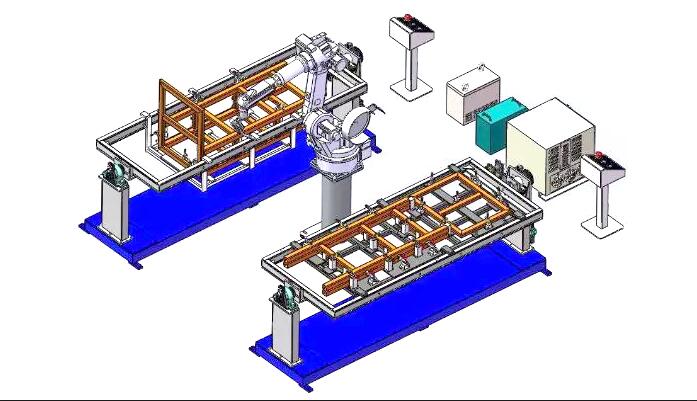
Matching design of fixtures, positioning mechanisms, and ground rails/travel axes
Developing replicable welding automation solutions to support capacity expansion and model changeover
Engineers can provide on-site guidance for installation, commissioning, and training to ensure stable production
Supporting project delivery and long-term operation and maintenance for customers in different countries
If you are looking for a welding robot integrator that truly delivers results, and you want more than just "robots moving," but "production lines running stably," then we are the kind of robotic welding integrators you should seriously consider.





 Chinese
 English
 OA
OA Current location:
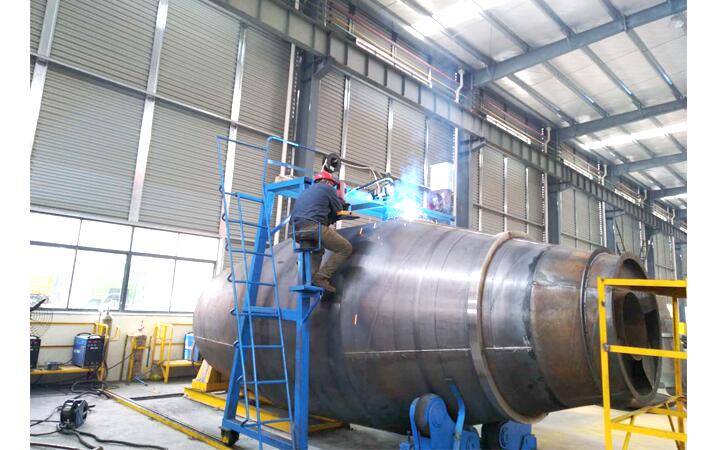 Concrete Mixer Drum Robotic Welding Solutions
 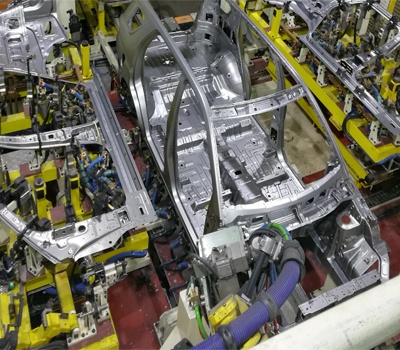 Automobile Body Production Line Welding Fixtures
 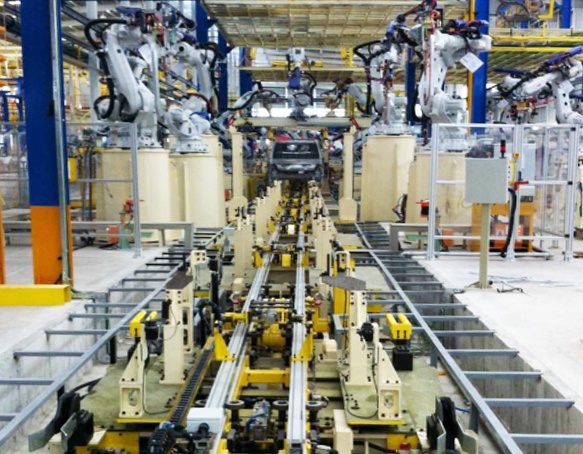 Automotive Body Welding Automated Manufacturing Solutions
 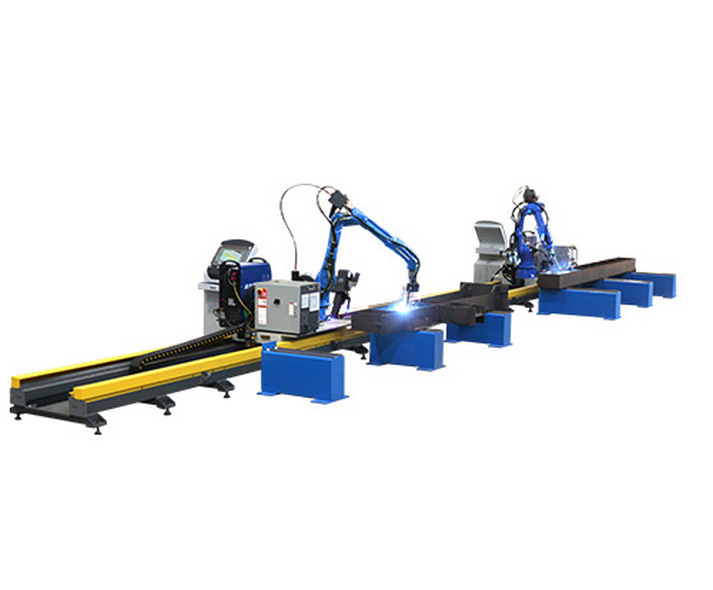 Free-Teaching Programming Welding Robot Cell For I Beam Welding
 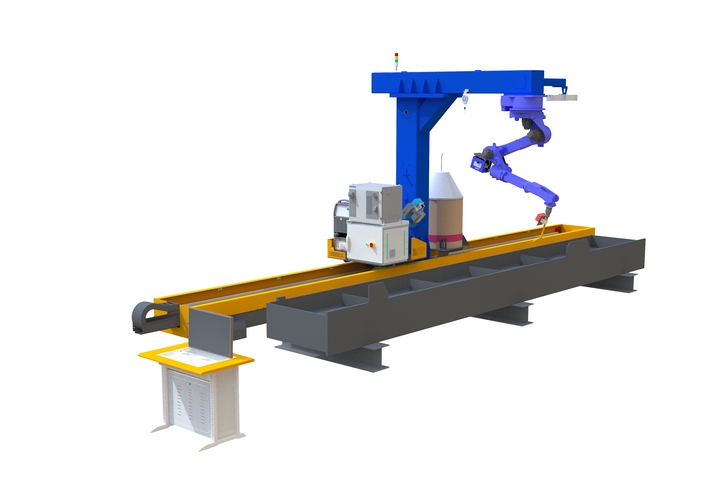 No Programming Required Robotic Welding Systems for H beam Welding Line