+86 15633683072
In boiler manufacturing, producing one acceptable weld is not the real challenge. The harder task is producing hundreds or thousands of tube welds with consistent quality, regardless of who operates the equipment.
A boiler factory may have several welding operators working across different shifts. One operator may have years of experience, while another is relatively new. Even with the same drawing and welding equipment, differences in torch angle, arc length, travel speed, filler addition, and start/stop technique can affect the final weld.
This is why modern manufacturers increasingly treat the boiler tube welding procedure as a production control system rather than simply a welding instruction.
The goal is simple:
Make the welding result depend more on the controlled process than on the individual operator.
Experienced welders can often compensate for small differences in joint fit-up and welding technique. However, this also makes the production process highly dependent on individual skill.
Imagine a boiler factory producing a large tube-sheet assembly. Operator A works the day shift, Operator B takes over in the evening, and Operator C continues the next morning.
They may all use the same equipment, but their actual welding behavior can still differ.
These include:
The result may not always be an obvious defect. Instead, variation gradually appears in weld appearance, penetration, distortion, cycle time, and inspection results.
This is why welding operator consistency is a manufacturing issue, not simply a training issue.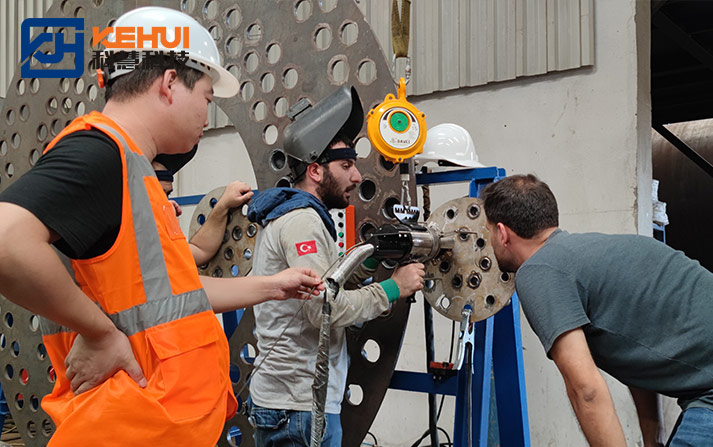
Standardization does not mean forcing every operator to physically weld in exactly the same way.
It means controlling the variables that should not depend on personal preference.
A practical boiler tube welding procedure should normally cover four areas:
For tube-to-tubesheet welding, manufacturers can standardize:
If these conditions vary too much, even automated equipment cannot completely compensate.
Therefore, a reliable boiler tube welding procedure should connect joint preparation with the welding process.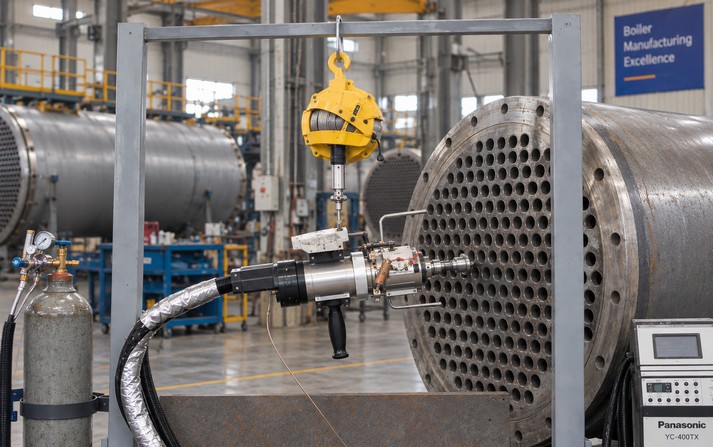
One of the most effective ways to reduce operator variation is to move critical welding decisions from the operator to the production process.
Instead of allowing each operator to select current according to personal experience, manufacturers can establish qualified standardized welding parameters for each joint configuration.
These may include:
The exact values depend on tube material, diameter, wall thickness, joint design, and welding process.
The important point is repeatable parameter management, rather than one universal parameter set.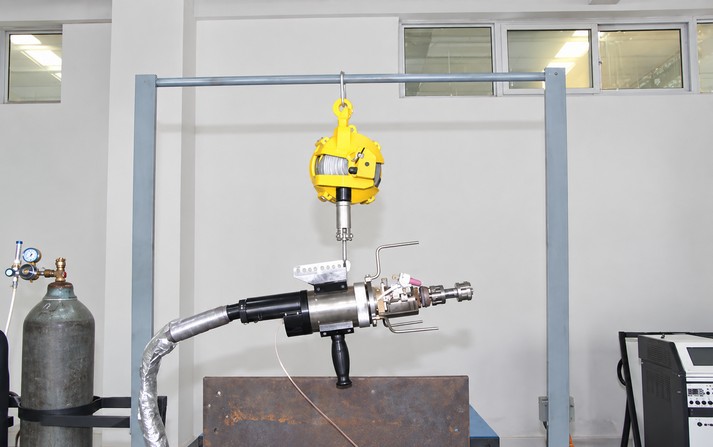
A boiler manufacturer may produce different models with different tube diameters, materials, and wall thicknesses.
If operators manually enter or adjust parameters for every job, production variation becomes more likely.
A digitally controlled welding system can store qualified programs for different joints.
For example:
Program A — Small Boiler Tube
→ Current profile
→ Pulse sequence
→ Travel speed
→ Shielding gas settings
Program B — Thick-Wall Tube
→ Different heat input
→ Different travel speed
Program C — Tube-to-Tubesheet Joint
→ Joint-specific welding sequence
→ Controlled torch movement
→ Start/end parameters
The result is that welding knowledge developed by experienced engineers can be reused across different operators and shifts.
A major application of process standardization is orbital welding for boiler tubes.
Instead of requiring an operator to manually control torch movement around the complete joint, an orbital welding system mechanically controls the welding path.
Depending on the equipment, the system can control:
The operator's role changes from continuously controlling the weld to setting up, verifying, and monitoring the process.
Therefore, orbital welding for boiler tubes is not simply about replacing manual welding. Its greater value is reducing unnecessary variation in repetitive production.
Consider a boiler manufacturer producing hundreds of similar tube joints.
At the beginning of a shift, the operator carefully positions the torch and produces a good first weld.
After several hours, small changes may occur in:
The difference between weld #1 and weld #500 may be difficult to notice individually, but becomes much clearer when hundreds of joints are inspected together.
With automatic boiler tube welding, the programmed welding movement and parameters can remain substantially more consistent throughout the production batch.
This is why manufacturers should evaluate automation based on welding process repeatability, not only welding speed.
A factory with multiple shifts needs a process that can be transferred easily between operators.
A practical boiler tube welding procedure should answer:
This makes the production process less dependent on individual experience.
Tube-to-tubesheet joints are particularly suitable for process standardization because boilers and heat exchangers may contain hundreds or thousands of repetitive tube connections.
With tube to tubesheet orbital welding, the welding head follows a predefined path around the joint while the welding power source follows programmed parameters.
This creates a more controlled relationship between:
Position → Time → Heat Input → Weld Formation
rather than relying entirely on manual torch movement.
For repetitive tube-sheet production, this can significantly improve process consistency.
An automatic tube sheet welding machine is more than a motorized welding torch. A complete system may include:
A typical production cycle may involve loading the workpiece, aligning the welding head, selecting the approved program, and starting the cycle.
The machine then performs the programmed welding sequence.
This makes an automatic tube sheet welding machine particularly useful when manufacturers need to produce large numbers of similar tube-to-tubesheet joints.
Automation does not make welding expertise unnecessary. Instead, it changes where that expertise is applied.
Experienced personnel can focus on:
The operator becomes part of a controlled manufacturing system rather than the sole source of process knowledge.
This distinction is important: the goal is process standardization, not simply operator replacement.
Manufacturers can build a standardized process around five stages.
Document tube diameter, wall thickness, material, tube projection, joint design, and accessibility.
Establish current, travel speed, pulse settings, shielding gas, and welding sequence. This becomes the production boiler tube welding procedure.
Produce representative welds and evaluate them against applicable quality requirements.
The goal is to prove that the process works consistently, not just that one weld looks good.
Store the approved welding program in the equipment so operators can select the correct process without repeatedly changing critical parameters.
Track abnormal welds, consumable condition, equipment problems, joint preparation issues, and inspection results.
This creates a feedback loop for continuous improvement.
Not every boiler manufacturer needs the same level of automation.
For small quantities and highly customized joints, experienced manual welding may remain the most flexible solution.
A hybrid approach can combine:
When hundreds or thousands of similar joints are produced, automatic boiler tube welding can provide stronger advantages in consistency and production control.
Manufacturers should evaluate not only labor cost but also:
Boiler manufacturers sometimes try to solve production inconsistency simply by purchasing faster welding equipment.
But equipment alone does not create standardization.
A stronger approach is:
Joint Standardization → Welding Procedure → Parameter Validation → Machine Program → Operator Training → Production Monitoring
Once this foundation is established, orbital welding for boiler tubes and automated welding technologies become much easier to implement.
The machine becomes the execution platform for a defined and validated manufacturing process.
For repetitive tube joints, an automatic tube sheet welding machine can help transfer welding knowledge from experienced engineers and welders into a repeatable production system.
For boiler manufacturers, the best solution is not always a standard machine selected from a catalog.
Tube diameter, wall thickness, material, tube projection, tubesheet geometry, joint accessibility, production quantity, and welding process can all affect the equipment configuration.
KEHUI develops automated welding equipment and customized welding solutions for industrial tube and pipe applications, including:
For factories with multiple operators and shifts, the engineering objective should be clear:
Make the welding process repeatable enough that changing the operator does not fundamentally change the weld.
That is the foundation of scalable boiler welding automation.
Use a qualified boiler tube welding procedure, consistent joint preparation, standardized welding parameters, programmed equipment, operator training, and production inspection. Automation can further reduce operator-dependent variation.
Orbital welding for boiler tubes controls torch movement and welding parameters mechanically or electronically, improving welding process repeatability for repetitive tube joints.
Automatic boiler tube welding is particularly suitable when manufacturers have high production volumes, repetitive tube joints, multiple shifts, or significant operator-to-operator variation.
An automatic tube sheet welding machine automates torch movement and, depending on configuration, controls welding parameters, sequencing, positioning, and indexing for repetitive tube-sheet joints.
Usually not. Tube diameter, wall thickness, material, joint geometry, and heat input requirements can change the welding process. Different joint configurations may require different validated programs.
Tube to tubesheet orbital welding controls the welding path around the joint, reducing variation in torch movement and helping create more repeatable welding cycles.
Evaluate tube diameter, wall thickness, material, joint design, tubesheet geometry, production volume, number of operators, welding process, accessibility, automation level, parameter control, and traceability.
Standardizing tube welding across different operators is fundamentally a process-control problem, not simply a welder-skill problem.
A well-designed boiler tube welding procedure defines how the joint is prepared, welded, inspected, and reproduced. Standardized welding parameters then turn that procedure into a controlled production process.
For repetitive manufacturing, orbital welding for boiler tubes, automatic boiler tube welding, and an automatic tube sheet welding machine can further reduce operator-dependent variation and improve welding process repeatability.
The goal is not to make every operator weld like the most experienced welder.
It is to design the production system so that every qualified operator can consistently produce the same welding result.
That is how modern boiler manufacturers turn individual welding experience into a scalable and repeatable manufacturing process.
Zhengzhou Kehui Technology Co., Ltd
Email: info@zzkehui.com





 Chinese
 English
 OA
OA Current location:
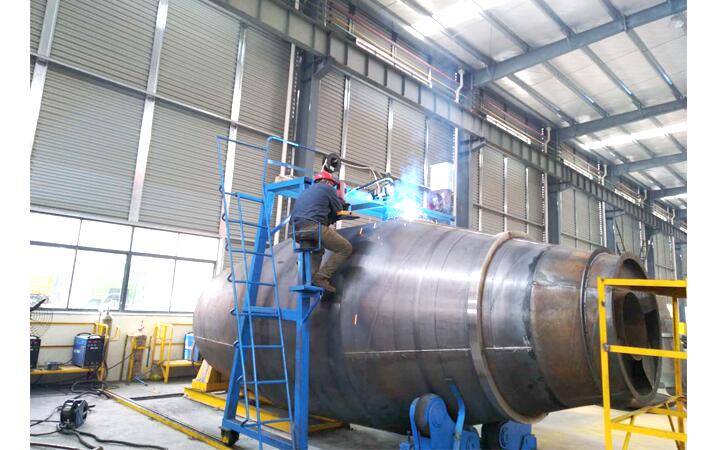 Concrete Mixer Drum Robotic Welding Solutions
 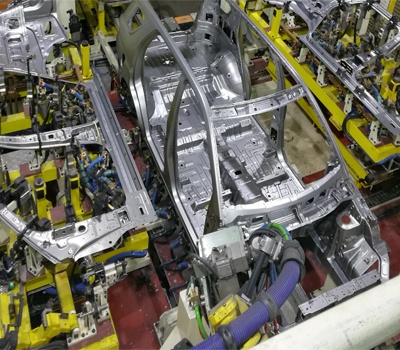 Automobile Body Production Line Welding Fixtures
 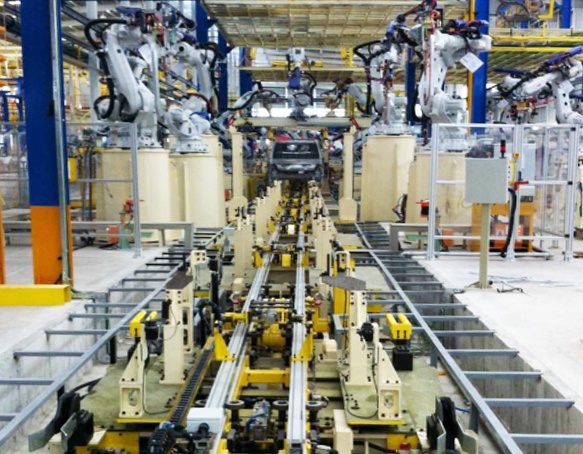 Automotive Body Welding Automated Manufacturing Solutions
 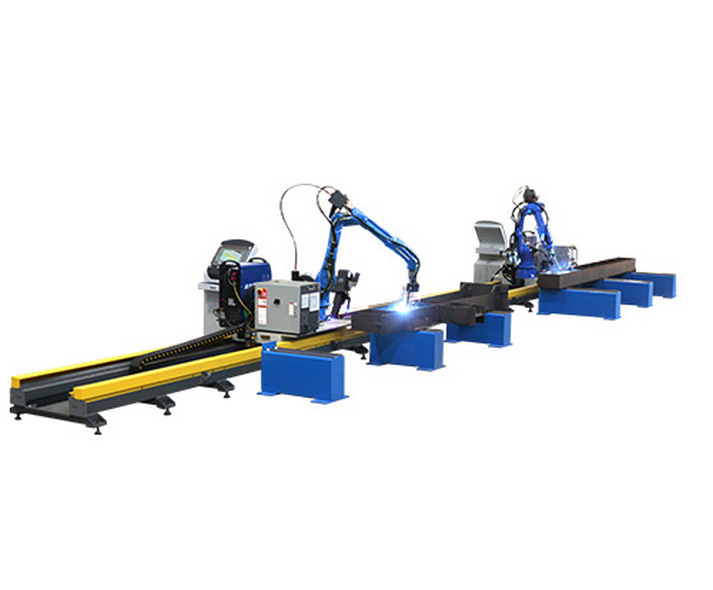 Free-Teaching Programming Welding Robot Cell For I Beam Welding
 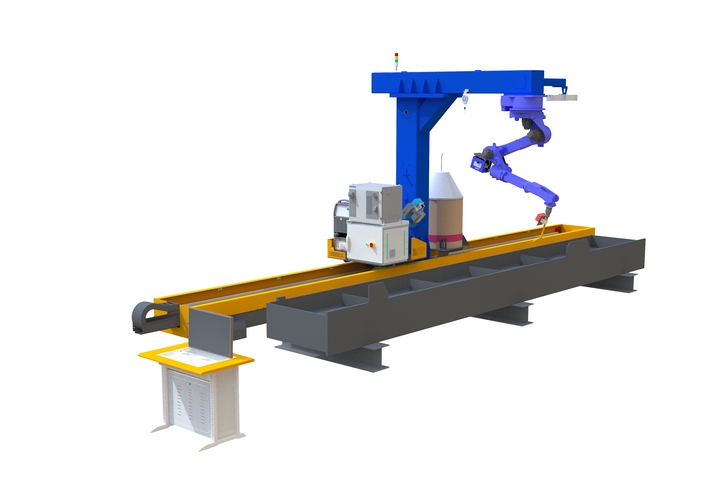 No Programming Required Robotic Welding Systems for H beam Welding Line