+86 15633683072
Yes. Tube hole clearance can affect tube-to-tubesheet welding quality, especially when the clearance becomes inconsistent or falls outside the qualified range.
The clearance between the tube outside diameter and the tubesheet hole affects tube-to-tubesheet fit-up, tube alignment, weld geometry, penetration, and potentially leak tightness.
In a real heat exchanger factory, tube hole clearance should therefore be treated as part of the welding preparation—not simply as a machining dimension.
The key is not to make the clearance “as small as possible” in every application. The required fit depends on the tube material, tube dimensions, joint design, insertion requirements, applicable specifications, and qualified welding procedure. Industry guidance also recognizes different standard and close-fit conditions for tube holes.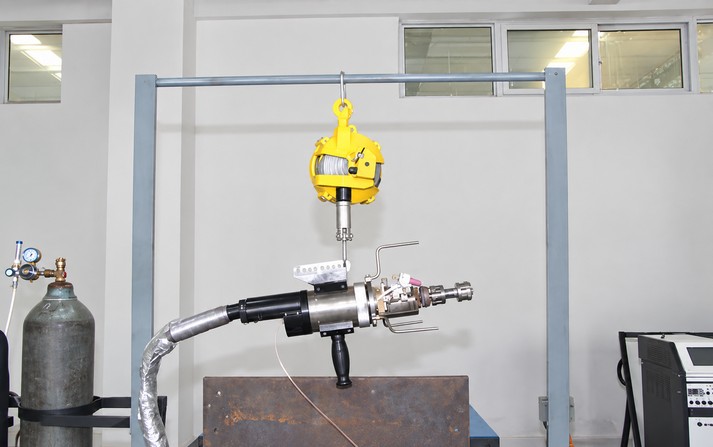
Tube hole clearance is the dimensional difference between the tube outside diameter (OD) and the corresponding hole diameter in the tubesheet.
For example:
Tube Hole Clearance = Tube Hole Diameter − Tube Outside Diameter
A small amount of clearance is normally necessary so that tubes can be inserted through the tubesheet and, where applicable, through the complete tube bundle assembly.
But from a welding perspective, the important question is:
What happens to the weld when the clearance changes from the condition used during procedure qualification?
That is where tube-to-tubesheet fit-up becomes important.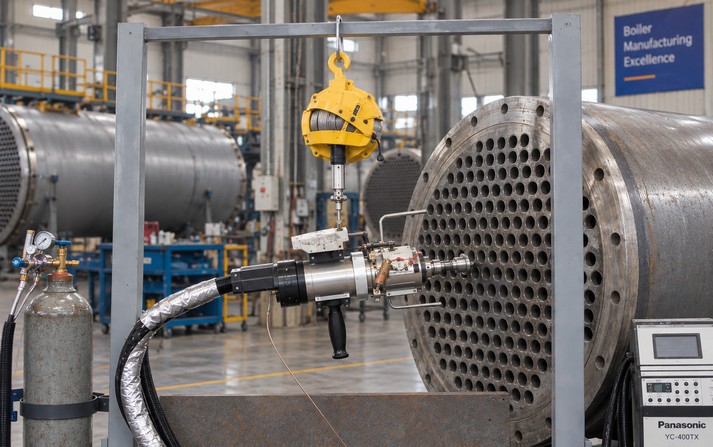
Tube-to-tubesheet fit-up describes how accurately the tube sits inside the tubesheet hole before welding.
If the clearance is relatively large, the tube may have more freedom to move inside the hole. This can make it harder to maintain consistent tube alignment and projection across hundreds of tubes.
If the clearance is too tight, however, tube insertion can become difficult and assembly tolerances can accumulate across the tube bundle.
A heat exchanger factory therefore needs a controlled balance between:
Good tube-to-tubesheet fit-up gives the welding head a predictable joint to follow.
Consider two tube joints with the same tube material and welding current.
One has a relatively tight fit, while the other has noticeably more clearance around the tube.
The arc still follows the same programmed path, but the amount of material available around the joint has changed.
This can influence:
This is why tube sheet welding parameters should not be separated completely from joint preparation.
A parameter set developed on one joint geometry may not produce exactly the same result when the physical fit-up changes significantly.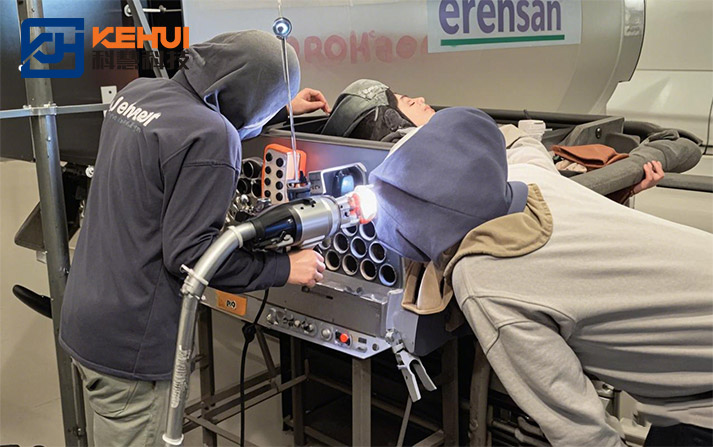
Yes, but clearance is only one factor.
In heat exchanger tube sheet welding, penetration is influenced by the interaction of joint geometry, material thickness, tube projection, torch position, current, travel speed, and heat input.
For example, if the tube is not centered consistently because of excessive clearance, the torch-to-joint position can vary.
That can create differences in the weld profile from one tube to another.
For a production tube sheet heat exchanger, this matters because a manufacturer may have hundreds or thousands of tube-to-tubesheet joints. A small variation repeated many times can become a production quality issue.
Research on tube-to-tubesheet joints also shows that joint geometry and assembly conditions can influence weld penetration and the minimum leak path.
Large clearance does not automatically mean that the weld will fail.
The actual effect depends on the joint design and the qualified welding procedure.
However, excessive or inconsistent clearance can create several manufacturing problems.
For tube to tube sheet seal welding, this deserves particular attention because the weld must provide the required sealing function.
A seal weld is intended primarily to prevent leakage, while a strength weld also contributes to the structural load-carrying function of the joint.
A smaller clearance is not automatically better for every manufacturing operation.
The tube still needs to be inserted through the tubesheet and assembled with the required production tolerances.
If the hole is too tight, a factory may experience:
Therefore, the objective of tube-to-tubesheet fit-up is not simply “minimum clearance.”
The objective is controlled clearance that meets the design and welding requirements.
In mass production, engineers should not look at one tube hole in isolation.
Imagine a tubesheet containing 1,000 holes.
Even if the nominal clearance is correct, variation in:
can create different tube-to-tubesheet fit-up conditions across the same tubesheet.
This is why tube sheet machining accuracy is an important upstream factor in heat exchanger tube sheet welding.
Some industry specifications distinguish standard and special close-fit tube-hole requirements depending on materials and applications, reinforcing the need to control the machining condition rather than relying on a generic clearance value.
Not necessarily.
If the clearance remains within the qualified range of the welding procedure, the existing tube sheet welding parameters may remain suitable.
If clearance changes significantly, however, the manufacturer should evaluate whether it affects:
This is especially important when a factory introduces a new tube diameter, material, or tubesheet design.
The correct approach is not to arbitrarily increase welding current to compensate for a larger gap.
Instead:
First verify the joint geometry and tube-to-tubesheet fit-up, then determine whether welding parameters need adjustment.
Consider a manufacturer producing a tube sheet heat exchanger with stainless steel tubes.
The tube OD is the same for the entire order, but the tubesheet comes from two different machining batches.
The welding machine and nominal parameters are unchanged.
Yet the second batch may show greater variation in weld appearance and geometry.
This does not necessarily mean the welding machine is the problem.
The real issue may have started earlier in the manufacturing chain:
Tube sheet machining → clearance variation → fit-up variation → welding variation
For a professional tube to tubesheet welding machine manufacturer, understanding this chain is important when developing equipment for real factory conditions.
A qualified tube to tubesheet welding machine manufacturer should consider more than the nominal tube diameter.
The equipment may need to accommodate differences in:
An automatic system cannot correct unlimited mechanical variation. The workpiece still needs controlled manufacturing tolerances.
However, once the mechanical conditions are controlled, an automatic system can provide more repeatable torch movement and tube to tube sheet seal welding execution.
This is particularly useful when a factory has large numbers of identical tube joints.
Before starting heat exchanger tube sheet welding, a practical factory inspection can include:
This simple checklist can prevent a situation where the welding operator is asked to solve a mechanical fit-up problem by changing welding parameters.
For a tube sheet heat exchanger, welding quality is not created only at the moment the arc starts.
It is built through several upstream steps:
Tube manufacturing → Tubesheet machining → Tube insertion → Tube-to-tubesheet fit-up → Welding → Inspection
If the first few steps are inconsistent, the welding process has to deal with greater variation.
That is why experienced manufacturers treat tube hole machining and Tube-to-tubesheet fit-up as part of the overall welding quality system.
For tube to tube sheet seal welding, this is even more important when leak tightness is the primary requirement.
Yes. Clearance can affect Tube-to-tubesheet fit-up, tube alignment, weld geometry and penetration. The actual impact depends on the joint design and qualified welding procedure.
Excessive clearance can make tube positioning less stable and increase variation in Tube-to-tubesheet fit-up. It may also affect weld geometry and sealing performance.
No. Tubes still need to be inserted and assembled without excessive force or damage. The appropriate clearance should follow the design, applicable specification and qualified procedure.
It can. Significant changes in joint clearance may affect weld geometry and heat distribution, so existing tube sheet welding parameters may need evaluation before production.
It is a critical part of consistent heat exchanger tube sheet welding. Good fit-up gives the welding system a predictable joint and reduces variation between individual tubes.
An automatic system can improve repeatability, but it cannot compensate for unlimited dimensional variation. A professional tube to tubesheet welding machine manufacturer should consider the actual tube, tubesheet and joint tolerances when designing the welding solution.
Zhengzhou Kehui Technology Co., Ltd
Email: info@zzkehui.com





 Chinese
 English
 OA
OA Current location:
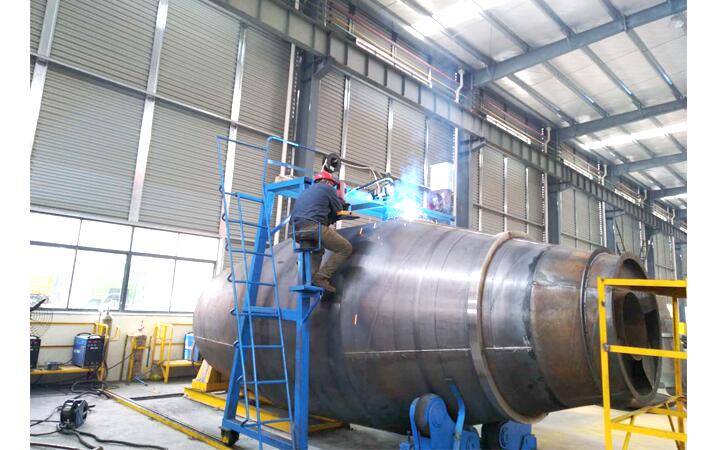 Concrete Mixer Drum Robotic Welding Solutions
 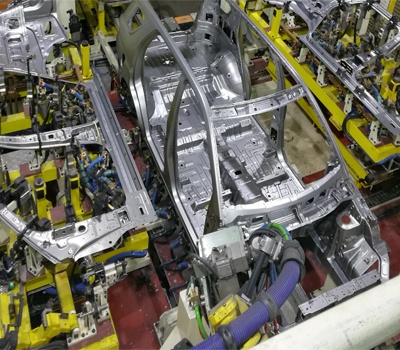 Automobile Body Production Line Welding Fixtures
 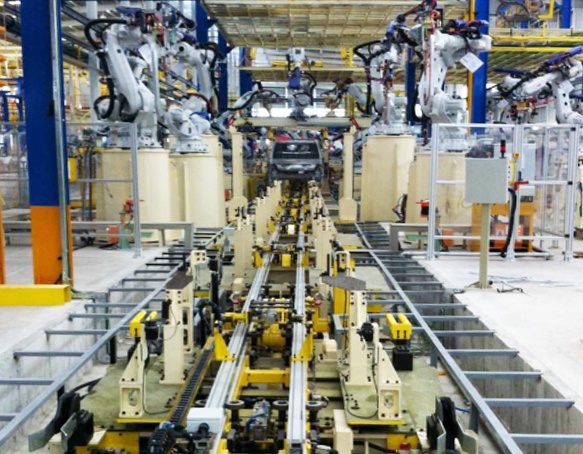 Automotive Body Welding Automated Manufacturing Solutions
 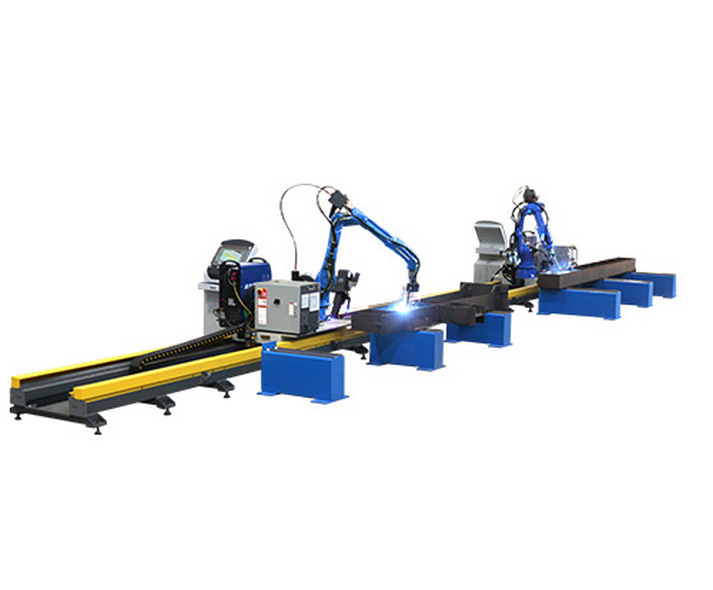 Free-Teaching Programming Welding Robot Cell For I Beam Welding
 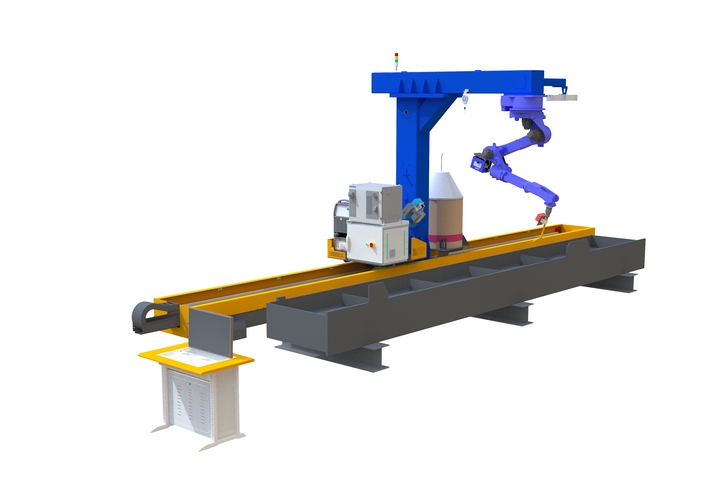 No Programming Required Robotic Welding Systems for H beam Welding Line