Visit any modern factory, and you'll see them: robotic arms moving in precisely choreographed sequences, autonomous carts ferrying materials, screens displaying real-time production data. The era of automation and robotics in manufacturing has arrived—but not in the way the headlines predict. It's quieter, more practical, and far more strategic than the "lights-out factory" fantasy.
The real story isn't about removing humans. It's about removing the parts of work that break humans—the repetition, the heat, the ergonomic brutality—while amplifying the parts that humans do best: judgment, adaptation, problem-solving.
The Automation Hierarchy
Not all automation is created equal. Walk through a typical manufacturing facility, and you'll see layers of technology, each solving a different problem.
At the bottom, you have fixed automation—dedicated machines that do one thing, forever. Above that, programmable automation: CNC machines, robotic cells that can switch tasks with a software change. At the top, you have the emerging world of robotic process automation in manufacturing—systems that don't just move material, but move information, making decisions based on real-time data.
The manufacturers winning today understand that automation and robotics in manufacturing isn't a single investment. It's a portfolio. You match the technology to the task.
Where Welding Lives
Welding occupies a unique space in this hierarchy. It's physically demanding—the heat, the smoke, the awkward positions. It's quality-critical—a bad weld can mean field failure, liability, recall. And it's facing a demographic crisis: the skilled welders who built our infrastructure are retiring, and not enough young workers are replacing them.
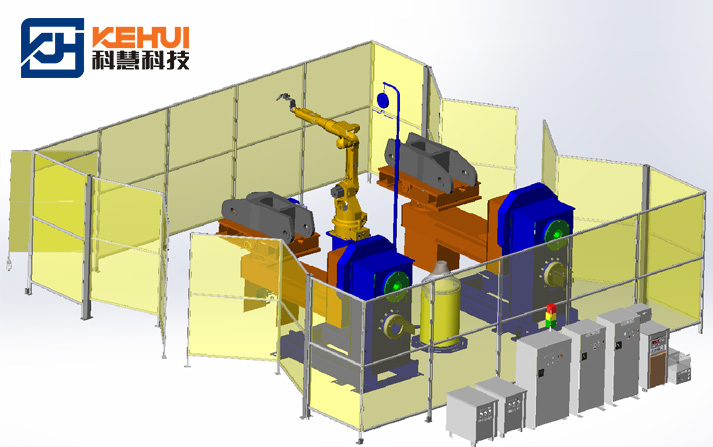
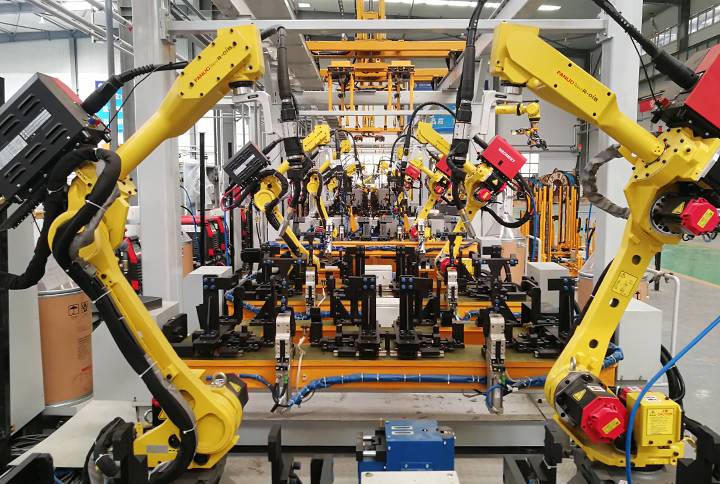
This is why spot welding automation has become the entry point for so many manufacturers. Spot welding is repetitive, high-volume, and perfectly suited to robotic intervention. A spot welding automation cell can out-produce multiple manual welders while maintaining consistency that human hands simply cannot match.
But here's what the brochures don't tell you: implementing spot welding automation requires more than buying a robot. It requires understanding metallurgy, part variation, and production flow. It requires a Welding robot integrator who knows how to make the technology work in your specific environment.
The Integration Gap
The difference between a successful automation project and an expensive disappointment often comes down to integration. A robot is just a motor with a computer. Making it weld—consistently, shift after shift, with real-world material variation—requires expertise.
A qualified Welding robot integrator brings more than robotics knowledge. They understand that a weld that looks perfect might hide cold fusion. They know how heat input affects distortion across a multi-pass sequence. They've learned, through years of trial and error, which robotic welding solutions work for high-strength steel versus aluminum versus exotic alloys.
The best robotic welding solutions aren't the ones with the flashiest specs. They're the ones that run 24/7 with minimal intervention, that adapt to part variation, that generate data you can actually use. And those solutions don't come from equipment catalogs. They come from experienced integrators who've seen every failure mode and designed around them.
Beyond the Weld Cell
While welding gets attention, the broader trend is robotic process automation in manufacturing—using robots to handle not just physical tasks, but the information flow around them.
Imagine a spot welding automation cell that doesn't just weld. It tracks electrode wear and schedules maintenance. It logs every weld parameter and flags deviations. It communicates with upstream stamping operations, adjusting for material variation before the first arc strikes. This is robotic process automation in manufacturing in action: the robot becomes a node in an information network, not just a tool.
Manufacturers implementing this approach report dramatic improvements. One automotive supplier reduced weld defects by 40% after implementing data-connected robotic welding solutions. A heavy equipment fabricator extended electrode life by 30% through predictive maintenance triggered by weld data. The robots didn't work harder—they worked smarter, guided by information.
The Human Partnership
Here's the counterintuitive truth about advanced automation and robotics in manufacturing: it makes human workers more valuable, not less.
When you deploy spot welding automation, the welder doesn't lose their job. They get promoted. They become the supervisor of multiple cells, responsible for setup, troubleshooting, and continuous improvement. Their craft knowledge—the subtle understanding of how metal behaves under heat—becomes the intelligence guiding the robots.
This partnership extends across the facility. Maintenance technicians learn to diagnose robotic systems. Engineers optimize programs for new parts. Operators monitor multiple stations from a control room instead of standing in smoke all day. Robotic process automation in manufacturing doesn't eliminate the need for skilled people—it changes what those people do.
Why Thirty Years Matters
We've been delivering automation and robotics in manufacturing solutions since 1994. Before "Industry 4.0" was a term, we were helping manufacturers figure out how to make robots weld profitably. We learned that the technology is the easy part. The hard part is making it work with real parts, real schedules, real people.
Our spot welding automation systems run in factories across the globe—automotive assembly, heavy equipment, job shops. Every installation comes with on-site engineering support because we know that success isn't automatic. It's earned through attention to details: cooling water quality, electrode maintenance, program optimization for each part variant.
As a Welding robot integrator, we've developed robotic welding solutions for every major material type and industry application. Our library of process parameters spans three decades of learning. Our field service engineers understand that stopping production costs thousands per minute, so prevention beats reaction.
And we're embracing the next wave: robotic process automation in manufacturing that connects weld data to quality systems, that predicts failures before they happen, that turns robots from isolated tools into integrated production assets.
The factory of the future isn't a distant concept. It's being built today, one cell at a time. Whether you're deploying your first spot welding automation cell or scaling toward full automation and robotics in manufacturing, the right partner makes all the difference.
We've spent thirty years proving that. Let us prove it to you.





 Chinese
 English
 OA
OA Current location:
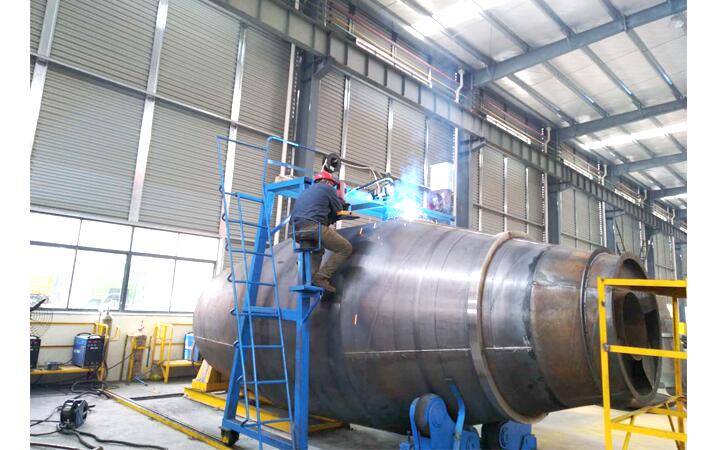 Concrete Mixer Drum Robotic Welding Solutions
 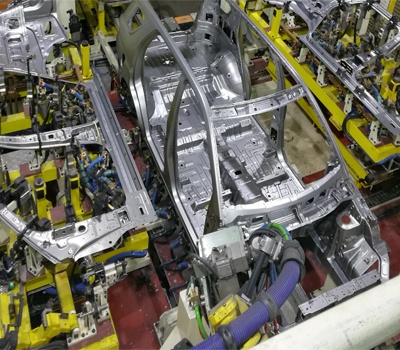 Automobile Body Production Line Welding Fixtures
 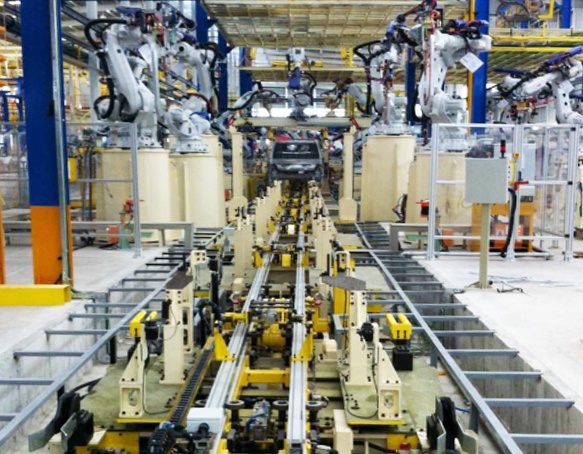 Automotive Body Welding Automated Manufacturing Solutions
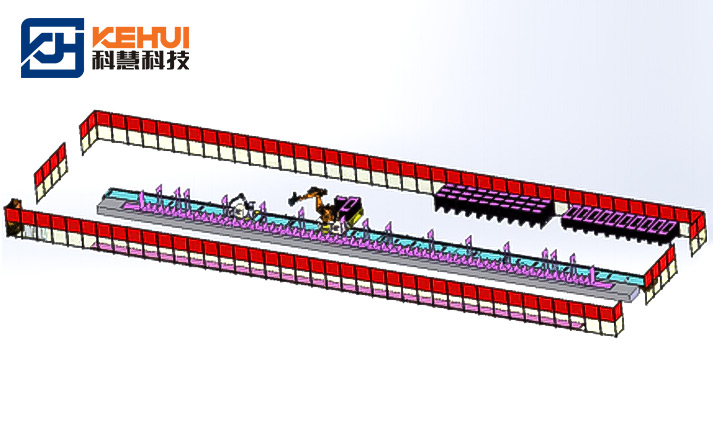
 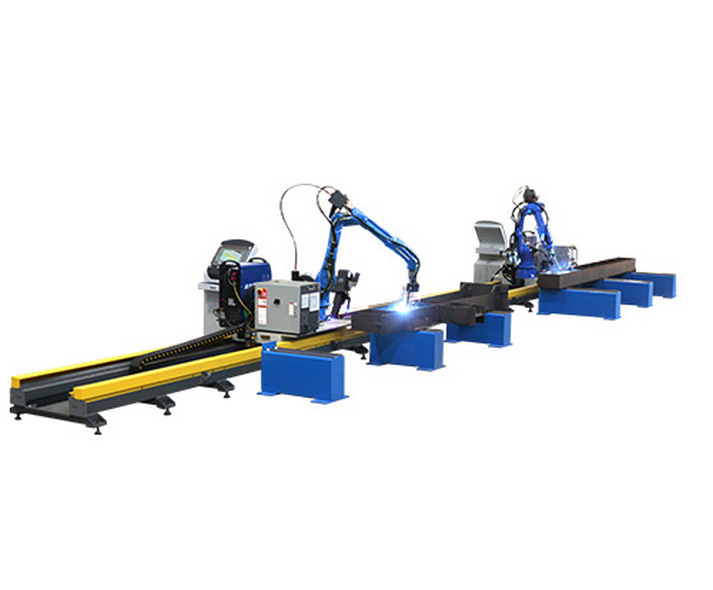 Free-Teaching Programming Welding Robot Cell For I Beam Welding
 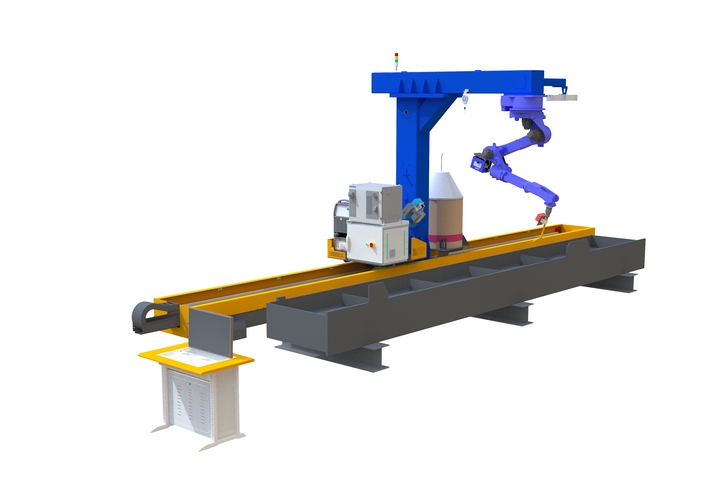 No Programming Required Robotic Welding Systems for H beam Welding Line