Why Electrode Wear Defines Your Robot Spot Welding Process
2026-03-11 16:36:44
Ask any production manager what keeps them up at night, and they won't say "robot breakdowns." They'll say "hidden problems"—the gradual decay that creeps into the robot spot welding process when nobody's looking. The electrode caps that slowly flatten. The oxide layer that builds up unnoticed. The weld quality that drifts just enough to fail final inspection, but not enough to trigger an alarm.
Here's the uncomfortable truth: your robotic spot welding machine is only as good as its last tip dressing. And most factories are flying blind.
The 3,000-Weld Lie
Equipment catalogs love to throw around numbers. "Electrode life: 3,000 welds." Sounds clean. Sounds predictable. In reality? That number is a fiction .
A robotic spot welding machine running at 60 Hz on galvanized steel might hit 2,500 welds before the tip mushrooms. The same machine on bare steel might run 8,000. The difference isn't the robot—it's the process conditions that standard spot welding automation systems completely ignore: cooling water temperature, part fit-up variation, even the humidity on the shop floor .
The Physics of Decay
When you understand what's actually happening at the tip interface, the whole maintenance question shifts.
Every weld cycle does two things: it passes current through the electrode, and it applies force. The current causes localized heating that softens the copper alloy. The force causes mechanical deformation—the tip face gradually mushrooms outward. Meanwhile, zinc from coated steels alloy with the copper, forming brass-like compounds that increase electrical resistance .
The result? Your automation in spot welding system thinks it's delivering 8 kA, but the actual current reaching the weld interface drops by 15% over 1,000 cycles. The controller shows "parameter within limits." The weld? Cold.
Why Counting Welds Isn't Enough
Most facilities manage electrodes by counting. "Run 2,000 welds, then dress." It's simple. It's also wrong.
Research shows that electrode wear isn't linear—it accelerates . A tip that loses 0.1mm in the first 1,000 welds might lose 0.3mm in the next 500. The thermal expansion characteristics change as the tip geometry degrades, altering the dynamic resistance curve that determines nugget formation .
Smart spot welding automation today doesn't just count—it measures. By analyzing the displacement curve during welding, modern controllers can detect when the electrode is degrading before the weld quality drops . The difference between maximum electrode displacement and final displacement correlates strongly with tip condition. When that delta starts shrinking, your electrode is telling you it needs attention.
The Data You're Ignoring
Your robotic spot welding machine generates more data than you use. Dynamic resistance profiles. Force curves. Displacement over time. That data contains fingerprints of electrode wear .
Studies in automotive manufacturing show that maintenance issues account for nearly 80% of downtime in robotic welding operations . But here's the kicker—most of that downtime is reactive. Something breaks, you fix it. By the time you see a bad weld, you've already made dozens.
Machine learning models trained on weld data can detect electrode degradation with over 90% accuracy . They don't replace human judgment—they augment it. The system flags "this electrode is trending toward failure," and your team schedules dressing during the next break, not after the line stops.
What Predictive Maintenance Actually Looks Like
Forget the buzzwords. Here's what real predictive maintenance means for a robot spot welding process:
- Displacement monitoring: The controller tracks how far the electrodes move during welding. As tips wear, the displacement profile changes. When it crosses a threshold, the system alerts .
- Dynamic resistance analysis: Each material stack has a signature resistance curve. When that curve starts shifting, something's changing—often the electrode face .
- Vision-assisted inspection: Some systems now use cameras to inspect tip condition after dressing, ensuring the face is clean before the next weld cycle .
- Adaptive compensation: Instead of just alerting, advanced controls adjust parameters on the fly—slightly increasing current or force to compensate for tip wear, maintaining consistent weld quality through the electrode's life .
The Real Cost of Getting It Wrong
Let's do the math a major Tier 1 supplier recently ran . Over three years, unplanned maintenance in their welding lines cost over $150,000 in lost production. Seventy-nine percent of their downtime traced back to maintenance issues—not catastrophic failures, but the cumulative effect of undetected wear .
The fix wasn't more frequent dressing. It was smarter dressing. By implementing condition-based monitoring, they extended electrode life by an average of 30% while reducing non-destructive weld quality failures by half. The electrodes came out when they needed to, not on an arbitrary schedule.
Why Experience Changes Everything
Here's the gap between theory and practice: the research papers describe what's possible. We've spent thirty years figuring out how to make it work on real factory floors, with real production schedules, and real operators who don't have PhDs in signal processing.
Since 1994, we've been integrating spot welding automation for manufacturers who can't afford downtime. We've learned that the difference between a system that works and one that frustrates often comes down to how it handles the gray areas—the slightly worn tip, the marginal cooling water, the part that's "close enough" to spec.
When you work with us, you're not just buying a robotic spot welding machine. You're buying three decades of learning what breaks, what wears, and what to watch. Our engineers don't just install equipment—they train your team to read the signals, to understand what the data means, and to intervene before problems escalate.
We've shipped systems to manufacturers across the globe, from automotive assembly lines to heavy equipment fabricators. Every installation comes with on-site support—engineers who understand that welding is physics, not magic, and that maintenance is strategy, not an afterthought.
The million-weld question isn't "how long do your electrodes last?" It's "how do you know when they're done?" We've spent thirty years building answers. Let us show you what they look like in your shop.





 Chinese
 English
 OA
OA Current location:
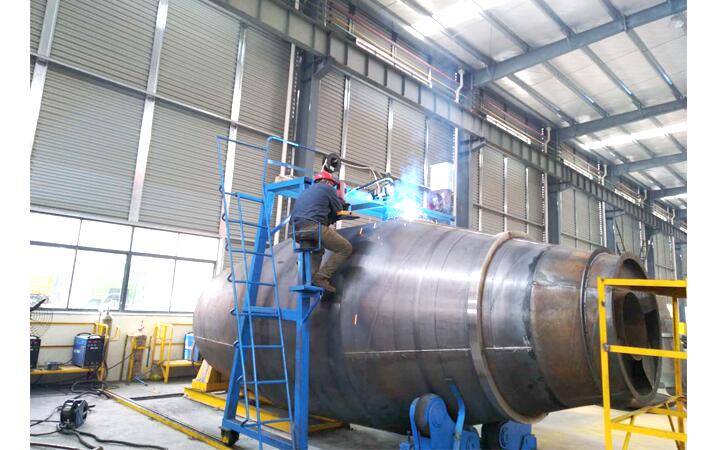 Concrete Mixer Drum Robotic Welding Solutions
 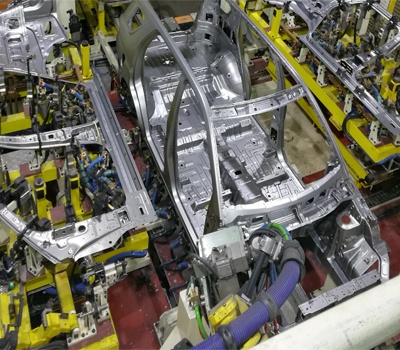 Automobile Body Production Line Welding Fixtures
 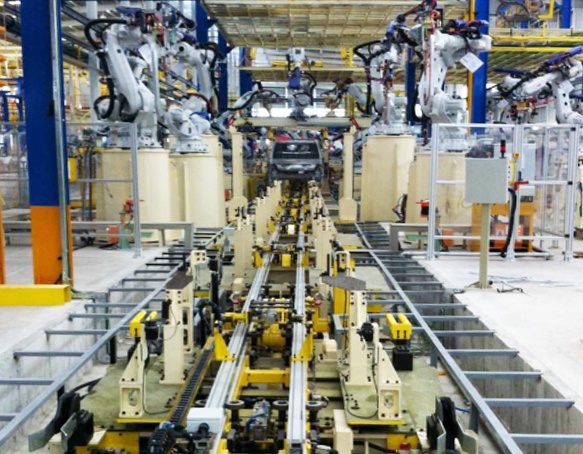 Automotive Body Welding Automated Manufacturing Solutions
 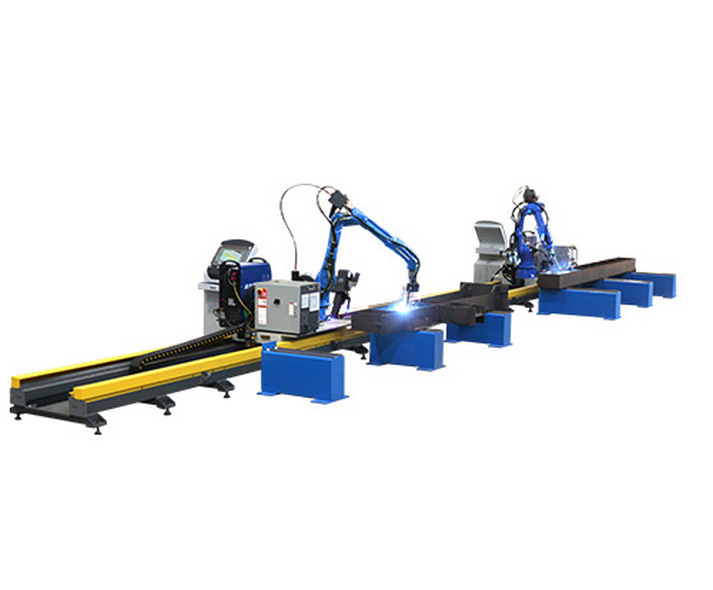 Free-Teaching Programming Welding Robot Cell For I Beam Welding
 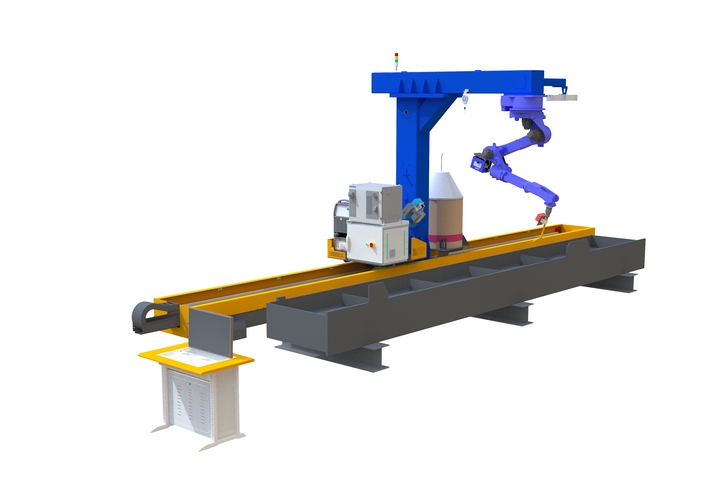 No Programming Required Robotic Welding Systems for H beam Welding Line