+86 15633683072
Every automation project looks stable on acceptance day. The real test begins three months later.
Most manufacturers encounter robotic welding issues and challenges not during installation, but during continuous production. The gap between “demo performance” and “factory reality” is where welding automation either proves its value—or exposes its weaknesses.
Understanding these robotic welding issues and challenges from a lifecycle perspective is essential for building reliable industrial robotics solutions.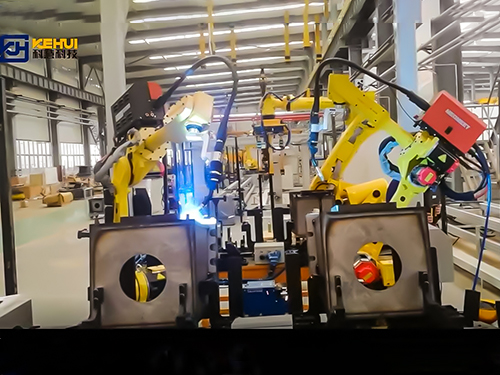
Many problems begin long before the first weld arc.
Common early-stage robotic welding issues and challenges include:
Underestimated heat distortion in large weldments
Unrealistic cycle time targets
Ignoring part tolerance variation
Selecting robot models without evaluating process load
At this stage, manufacturers often focus on robot brand or cost. However, successful robotic welding solutions begin with welding procedure validation, fixture stress analysis, and process simulation.
Strong industrial robotics solutions are engineered around welding behavior—not just robot capability charts.
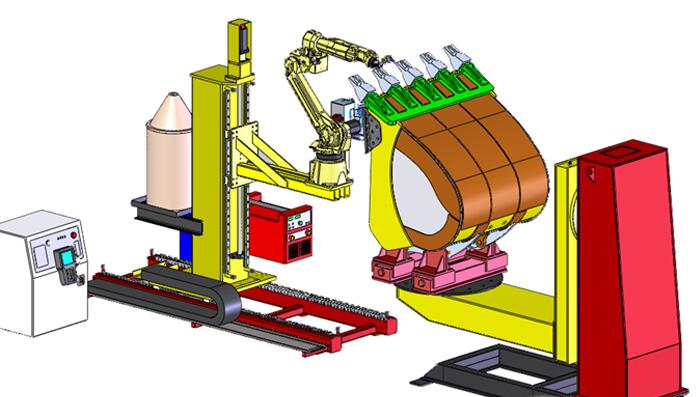
During commissioning, the system runs well under controlled conditions. But once production variability increases, hidden weaknesses appear.
Typical robotic welding issues and challenges at this stage:
Inconsistent arc start under different surface conditions
Wire feed instability after long duty cycles
Minor TCP deviations causing visible weld inconsistency
Spatter buildup affecting sensor reliability
These are not robot hardware failures. They are integration depth issues.
Proper robotic welding integration requires synchronized control between:
Robot controller
Welding power source
Wire feeder
Positioners
Safety systems
Many robotic welding machine manufacturers provide reliable robots, but system-level integration determines whether those robots perform consistently.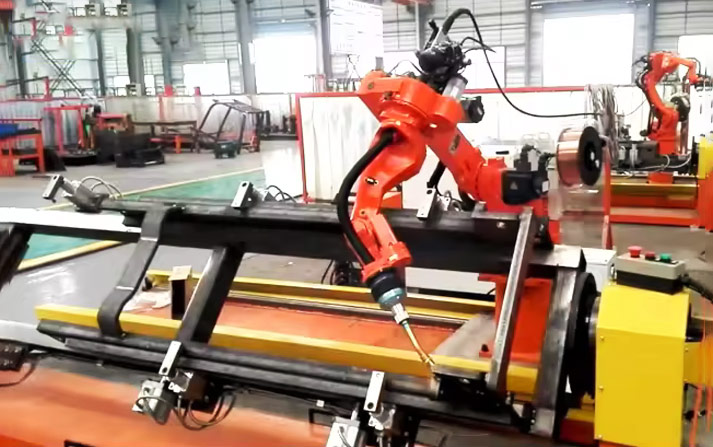
When production increases from single shift to continuous operation, new robotic welding issues and challenges appear:
Thermal drift in fixtures
Accumulated mechanical wear in torch mounts
Parameter deviation between shifts
Variation in operator handling of consumables
At this stage, reactive troubleshooting is no longer enough.
Proactive robotic welding solutions include:
Structured maintenance planning
Consumable lifecycle monitoring
Arc stability data tracking
Fixture recalibration protocols
This is where robust industrial robotics solutions demonstrate long-term value.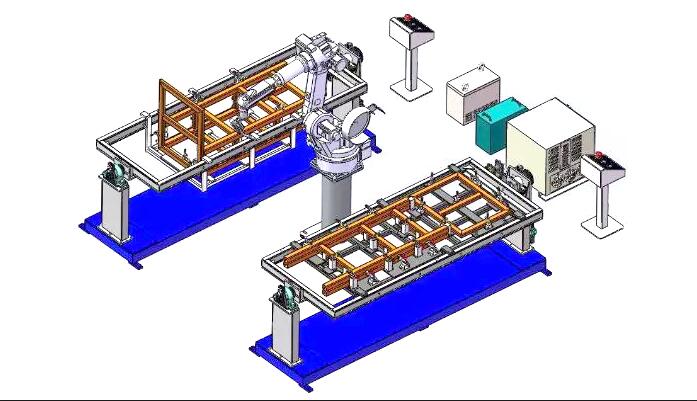
Arc welding and laser welding introduce different technical risks.
A skilled laser welding robot integrator must manage:
Optical alignment stability
Beam quality consistency
Shielding gas precision
Thermal concentration control
Laser processes tolerate far less deviation than arc welding. Therefore, robotic welding integration in laser systems demands tighter calibration and higher environmental control.
Not all robotic welding machine manufacturers are prepared to deliver full-process laser integration. Choosing the right laser welding robot integrator becomes critical when precision and heat input margins are minimal.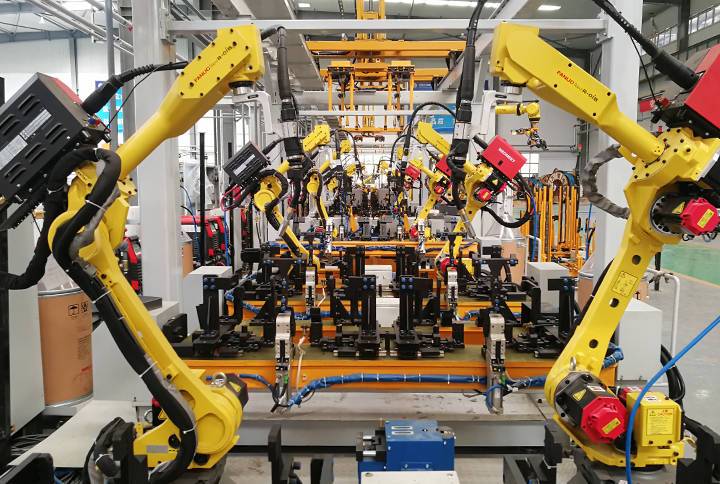
One overlooked area in robotic welding issues and challenges is data visibility.
Without structured data collection:
Arc interruptions go undocumented
Parameter drift remains unnoticed
Maintenance patterns are reactive
Root causes stay hidden
Modern industrial robotics solutions increasingly integrate:
Weld parameter logging
Arc time monitoring
Quality traceability systems
Real-time fault diagnostics
These elements transform robotic welding from mechanical automation into measurable process control.
Many companies approach robotic welding machine manufacturers expecting a turnkey result.
However, manufacturers supply equipment. Performance depends on system architecture.
Reliable robotic welding solutions require:
Fixture engineering aligned with weld sequence
Power source selection based on material type
Seam tracking integration when necessary
Multi-robot coordination logic
On-site validation under real production conditions
This depth defines true robotic welding integration.
Since 1994, we have specialized in welding-focused robotic welding integration.
We are not simply equipment suppliers among many robotic welding machine manufacturers. We build complete, production-ready industrial robotics solutions designed for real manufacturing environments.
Our approach includes:
Welding process validation before robot selection
Integrated fixture and thermal design
Seam tracking and adaptive correction when required
Arc parameter optimization under production load
On-site installation, commissioning, and training worldwide
We have delivered robotic welding systems to manufacturers across multiple countries, supporting heavy fabrication, structural components, machinery production, and complex welded assemblies.
Most importantly, we design systems to address real robotic welding issues and challenges before they disrupt production.
Automation should reduce uncertainty—not create it.
If your goal is stable output, predictable weld quality, and scalable welding automation, then the strength of your robotic welding solutions depends on the depth of your integration partner.
That is where our experience, built over three decades, makes the difference.
Zhengzhou Kehui Technology Co., Ltd
Email: info@zzkehui.com





 Chinese
 English
 OA
OA Current location:
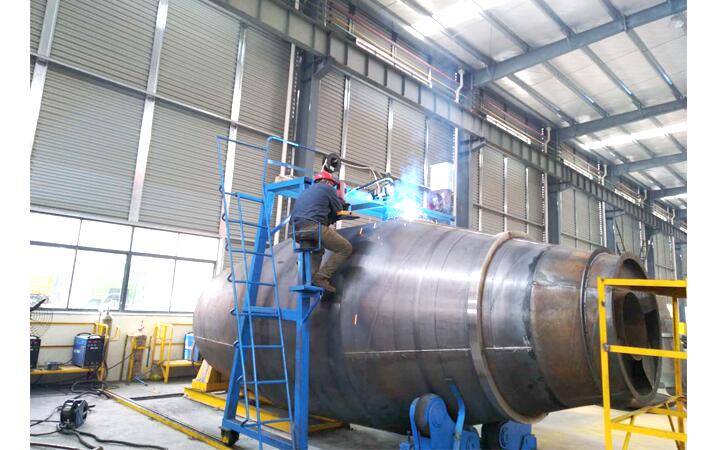 Concrete Mixer Drum Robotic Welding Solutions
 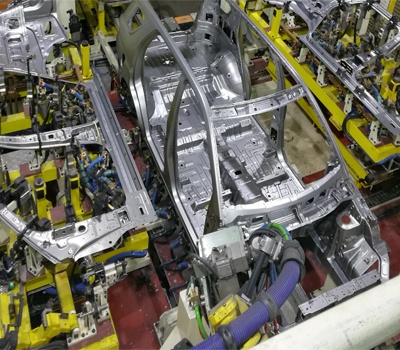 Automobile Body Production Line Welding Fixtures
 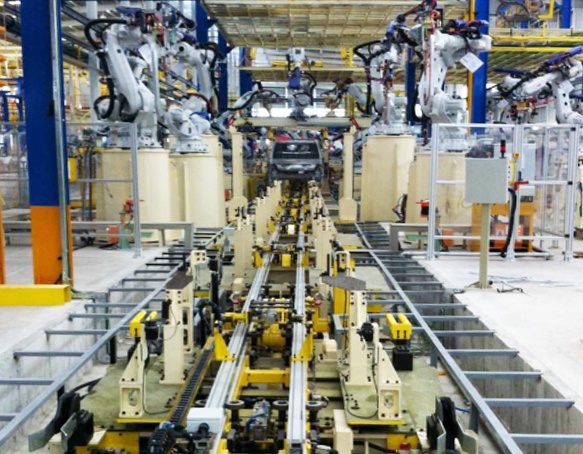 Automotive Body Welding Automated Manufacturing Solutions
 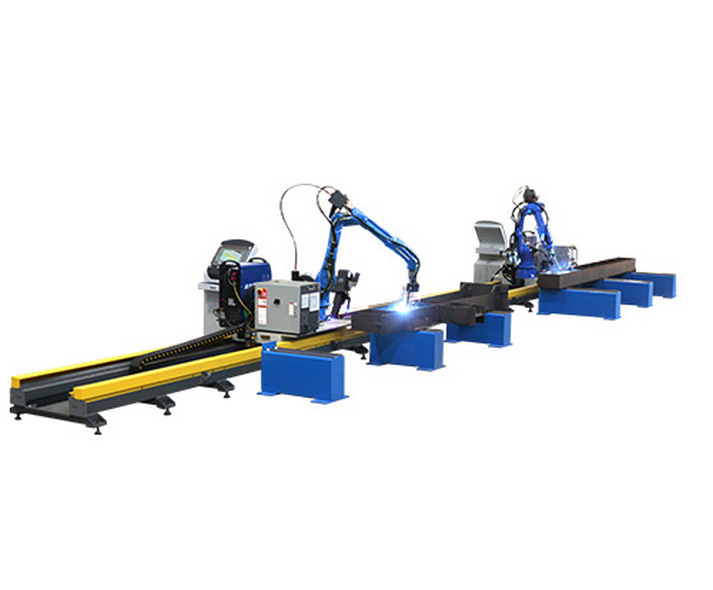 Free-Teaching Programming Welding Robot Cell For I Beam Welding
 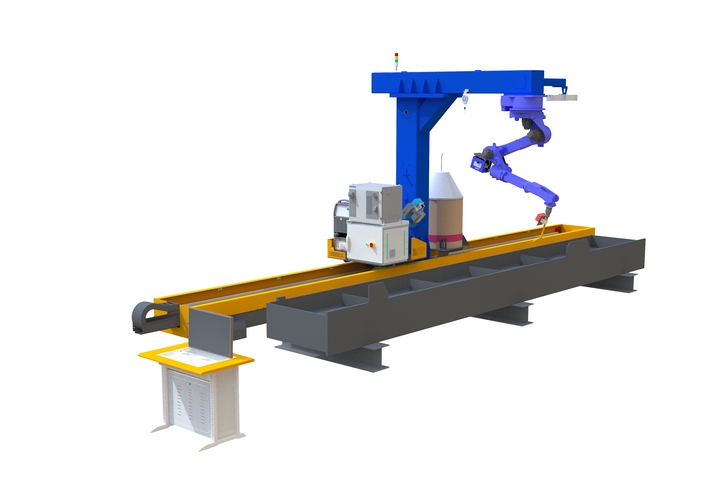 No Programming Required Robotic Welding Systems for H beam Welding Line